
Economics – Master of Science
University of Cologne · Cologne, Europe
Duration
24 mo
Tuition
No tuition fee
sourcedIntake
Winter semester
English
—
Winter semester intake. Most universities admit on a rolling basis — we confirm the exact application deadline for your profile, free.
Course details verified 09 Sep 2026 — intakes, entry requirements and course facts · official source
Fee sourced Taken from the university's published fees page, not re-checked since — confirm it before you budget. See the university fees page.
About this programme
The Master's in Economics at the University of Cologne offers a research-oriented study programme with courses from a wide range of economic areas. As a student, you are largely free to choose the subjects you intend to concentrate on, and you can opt to focus on different areas within and between fields. The main topics are: Market Design and Behaviour Markets and Economic Policy Empirical Methods and Data Analysis Energy and Climate Change The empirical and analytical focus of the programme enables you to analyse economic phenomena using state-of-the-art research methods and to carry out research projects. Upon graduating from the programme, you will be prepared to enter a professional career in many private and public institutions in need of economic expertise. You may also opt for the continuation of your studies through a PhD programme in economic research. The majority of the MSc Economics programme is internationally oriented in both content and style. It provides an international study environment in Germany, with a high proportion of international students from diverse backgrounds enrolling into the programme. Furthermore, many members of our faculty have an international background, either coming from or having been trained abroad. The Master’s programme carries 120 ECTS credits and compromises a Core Section, a Specialisation Section, Supplementary Sections, and the Master Thesis. It equips you with knowledge of the theoretical foundations and methods and the ability to conduct applied and theoretical economic analyses. Apart from the Core Section, you will be able to flexibly choose your course curriculum largely following your individual preferences. The Core Section of the programme contains 24 credit points (four courses) and will introduce you to the central methods and insights of the main areas of modern economics: econometrics and statistics, macroeconomics and microeconomics. In the Specialisation Section, you will choose courses from the main areas that reflect your substantive orientation in which you want to proceed with your studies. In the specialisation on Empirical Methods and Data Analysis, your focus will be on the tools of empirical analysis. In Markets and Economic Policy, your focus will be largely on issues of public policy and the functioning of markets from a macroeconomic perspective. In Market Design and Behaviour, you will focus on the microeconomic working of specific markets and how they should be regulated and the behaviour of individuals in them. The Supplementary Section in Economics offers both specialisation and generalisation. A particular concentration on energy markets and climate economics is possible in our specialised field of Energy and Climate Change, which builds on and deepens methods and insights from various areas of the specialisation section. You may also acquire particular skills that interest you by choosing further courses from any of the fields in the specialisation section. You can also complement and deepen your studies with courses from our Master in Economic Research programme. The Supplementary Section in Management and Social Science provides the opportunity to explore other fields within the faculty. For instance, you can complement the study of labour markets with courses in Personnel Economics, enhance your understanding of public policy with expertise from political science, or delve into human behaviour through courses in sociology. With the Master’s thesis, you will show your ability to apply the skills you have acquired throughout the programme and conduct your very own research to contribute to scientific knowledge. PDF Download
Intakes & deadlines
Winter semester
Dates confirmed for your profile · Open
Entry requirements
-
English
E.G. TOEFL iBT (since 2026): 4 Reading: 4 Listening: 4 Speaking: 4 Writing: 4 IELTS Academic: 5.5 Cambridge English Qualifications: B2 First
-
Prerequisites
Overall grade of at least 2.7 (German grading system) in the Bachelor’s degree and EITHER at least 30 ECTS in the field of Economics at least 15 ECTS in the fields of Statistics and/or Mathematics (only modules with mathematical and/or statistical methodological skills; pure (software) application skills are not accepted) OR at least 40 ECTS in the field of Mathematics Please find more information and requirements here.
-
Documents
SOP, LOR & Resume — generate them free in 2 minutes.
This is an indicative early-career range for the whole Business & Management field in Europe, from official graduate-outcome data — not a figure for this programme or university, and not a guarantee of what you will earn. What you actually earn depends on the role, employer, city and your visa.
Source: Profiling Institut - Gehaltsranking nach Studienfach 2026 (StepStone Gehaltsreport 2026), 2026. Market job-board data — less official than a government survey; treat as indicative.
Rupee figure converted at the 18 Aug 2026 mid-market rate; your bank's rate will be worse and currencies move, so use it for planning, not as the amount you will receive.
Fees & scholarships
No tuition fee tuition (sourced). We confirm the exact costs and the scholarships you qualify for at University of Cologne — free, for your profile.
Other programmes at University of Cologne
Bonn-Cologne Graduate School of Physics and Astronomy: MSc in Physics (Cologne)
No tuition fee Tuition · sourced 2 years Duration View details CO University of CologneBusiness Administration (Master of Science) – Major: Accounting & Taxation, Corporate Development, Finance, Marketing, Supply Chain Management
No tuition fee Tuition · sourced 2 years Duration View details CO University of CologneBusiness Analytics & Econometrics – Master of Science
No tuition fee Tuition · sourced 2 years Duration View details CO University of CologneDouble Master's Programme in Business Administration – Master of Science
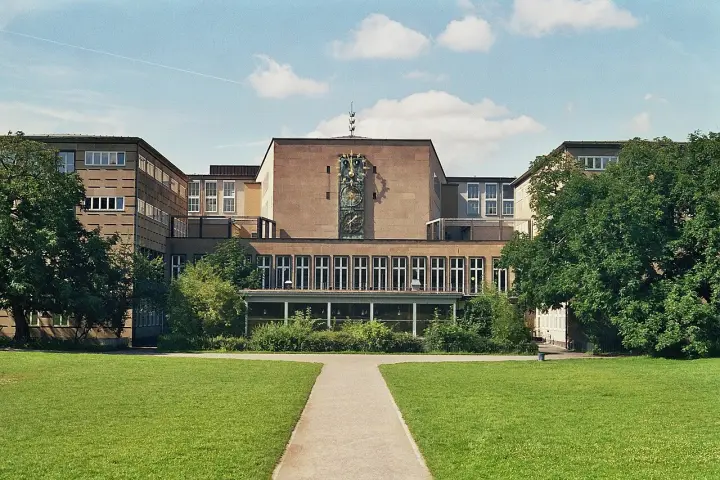
No tuition fee Tuition · sourced 2 years Duration View detailsCampus photos on this page: UzK (Public domain) — via Wikimedia Commons.
Economics – Master of Science — FAQs
5 questions
Tuition is No tuition fee. Taken from the university's published fees page, not re-checked since — confirm it before you budget. We confirm the current fee and the scholarships you qualify for — free.
The main intake is Winter semester. Most universities admit on a rolling basis — we confirm the exact deadline for your profile, free.
Overall grade of at least 2.7 (German grading system) in the Bachelor’s degree and EITHER at least 30 ECTS in the field of Economics at least 15 ECTS in the fields of Statistics and/or Mathematics (only modules with mathematical and/or statistical methodological skills; pure (software) application skills are not accepted) OR at least 40 ECTS in the field of Mathematics Please find more information and requirements here. English: E.G. TOEFL iBT (since 2026): 4 Reading: 4 Listening: 4 Speaking: 4 Writing: 4 IELTS Academic: 5.5 Cambridge English Qualifications: B2 First.
The programme runs about 24 months full-time.
Yes — shortlisting, SOP, LOR, Resume, application, scholarships and visa guidance are all free. We're paid by partner universities, not by you.
Apply to Economics – Master of Science — free help
A counsellor calls you back during office hours — 9am to 8pm IST, Mon to Sat. We are closed right now, so your request is first in line when we reopen.