Materials Chemistry & Catalysis
University of Bayreuth · Bayreuth, Europe
Duration
24 mo
Tuition
No tuition fee
sourcedIntake
Winter semester
English
—
Winter semester intake. Most universities admit on a rolling basis — we confirm the exact application deadline for your profile, free.
Course details verified 09 Sep 2026 — intakes, entry requirements and course facts · official source
Fee sourced Taken from the university's published fees page, not re-checked since — confirm it before you budget. See the university fees page.
About this programme
New materials and catalytic converters are driving innovation in an increasing number of areas in industry, research, and technology. The Bayreuth Master's programme in "Materials Chemistry and Catalysis" enables students to participate successfully in shaping this development with a high level of professional competence. Consequently, new material concepts such as nanomaterials, hybrid materials, composites, colloidal molecules, surface-active material or biomimetic materials, and the design of catalysts are at the centre of the course. Profile The Master's offers students a challenging research-related education. Students learn the chemical and physical fundamentals, but also the properties and application potentials of many classes of materials and catalysts that are of particular importance for technological progress and economic growth in the 21st century. Graduates are therefore able to synthesise, modify and characterise materials for various requirements. The campus of the University of Bayreuth offers excellent opportunities for this with modern laboratory facilities and outstanding library equipment. Particularly qualified students have the opportunity to participate in the elite study programme in "Macromolecular Science" parallel to their Master's and doctoral studies. In addition, the Master's programme is embedded in the following focus areas of University of Bayreuth: "Polymer and Colloid Research" and "Advanced Materials". Important impulses for teaching also emanate from its internationally networked competences in this field. Central scientific facilities of the university promote interdisciplinary contacts on campus and research collaborations with industry. Structure and content The Master's programme is aimed at students who have a strong interest in the fundamentals of materials or catalysis research, who want to work on the development of high-performance materials or catalysts with a high level of professional competence and creativity, and who aspire to a responsible position in companies, research institutes or universities. Programme outline The two-year Master’s programme begins with fundamental aspects and covers recent developments in the field along with applications of the various soft or hard material classes (ceramics, metals, polymers) and catalysts (heterogeneous & homogeneous). The programme is research-oriented and is taught by reputable scholars who are active in the field and who are experienced in teaching the various aspects of materials chemistry and catalysis. The Master's programme in "Materials Chemistry and Catalysis" can be started either in the winter or summer semester. In the first year of study, students take seven modules from a selection of fourteen, typically consisting of lectures and laboratory courses that familiarise the subject by experiments and to train their practical skills. In the first semester, students choose four out of seven proposed modules (e.g. for the start in the winter semester: Solid-state Inorganic Materials: Nanochemistry, Homogeneous Catalysis, Electrochemical Energy Systems and Energy Conversion, Colloids and Surfaces, Stereoselective Organic Synthesis, Polymer Synthesis, Biomaterials). But they must also take at least one from each of the core areas: "Inorganic Chemistry", "Colloids and Materials" and "Organic Chemistry and Macromolecular Materials". This assures that the student will gain the appropriate breadth of the acquired knowledge. The fourth module can also be selected from the other courses offered in this degree programme or other Master's degree programmes in chemistry. In the second semester, students take three in-depth modules, each worth nine credit points. These modules each include a longer internship in one of the research groups involved in the study programme. Possible modules for winter starters are as follows: Solid-State Inorganic Materials: Properties and Applications; Catalyst Design, High Performance Materials for Elec
Intakes & deadlines
Winter semester
Dates confirmed for your profile · Open
Summer semester
Dates confirmed for your profile · Open
Entry requirements
-
English
E.G. Cambridge English Qualifications Business (BEC) : B2 Business Vantage TOEFL Essentials: 8 Reading: 8 Listening: 8 Speaking: 8 Writing: 8 Cambridge English Qualifications: B2 First IELTS Academic: 5.5
-
Prerequisites
Admission requirements for the Master's programme are a first degree (Bachelor of Science) in chemistry, polymer and colloid chemistry, biochemistry, physics, materials science, or a related discipline in addition to successful completion of an aptitude assessment process. Aptitude Assessment Process: Admission to the degree programme is based on an aptitude assessment process. Admission requirements for the Master's programme in Materials Chemistry and Catalysis are a first degree (Bachelor of Science) in chemistry, polymer and colloid chemistry, biochemistry, physics, materials science, or a related discipline in addition to successful completion of an aptitude assessment process. Aptitude Assessment Process: The prerequisite for admission to the degree programme is passing the aptitude assessment process (see Examination Regulations, Annex 2), which includes the assessment of qualifications based on submitted papers and, if applicable, an aptitude interview. Applying without a degree certificate: Applications may already be submitted before completion of the Bachelor's degree. However, a total of at least 135 credits are required by the time of application. Language proficiency: English at B2 level
-
Documents
SOP, LOR & Resume — generate them free in 2 minutes.
Fees & scholarships
No tuition fee tuition (sourced). We confirm the exact costs and the scholarships you qualify for at University of Bayreuth — free, for your profile.
Other programmes at University of Bayreuth
African Studies: Language, Arts, Philosophy
No tuition fee Tuition · sourced 2 years Duration View details BA University of BayreuthBattery Materials and Technology (Master of Science)
No tuition fee Tuition · sourced 2 years Duration View details BA University of BayreuthBiofabrication
No tuition fee Tuition · sourced 2 years Duration View details BA University of BayreuthComputer Science, Master of Science (MSc)
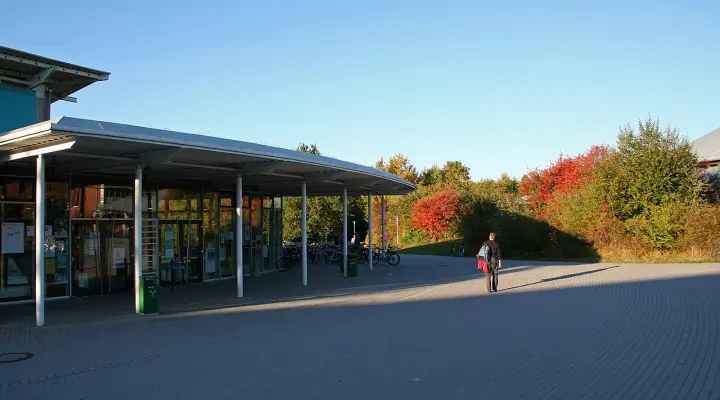
No tuition fee Tuition · sourced 2 years Duration View detailsCampus photos on this page: H. Wurst (CC BY-SA 2.0 de) — via Wikimedia Commons.
Materials Chemistry & Catalysis — FAQs
5 questions
Tuition is No tuition fee. Taken from the university's published fees page, not re-checked since — confirm it before you budget. We confirm the current fee and the scholarships you qualify for — free.
The main intake is Winter semester. Most universities admit on a rolling basis — we confirm the exact deadline for your profile, free.
Admission requirements for the Master's programme are a first degree (Bachelor of Science) in chemistry, polymer and colloid chemistry, biochemistry, physics, materials science, or a related discipline in addition to successful completion of an aptitude assessment process. Aptitude Assessment Process: Admission to the degree programme is based on an aptitude assessment process. Admission requirements for the Master's programme in Materials Chemistry and Catalysis are a first degree (Bachelor of Science) in chemistry, polymer and colloid chemistry, biochemistry, physics, materials science, or a related discipline in addition to successful completion of an aptitude assessment process. Aptitude Assessment Process: The prerequisite for admission to the degree programme is passing the aptitude assessment process (see Examination Regulations, Annex 2), which includes the assessment of qualifications based on submitted papers and, if applicable, an aptitude interview. Applying without a degree certificate: Applications may already be submitted before completion of the Bachelor's degree. However, a total of at least 135 credits are required by the time of application. Language proficiency: English at B2 level English: E.G. Cambridge English Qualifications Business (BEC) : B2 Business Vantage TOEFL Essentials: 8 Reading: 8 Listening: 8 Speaking: 8 Writing: 8 Cambridge English Qualifications: B2 First IELTS Academic: 5.5.
The programme runs about 24 months full-time.
Yes — shortlisting, SOP, LOR, Resume, application, scholarships and visa guidance are all free. We're paid by partner universities, not by you.
Apply to Materials Chemistry & Catalysis — free help
A counsellor calls you back during office hours — 9am to 8pm IST, Mon to Sat. We are open now.