Master of Science in Applied Neurosciences in Sports & Exercise (ANSE)
Universität Paderborn · Paderborn, Europe
Duration
24 mo
Tuition
No tuition fee
sourcedIntake
Winter semester
English
—
Winter semester intake. Most universities admit on a rolling basis — we confirm the exact application deadline for your profile, free.
Course details verified 10 Sep 2026 — intakes, entry requirements and course facts · official source
Fee sourced Taken from the university's published fees page, not re-checked since — confirm it before you budget. See the university fees page.
About this programme
The international MSc in Applied Neurosciences in Sports & Exercise focuses on neuroscientific aspects of physical activity in sports and health care settings. Academic knowledge and research skills are conveyed within the two major scopes "Sports and Exercise in Neurological and Neurodegenerative Diseases and Injuries" and "Training and Performance Development from a Neuroscientific Perspective". Graduates will explicitly be enabled to pursue careers in related research fields. Moreover, working in applied clinical occupational fields will also be possible. However, we don't set a focus on acquiring manual or clinical skills (even though it is important for physiotherapists and psychologists to enhance their manual skills for clinical practice). "Sports and Exercise in Neurological and Neurodegenerative Diseases and Injuries" focuses on imparting specific knowledge of the symptoms and syndromes of diseases and injuries within the nervous system (i.e. different types of dementia and epilepsy, multiple sclerosis, concussion). Furthermore, the impact of physical activity in prevention and rehabilitation will be centred in different learning arrangements (literature based, experimental, applied). "Training and Performance Development from a Neuroscientific Perspective" focuses on imparting specific knowledge of the central nervous activity during training and competition (i.e. mechanisms leading to fatigue, injury, over-training). Furthermore, the impact of appropriately managing exposure and recovery of the central and autonomic nervous system will be centred in different learning arrangements (literature based, experimental, applied). Gaining methodological competences represents another key area of education. The programme complies with the increasing demands of professional expertise and scientific work to accomplish the following: improve evidence based prevention and rehabilitation of neurological and neurodegenerative diseases and injuries by a differentiated application of the drug "physical activity" improve evidence based exposure and recovery management in sports and exercise from a neuroscientific perspective to increase performance and reduce the risk of injuries The required skills to manage a successful career in the related fields are achieved through a modular structured study programme. This study programme is divided into three successive stages of study within a total of two years of studies. The first semester covers basic aspects of sports neurology and the neuroscience of sports and exercise as well as methodological skills (competences in neuroscientific methods, general research skills). During the second and third semesters, students work in a project-geared period. Students have the opportunity to improve and apply their neuroscientific knowledge in therapy and lab settings, leading to the ability to adequately implement sports and physical activity in these settings as well as strengthening their methodological skills. The main part of the workload is generated through scientific project work (literature based, experimental, and/or conceptual work). In the third semester, students additionally choose two out of three modules to expand their expertise in the fields of programming skills, intercultural communication, and/or a "Studium Generale" (general studies in a chosen field within the courses offered by the university, e.g. a German language class). At the end of the third semester, a four-week internship helps students apply the knowledge they have gained in a practical context (i.e. research oriented or clinical setting). The fourth semester is dedicated to the Master's thesis. Besides neuroscientific knowledge, interdisciplinary elements within the programme enforce the development of personal skills, such as communicating, reporting, and presenting their own work or the work of a group. Project groups, which bring together about 10 students who work on the solution of a scientific problem, will
Intakes & deadlines
Winter semester
Dates confirmed for your profile · Open
Entry requirements
-
English
E.G. TOEFL iBT Home Edition (before 2026): 95 Reading: 24 Listening: 22 Speaking: 25 Writing: 24 TOEFL iBT Home Edition (since 2026): 5 Reading: 5 Listening: 5 Speaking: 5 Writing: 5 UNIcert® English: UNIcert® III TOEFL iBT (since 2026): 5 Reading: 5 Listening: 5 Speaking: 5 Writing: 5 TOEFL iBT (before 2026): 95 Reading: 24 Listening: 22 Speaking: 25 Writing: 24 PTE Academic: 76 IELTS Academic: 7 Cambridge English Qualifications: C1 Advanced
-
Prerequisites
Applicants must have a Bachelor's degree in sports science, health science, physiotherapy, or neuroscience (or equivalent) with an overall grade of 2.5 or better according to the German grading system. The transcript of the Bachelor's degree should provide evidence of two of the three following ECTS requirements: at least 12 ECTS in Physiology, at least 12 ECTS in Research Methods / Statistics, and 12 ECTS in Bachelor's thesis.
-
Documents
SOP, LOR & Resume — generate them free in 2 minutes.
Fees & scholarships
No tuition fee tuition (sourced). We confirm the exact costs and the scholarships you qualify for at Universität Paderborn — free, for your profile.
Other programmes at Universität Paderborn
Additive Manufacturing
No tuition fee Tuition · sourced 2 years Duration View details PA Universität PaderbornBeNeLux Studies
No tuition fee Tuition · sourced 2 years Duration View details PA Universität PaderbornGerman as a Second and Foreign Language for Work and Specialised Studies
No tuition fee Tuition · sourced 2 years Duration View details PA Universität PaderbornMaster of Science in Computer Engineering
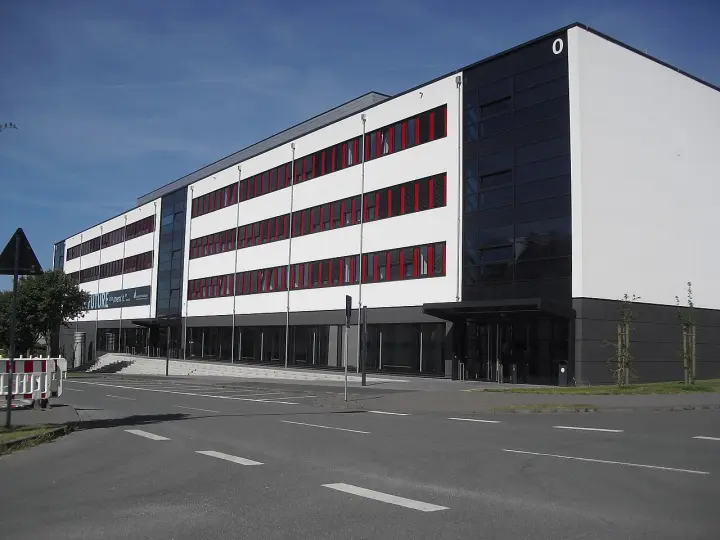
No tuition fee Tuition · sourced 2 years Duration View detailsCampus photos on this page: Athde (CC0) — via Wikimedia Commons.
Master of Science in Applied Neurosciences in Sports & Exercise (ANSE) — FAQs
5 questions
Tuition is No tuition fee. Taken from the university's published fees page, not re-checked since — confirm it before you budget. We confirm the current fee and the scholarships you qualify for — free.
The main intake is Winter semester. Most universities admit on a rolling basis — we confirm the exact deadline for your profile, free.
Applicants must have a Bachelor's degree in sports science, health science, physiotherapy, or neuroscience (or equivalent) with an overall grade of 2.5 or better according to the German grading system. The transcript of the Bachelor's degree should provide evidence of two of the three following ECTS requirements: at least 12 ECTS in Physiology, at least 12 ECTS in Research Methods / Statistics, and 12 ECTS in Bachelor's thesis. English: E.G. TOEFL iBT Home Edition (before 2026): 95 Reading: 24 Listening: 22 Speaking: 25 Writing: 24 TOEFL iBT Home Edition (since 2026): 5 Reading: 5 Listening: 5 Speaking: 5 Writing: 5 UNIcert® English: UNIcert® III TOEFL iBT (since 2026): 5 Reading: 5 Listening: 5 Speaking: 5 Writing: 5 TOEFL iBT (before 2026): 95 Reading: 24 Listening: 22 Speaking: 25 Writing: 24 PTE Academic: 76 IELTS Academic: 7 Cambridge English Qualifications: C1 Advanced.
The programme runs about 24 months full-time.
Yes — shortlisting, SOP, LOR, Resume, application, scholarships and visa guidance are all free. We're paid by partner universities, not by you.
Apply to Master of Science in Applied Neurosciences in Sports & Exercise (ANSE) — free help
A counsellor calls you back during office hours — 9am to 8pm IST, Mon to Sat. We are closed right now, so your request is first in line when we reopen.