
Sustainability and Postcolonial Studies. Gender, Nature and History
Universität Kassel · Kassel, Europe
Duration
24 mo
Tuition
No tuition fee
sourcedIntake
Winter semester
English
—
Winter semester intake. Most universities admit on a rolling basis — we confirm the exact application deadline for your profile, free.
Course details verified 10 Sep 2026 — intakes, entry requirements and course facts · official source
Fee sourced Taken from the university's published fees page, not re-checked since — confirm it before you budget. See the university fees page.
About this programme
Programme profile The two-year Master's programme in "Sustainability and Postcolonial Studies. Gender, Nature and History" focuses on the ideas, discourses and practices surrounding "sustainability", which refers to the protection of our world's resources in order to ensure a liveable planet for future generations. In doing so, it sheds light on postcolonial perspectives and global inequalities. Students will explore the historical and societal origins and negotiations of current sustainability concepts, strategies and practices. By jointly examining assumptions and universalisms relating to sustainability, the programme aims to contribute to constructive debates on the future-oriented development of sustainability concepts, strategies and practices. Our profile is unique within the German higher education sector: we combine sustainability with postcolonial perspectives, emphasising the dimensions of gender, nature and history from historical and contemporary analytical perspective. Critical-analytical understanding of sustainability: The programme encourages critical engagement with assumptions and universalisms about sustainability and critically reflects on previous implementations of sustainability. Dialogue-based study: During the programme, students work together to develop creative potential for the necessary reflection and constructive further development of sustainability concepts and practices. Postcolonial perspectives: The global context of the emergence and implementation of sustainability is reflected upon, and dialogue with lesser-known ideas and strategies for sustainability from the Global South is facilitated. Thematic focus on gender, nature and history: Joint exploration of the historical origins and societal negotiations of key aspects of sustainability while focussing on questions of power, inequality and marginalisation Career prospects The programme qualifies graduates for roles in national and international organisations, research institutes, public administration, development agencies, political education, consulting and corporate environments. Graduates will have the competence to critically examine sustainability concepts and practices from a social science perspective and to understand their global, historical and (post-)colonial dimensions. Graduates also have an awareness of gender and power-critical perspectives and of the diversity of understandings of sustainability worldwide, as well as conceptual and consulting skills in the development, evaluation and implementation of innovative sustainability strategies in private and public organisations. Programme structure First semester: Two introductory modules on critical sustainability and postcolonial studies provide the theoretical basis for subsequent studies. Students are also introduced to academic standards and writing, preparing them for term papers and their final thesis. Second and third semesters: Three subject-specific modules enable students to tailor a personalised study programme from a wide range of courses offered by the disciplines of history, sociology and political science. The project module introduces various research methods and enables students to conduct their own research project on a chosen topic. Fourth semester: Writing of the Master’s degree dissertation Teaching in small groups enables intensive discussion, individual feedback and close supervision. Modules offered Critical Sustainability Postcolonial Studies Gender and Intersectionality Nature, Culture and Economies in Past and Present Societies Socio-Ecological Transformations: Conflicts, Movements and (Un-)Learning Master's Degree Module Academic Standards and Writing A variety of courses with different content focuses are offered within the modules, from which students can design their own study programme by selecting those courses that suit their interests. PDF Download
Intakes & deadlines
Winter semester
Dates confirmed for your profile · Open
Entry requirements
-
English
E.G. TOEFL iBT (since 2026): 5 Reading: 5 Listening: 5 Speaking: 5 Writing: 5 telc English: telc English C1 IELTS Academic: 7 Cambridge English Qualifications: C1 Advanced
-
Prerequisites
Candidates can be admitted to programme with a Bachelor’s degree or an equivalent degree in sustainability studies, social sciences, cultural studies or humanities or a first state examination for teaching history or politics and economics with a study period of at least six semesters and 180 credits or an equivalent foreign degree in the above mentioned fields with a study period of at least six semesters and 180 credits, and adequate knowledge of the English language (C1 level CEFR, details below). The examination board will admit the students following the above mentioned admission requirements. All decisions will be made based on the written application documents. The examination board can admit students provisionally and request further documents.
-
Documents
SOP, LOR & Resume — generate them free in 2 minutes.
Fees & scholarships
No tuition fee tuition (sourced). We confirm the exact costs and the scholarships you qualify for at Universität Kassel — free, for your profile.
Other programmes at Universität Kassel
Agriculture, Ecology & Societies (AGES)
No tuition fee Tuition · sourced 2 years Duration View details KA Universität KasselEconomic Behavior & Governance (EB&Go)
No tuition fee Tuition · sourced 2 years Duration View details KA Universität KasselElectrical Communication Engineering (MSc)
No tuition fee Tuition · sourced 2 years Duration View details KA Universität KasselEuropean Master's in Business Studies (EMBS)
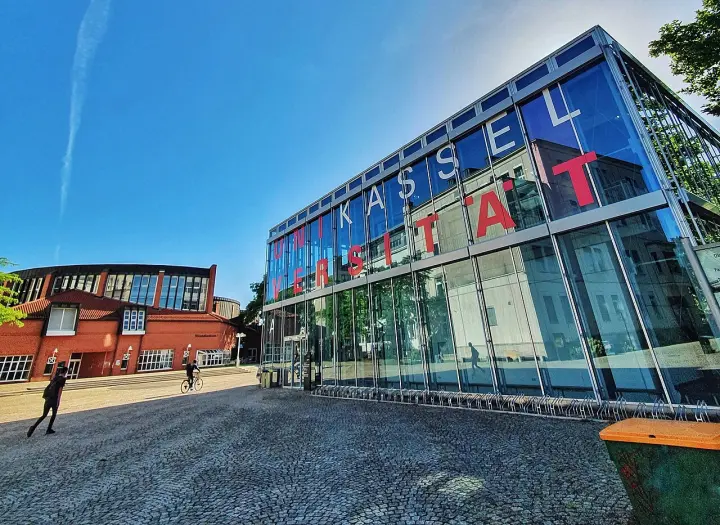
€3,350/yr Tuition · sourced 2 years Duration View detailsCampus photos on this page: Mönch K36 (CC BY-SA 4.0) — via Wikimedia Commons.
Sustainability and Postcolonial Studies. Gender, Nature and History — FAQs
5 questions
Tuition is No tuition fee. Taken from the university's published fees page, not re-checked since — confirm it before you budget. We confirm the current fee and the scholarships you qualify for — free.
The main intake is Winter semester. Most universities admit on a rolling basis — we confirm the exact deadline for your profile, free.
Candidates can be admitted to programme with a Bachelor’s degree or an equivalent degree in sustainability studies, social sciences, cultural studies or humanities or a first state examination for teaching history or politics and economics with a study period of at least six semesters and 180 credits or an equivalent foreign degree in the above mentioned fields with a study period of at least six semesters and 180 credits, and adequate knowledge of the English language (C1 level CEFR, details below). The examination board will admit the students following the above mentioned admission requirements. All decisions will be made based on the written application documents. The examination board can admit students provisionally and request further documents. English: E.G. TOEFL iBT (since 2026): 5 Reading: 5 Listening: 5 Speaking: 5 Writing: 5 telc English: telc English C1 IELTS Academic: 7 Cambridge English Qualifications: C1 Advanced.
The programme runs about 24 months full-time.
Yes — shortlisting, SOP, LOR, Resume, application, scholarships and visa guidance are all free. We're paid by partner universities, not by you.
Apply to Sustainability and Postcolonial Studies. Gender, Nature and History — free help
A counsellor calls you back during office hours — 9am to 8pm IST, Mon to Sat. We are open now.