
Mechanical Engineering
Universität Duisburg-Essen · Essen, Europe
Duration
24 mo
Tuition
No tuition fee
sourcedIntake
Winter semester
English
—
Winter semester intake. Most universities admit on a rolling basis — we confirm the exact application deadline for your profile, free.
Course details verified 10 Sep 2026 — intakes, entry requirements and course facts · official source
Fee sourced Taken from the university's published fees page, not re-checked since — confirm it before you budget. See the university fees page.
About this programme
Mechanical and plant engineering is one of the largest and most future-proof high-tech sectors in Germany. By combining mechanical engineering with electrical engineering, measurement, control engineering and information technology, new products and processes are constantly being developed. The Master's degree programme in Mechanical Engineering is divided into seven specialisations. The General Mechanical Engineering specialisation offers a broad, traditional education in mechanical engineering. Besides the sound technical basis, the curriculum includes elective options that allow students to design their own profiles. The Mechatronics specialisation combines traditional mechanical engineering with electrical engineering and information technology. Students learn the basics of developing and manufacturing mechatronic systems in which mechanical, electrical and electronic components are integrated in innovative modules. Global markets and value chains require new and efficient material flows. In the Production and Logistics specialisation, students acquire methods for planning, developing and controlling production and logistics processes in supply chains. The programme combines technical aspects with organisational and economic requirements and prepares students for interdisciplinary activities. In view of the global climate problem and scarcity of resources, energy and environmental technology plays a key role. This specialisation qualifies students for the development of resource-saving systems and technologies to reduce environmental pollution in soil, water and air. Maritime systems are among the most complex large-scale structures and facilities built by humans. On the one hand, these systems contain a high degree of specific, closely interlinked, complex subsystems and need to be operated with a high degree of efficiency, but on the other hand, they have to cope with the harsh environmental conditions at sea. The Sustainable and Autonomous Maritime Systems specialisation addresses the need for highly qualified engineers. The foundation of general mechanical engineering is enhanced by industry-specific knowledge in the field of ship and offshore technology. The Maritime Systems Safety specialisation addresses issues relating to the safety of maritime systems. Specific content of safety-relevant areas of ship and offshore technology as well as knowledge of risk assessment, functional safety, diagnosis of systems, system reliability, and process control technology are taught. The Turbomachinery specialisation focuses on the physical relationships of energy conversion in the form of shaft power, e.g. for power generation and the conveyance of media. In addition to product development, this includes the thermodynamic, aerodynamic and rotor-dynamic design of turbomachinery with the aid of current development and research tools. All Master's degree programmes follow the same structure and consist of core subjects, advanced theories, profile subjects, elective courses and the Master's thesis. The mandatory core subjects are obligatory for all students and provide in-depth knowledge in the specific discipline. The subjects of a profile specialise in a specific area within this discipline. The elective courses can be chosen out of any discipline in engineering. The overall language of instruction for each Master's degree programme is 50% English and 50% German. In both industry and universities, there is a worldwide and long-term need for engineering graduates. The ISE programme corresponds to global market conditions and was designed to match the job requirements for graduates. It particularly offers subjects of specific international relevance. Apart from the technical qualification, the linguistic and cultural aspects offer special advantages for graduates in a global job market and qualify them for responsible positions in international companies or for a continuation of their academic career, e.g. when heading for a PhD.
Intakes & deadlines
Winter semester
Dates confirmed for your profile · Open
Summer semester
Dates confirmed for your profile · Open
Entry requirements
-
English
E.G. TOEFL iBT (since 2026): 4 Reading: 4 Listening: 4 Speaking: 4 Writing: 4 IELTS Academic: 5.5 Cambridge English Qualifications: B2 First
-
Prerequisites
Bachelor's degree in an appropriate subject area, with adequate length of studies and with an average mark of at least 3.0 issued in Germany or a foreign equivalent
-
Documents
SOP, LOR & Resume — generate them free in 2 minutes.
This is an indicative early-career range for the whole Engineering (general) field in Europe, from official graduate-outcome data — not a figure for this programme or university, and not a guarantee of what you will earn. What you actually earn depends on the role, employer, city and your visa.
Source: Profiling Institut - Gehaltsranking nach Studienfach 2026 (StepStone Gehaltsreport 2026), 2026. Market job-board data — less official than a government survey; treat as indicative.
Rupee figure converted at the 18 Aug 2026 mid-market rate; your bank's rate will be worse and currencies move, so use it for planning, not as the amount you will receive.
Fees & scholarships
No tuition fee tuition (sourced). We confirm the exact costs and the scholarships you qualify for at Universität Duisburg-Essen — free, for your profile.
Other programmes at Universität Duisburg-Essen
Automation and Safety
No tuition fee Tuition · sourced 2 years Duration View details DE Universität Duisburg-EssenCommunications Engineering
No tuition fee Tuition · sourced 2 years Duration View details DE Universität Duisburg-EssenComputational Mechanics
No tuition fee Tuition · sourced 2 years Duration View details DE Universität Duisburg-EssenEmbedded Systems Engineering
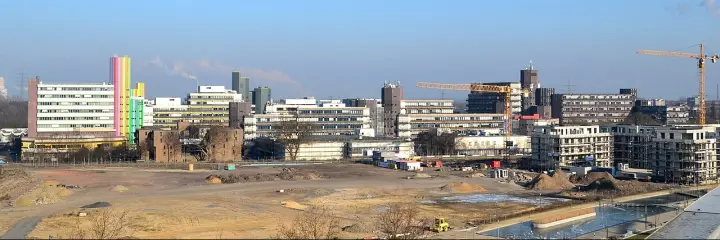
No tuition fee Tuition · sourced 2 years Duration View detailsCampus photos on this page: Wiki05 (CC BY-SA 3.0) — via Wikimedia Commons.
Mechanical Engineering — FAQs
5 questions
Tuition is No tuition fee. Taken from the university's published fees page, not re-checked since — confirm it before you budget. We confirm the current fee and the scholarships you qualify for — free.
The main intake is Winter semester. Most universities admit on a rolling basis — we confirm the exact deadline for your profile, free.
Bachelor's degree in an appropriate subject area, with adequate length of studies and with an average mark of at least 3.0 issued in Germany or a foreign equivalent English: E.G. TOEFL iBT (since 2026): 4 Reading: 4 Listening: 4 Speaking: 4 Writing: 4 IELTS Academic: 5.5 Cambridge English Qualifications: B2 First.
The programme runs about 24 months full-time.
Yes — shortlisting, SOP, LOR, Resume, application, scholarships and visa guidance are all free. We're paid by partner universities, not by you.
Apply to Mechanical Engineering — free help
A counsellor calls you back during office hours — 9am to 8pm IST, Mon to Sat. We are open now.