
Biomedical Micro- and Nanodevices, Biomedical Sciences and Engineering
Tampere University · Tampere, Europe
Duration
—
Tuition
€12,000/yr
sourcedIntake
Autumn 2026
English
—
Autumn 2026 intake. Most universities admit on a rolling basis — we confirm the exact application deadline for your profile, free.
Course details verified 10 Sep 2026 — intakes, entry requirements and course facts · official source
Fee sourced Taken from the university's published fees page, not re-checked since — confirm it before you budget. See the university fees page.
About this programme
Biomedical Sciences and Engineering combines engineering with life sciencesPeople's need for more tailored and cost-efficient implants, devices and health informatics solutions is growing.At the interface between engineering and health sciencesThe biomedical engineering industry is an increasingly important, global high-tech sector. In Finland, the HealthTech industry is especially strong. With the emergence of numerous small enterprises, the fields of biomedical sciences and engineering are rapidly expanding and offer diverse career options. This programme provides you with a solid understanding of the challenges related to biomedical sciences and health technology. You will become familiar with advanced technologies at the interface between engineering and health sciences and can develop innovative solutions to solve these challenges. You will be able to demonstrate critical thinking and professionalism and pursue a career in industry, a hospital or continue your studies towards a doctoral degree. You may also be a natural-born entrepreneur and launch your own start-up.Biomedical Micro- and NanodevicesThe specialisation Biomedical Micro- and Nanodevices focuses on biomedical devices and systems with micro- and nanoscale components, including microsensors, microactuators, microrobots, microfluidics, micro-optics as well as wireless signal and power transfer technologies. If you want to work on e.g. portable devices, wearables, biosensors, or microfluidic chips, this is a good specialisation for you. In this specialisation, you will learn practical skills in cleanroom microfabrication, characterization of microsensors and actuators, microscopy, and theoretical background to understand physics at the microscale.Miniaturisation has been one of the important technological megatrends in the past decades. Miniaturisation is a key approach to make devices and processes sustainable: by making devices and components smaller, we can make more measurements by using smaller amounts of reagents and samples, more computations with less energy, obtain more data in a shorter time, and make more devices from the same amount of raw materials.Within Finland, this specialisation is unique in its interdisciplinarity: you learn the fundamentals of microsystems technology but also its biomedical applications in one whole. This gives you a strong background for designing micro- and nanodevices, but also to understand how these devices can be used in biomedical applications to the benefit of the patient or the user.Career opportunitiesAfter you graduate with this specialisation, your future job might be to develop a wearable sensor device for monitoring physiological signals, targeting either patient monitoring or wellness tracking applications. Or you might continue career in academia, researching organ-on-a-chip type of devices. Organ-on-a-chip devices are microfluidic cell culture chips, mimicking the activities of entire organs and thus providing a novel approach for developing new medicines, understanding disease mechanisms, and studying toxicological effects of chemical compounds in vitro. The job market prospects for microtechnologies in Europe remains strong. Recently, EU has launched the European Chips Act, which aims to invest €43 billion in the field, meaning there will be many job openings in related fields within the near future.CollaborationWe foster close collaboration between engineering professionals, life scientists and clinicians, and therefore provide optimal exposure for the students taking part in the degree programme. Our excellent basic and translational (from laboratory to clinic) research is recognised worldwide. When applying to the Master's programme in Biomedical Sciences and Engineering (MSc Tech), you may choose from the following options:Medical Physics and Biomedical InstrumentationBiomedical InformaticsBiomaterials and Tissue EngineeringBiomedical Micro- and NanodevicesWe collaborate closely with the Finnish-taught programme and the international life science programme in the field of biomedical sciences offered by the Faculty of Medicine and Health Technology, the Master’s programme in Biomedical Technology (MSc), which has three specialisation options:Biomedical Informatics (natural sciences)Cell TechnologyMolecular Biology
Intakes & deadlines
Autumn 2026
Dates confirmed for your profile · Open
Entry requirements
-
Prerequisites
University Bachelor's degree
-
Documents
SOP, LOR & Resume — generate them free in 2 minutes.
Fees & scholarships
€12,000/yr tuition (sourced). We confirm the exact costs and the scholarships you qualify for at Tampere University — free, for your profile.
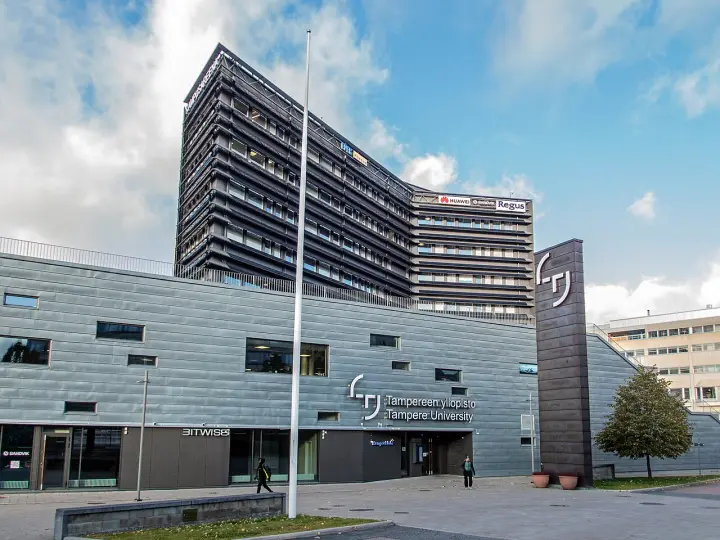
Other programmes at Tampere University
Accessibility and Diversity in Digital Services, Sustainable Societies and Digitalisation
€12,000/yr Tuition · sourced View details TA Tampere UniversityAdministrative Sciences, Sustainable Urban Development
€10,000/yr Tuition · sourced View details TA Tampere UniversityBiomaterials and Tissue Engineering, Biomedical Sciences and Engineering
€12,000/yr Tuition · sourced View details TA Tampere UniversityBiomedical Informatics, Biomedical Sciences and Engineering
€12,000/yr Tuition · sourced View detailsCampus photos on this page: Kotivalo (CC BY-SA 4.0) — via Wikimedia Commons.
Biomedical Micro- and Nanodevices, Biomedical Sciences and Engineering — FAQs
4 questions
Tuition is €12,000/yr. Taken from the university's published fees page, not re-checked since — confirm it before you budget. We confirm the current fee and the scholarships you qualify for — free.
The main intake is Autumn 2026. Most universities admit on a rolling basis — we confirm the exact deadline for your profile, free.
University Bachelor's degree
Yes — shortlisting, SOP, LOR, Resume, application, scholarships and visa guidance are all free. We're paid by partner universities, not by you.
Apply to Biomedical Micro- and Nanodevices, Biomedical Sciences and Engineering — free help
A counsellor calls you back during office hours — 9am to 8pm IST, Mon to Sat. We are closed right now, so your request is first in line when we reopen.