Life Science Informatics (b-it)
Rheinische Friedrich-Wilhelms-Universität Bonn · Bonn, Europe
Duration
24 mo
Tuition
No tuition fee
sourcedIntake
Winter semester
English
—
Winter semester intake. Most universities admit on a rolling basis — we confirm the exact application deadline for your profile, free.
Course details verified 10 Sep 2026 — intakes, entry requirements and course facts · official source
Fee sourced Taken from the university's published fees page, not re-checked since — confirm it before you budget. See the university fees page.
About this programme
The programme is distinguished by its international orientation, its focus on both natural sciences and IT competence, and its high level of integration of research and teaching. The programme is characterised by a significant number of research lab courses embedded in both basic and applied research at the participating Fraunhofer Institutes of Applied Information Technology (FIT) and for Algorithms and Scientific Computing (SCAI) in cooperation with regional industry. The Master's programme in Life Science Informatics consists of four main blocks: Computer science and mathematics for natural scientists Basic principles of life science informatics Biology of the cell and systems biology Biomedical data science & AI Major topics include: biomedical database systems management and retrieval of information data mining and machine learning statistical genetics drug design medical imaging and visualisation computational neuroscience computational modelling of regulatory and metabolic networks systems biology and computational systems biology analysis of microarrays biomedical data science and artificial intelligence Special courses and internships on information retrieval, data mining, data science and AI provide a special focus on (or within) the important application domain of biomedical information systems, biomedical data science and AI. The programme also includes training designed to sensitise students to the ethical implications of emerging biotechnologies. The final six months of the programme are dedicated to the Master's thesis, which can be completed in cooperation with partners in the industry. The course contents are structured according to the ECTS (European Credit Transfer System). The programme consists of three semesters with lectures/lab work, and a Master's thesis which is written in the final, fourth semester. Lectures are usually accompanied by course assignments which have to be successfully completed by the students. Lab work is a substantial part of the programme. Several of the courses are mandatory; many electives are offered in the later semesters. The programme emphasises the students' early exposure to eminent scientists. Therefore, courses and lecture series with guest researchers who are prominent in their respective fields are offered to students in order to broaden their horizons. One example of how this is achieved is the LSI's International Lecture Series. Every summer semester, students have the opportunity to discuss current topics from the field of life science informatics with a range of highly experienced, international researchers. Moreover, company visits and specific workshops for students complement the lecture series by giving students insights into industrial research topics.
Intakes & deadlines
Winter semester
Dates confirmed for your profile · Open
Entry requirements
-
English
E.G. IELTS Academic: 6
-
Prerequisites
Candidates must hold a first degree awarded by an internationally recognised, university-level institution (Bachelor of Science or Engineering) in biology, medicine, pharmaceutics or computer science, or another closely related discipline. Candidates should have performed well above average in their undergraduate studies. The Graduate Record Examination (GRE) is strongly recommended. In particular, applicants must have knowledge equivalent to a one-year course in each of the following subjects: analysis, linear algebra, fundamentals of biochemistry, theoretical biology, in the areas programming, data structures and algorithms, computer organisation and design, fundamentals of theoretical computer science, molecular biology, genetics, cell biology, neurobiology, biodiversity, microbiology and pharmacology.
-
Documents
SOP, LOR & Resume — generate them free in 2 minutes.
This is an indicative early-career range for the whole Computer Science / IT field in Europe, from official graduate-outcome data — not a figure for this programme or university, and not a guarantee of what you will earn. What you actually earn depends on the role, employer, city and your visa.
Source: get in IT (Gehaltsstatistik Informatik 2026), 2026. Market job-board data — less official than a government survey; treat as indicative.
Rupee figure converted at the 18 Aug 2026 mid-market rate; your bank's rate will be worse and currencies move, so use it for planning, not as the amount you will receive.
Fees & scholarships
No tuition fee tuition (sourced). We confirm the exact costs and the scholarships you qualify for at Rheinische Friedrich-Wilhelms-Universität Bonn — free, for your profile.
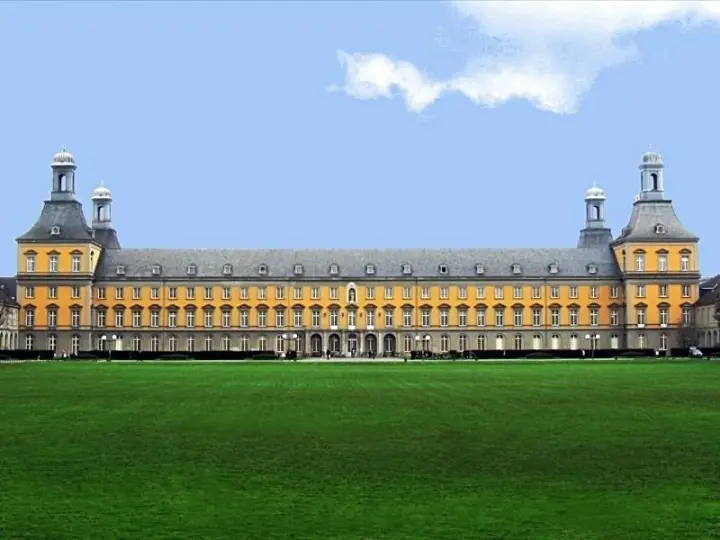
Other programmes at Rheinische Friedrich-Wilhelms-Universität Bonn
Agricultural and Food Economics (AFECO)
No tuition fee Tuition · sourced 2 years Duration View details RFW Rheinische Friedrich-Wilhelms-Universität BonnAgricultural Sciences and Resource Management in the Tropics and Subtropics (ARTS)
No tuition fee Tuition · sourced 2 years Duration View details RFW Rheinische Friedrich-Wilhelms-Universität BonnAnthropology of the Americas
No tuition fee Tuition · sourced 2 years Duration View details RFW Rheinische Friedrich-Wilhelms-Universität BonnApplied Linguistics
No tuition fee Tuition · sourced 2 years Duration View detailsCampus photos on this page: Daniel Tibi (Dti) | daniel-tibi.de (Public domain) — via Wikimedia Commons.
Life Science Informatics (b-it) — FAQs
5 questions
Tuition is No tuition fee. Taken from the university's published fees page, not re-checked since — confirm it before you budget. We confirm the current fee and the scholarships you qualify for — free.
The main intake is Winter semester. Most universities admit on a rolling basis — we confirm the exact deadline for your profile, free.
Candidates must hold a first degree awarded by an internationally recognised, university-level institution (Bachelor of Science or Engineering) in biology, medicine, pharmaceutics or computer science, or another closely related discipline. Candidates should have performed well above average in their undergraduate studies. The Graduate Record Examination (GRE) is strongly recommended. In particular, applicants must have knowledge equivalent to a one-year course in each of the following subjects: analysis, linear algebra, fundamentals of biochemistry, theoretical biology, in the areas programming, data structures and algorithms, computer organisation and design, fundamentals of theoretical computer science, molecular biology, genetics, cell biology, neurobiology, biodiversity, microbiology and pharmacology. English: E.G. IELTS Academic: 6.
The programme runs about 24 months full-time.
Yes — shortlisting, SOP, LOR, Resume, application, scholarships and visa guidance are all free. We're paid by partner universities, not by you.
Apply to Life Science Informatics (b-it) — free help
A counsellor calls you back during office hours — 9am to 8pm IST, Mon to Sat. We are closed right now, so your request is first in line when we reopen.