
Geography of Environmental Risks and Human Security
Rheinische Friedrich-Wilhelms-Universität Bonn · Bonn, Europe
Duration
24 mo
Tuition
No tuition fee
sourcedIntake
Winter semester
English
—
Winter semester intake. Most universities admit on a rolling basis — we confirm the exact application deadline for your profile, free.
Course details verified 10 Sep 2026 — intakes, entry requirements and course facts · official source
Fee sourced Taken from the university's published fees page, not re-checked since — confirm it before you budget. See the university fees page.
About this programme
This two-year Master of Science programme provides postgraduate students with detailed knowledge, critical understanding and the tools required to better understand the complex emergence of environmental risks and natural hazards, their implications for human-nature relations (vulnerability, resilience, adaptation), and how to deal with them in practice. It offers great visibility and exposure to international organisations, federal agencies, research organisations and private companies involved in disaster risk reduction and preparedness, humanitarian aid, international relations, research on climate change, food security, spatial planning and policy. Fields of study include: geographical approaches to risk, vulnerability, and resilience new approaches to development geography Earth system science qualitative & quantitative methods, as well as GIS & remote sensing social-ecological systems, risk & technology risk management and governance, forecast & prediction disaster management, disaster risk reduction (DRR), and humanitarian response For additional information incl. the curriculum, module handbook, application FAQ, and more, please visit the programme's websites of the University of Bonn and UNU-EHS. The international MSc programme is taught equally by lecturers from the Department of Geography at the University of Bonn as well as researchers from the Institute for Environment and Human Security at the United Nations University. Fields of expertise include vulnerability assessment, ecosystem services, sustainable development, disaster management, climate change adaptation, human-nature relationships, science & technology studies, development geography, geomorphology, socio-hydrology, future studies, GIS, and remote sensing. The programme consists of 11 on-site modules as well as a compulsory eight-week internship and the Master's thesis. PDF Download
Intakes & deadlines
Winter semester
Dates confirmed for your profile · Open
Entry requirements
-
English
E.G. Cambridge English Qualifications: B2 First PTE Academic: 67 TOEFL iBT (since 2026): 4 telc English: telc English B2-C1 University TOEFL iBT (before 2026): 79 IELTS Academic: 6.5
-
Prerequisites
Applicants must possess a first higher education qualification (Bachelor’s degree or equivalent) in Geography or a related/relevant academic field. Out of all achieved academic performances (Bachelor’s, Master’s, additional coursework, etc.) the majority of attended courses (as reflected in the transcripts) must be related to the three following areas: human geography and social sciences with a focus on spatial patterns, society, development; science methodology and empirical research methods; physical geography, geosciences and environmental sciences with a focus on earth system science. (Hint: The programme is not designed for graduates in engineering-related subjects.) A strong motivation to contribute to the area of human security and management of risks related to environmental change is a prerequisite to study in the Master’s programme. Applicants should be highly motivated to learn in a multicultural and interdisciplinary environment. A minimum of two years of related professional experience is additionally required for candidates from developing countries who wish to apply for a scholarship under the Development-Related Postgraduate Courses (EPOS) programme of the German Academic Exchange Service (DAAD).
-
Documents
SOP, LOR & Resume — generate them free in 2 minutes.
Fees & scholarships
No tuition fee tuition (sourced). We confirm the exact costs and the scholarships you qualify for at Rheinische Friedrich-Wilhelms-Universität Bonn — free, for your profile.
Other programmes at Rheinische Friedrich-Wilhelms-Universität Bonn
Agricultural and Food Economics (AFECO)
No tuition fee Tuition · sourced 2 years Duration View details RFW Rheinische Friedrich-Wilhelms-Universität BonnAgricultural Sciences and Resource Management in the Tropics and Subtropics (ARTS)
No tuition fee Tuition · sourced 2 years Duration View details RFW Rheinische Friedrich-Wilhelms-Universität BonnAnthropology of the Americas
No tuition fee Tuition · sourced 2 years Duration View details RFW Rheinische Friedrich-Wilhelms-Universität BonnApplied Linguistics
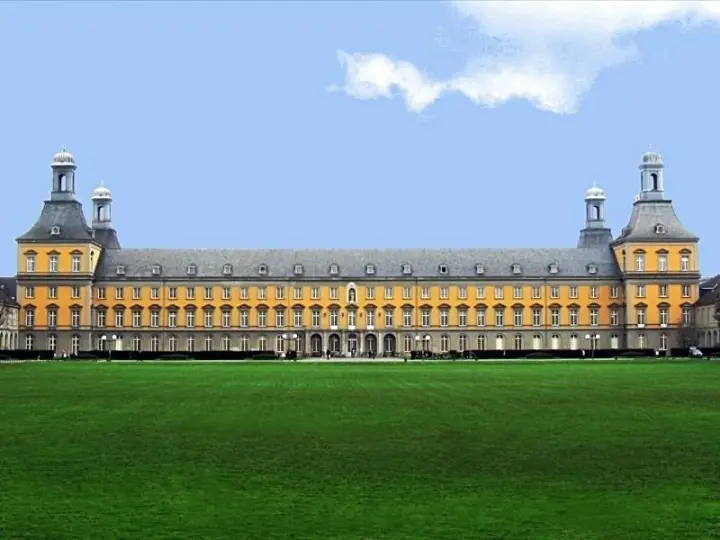
No tuition fee Tuition · sourced 2 years Duration View detailsCampus photos on this page: Daniel Tibi (Dti) | daniel-tibi.de (Public domain) — via Wikimedia Commons.
Geography of Environmental Risks and Human Security — FAQs
5 questions
Tuition is No tuition fee. Taken from the university's published fees page, not re-checked since — confirm it before you budget. We confirm the current fee and the scholarships you qualify for — free.
The main intake is Winter semester. Most universities admit on a rolling basis — we confirm the exact deadline for your profile, free.
Applicants must possess a first higher education qualification (Bachelor’s degree or equivalent) in Geography or a related/relevant academic field. Out of all achieved academic performances (Bachelor’s, Master’s, additional coursework, etc.) the majority of attended courses (as reflected in the transcripts) must be related to the three following areas: human geography and social sciences with a focus on spatial patterns, society, development; science methodology and empirical research methods; physical geography, geosciences and environmental sciences with a focus on earth system science. (Hint: The programme is not designed for graduates in engineering-related subjects.) A strong motivation to contribute to the area of human security and management of risks related to environmental change is a prerequisite to study in the Master’s programme. Applicants should be highly motivated to learn in a multicultural and interdisciplinary environment. A minimum of two years of related professional experience is additionally required for candidates from developing countries who wish to apply for a scholarship under the Development-Related Postgraduate Courses (EPOS) programme of the German Academic Exchange Service (DAAD). English: E.G. Cambridge English Qualifications: B2 First PTE Academic: 67 TOEFL iBT (since 2026): 4 telc English: telc English B2-C1 University TOEFL iBT (before 2026): 79 IELTS Academic: 6.5.
The programme runs about 24 months full-time.
Yes — shortlisting, SOP, LOR, Resume, application, scholarships and visa guidance are all free. We're paid by partner universities, not by you.
Apply to Geography of Environmental Risks and Human Security — free help
A counsellor calls you back during office hours — 9am to 8pm IST, Mon to Sat. We are open now.