
Ecumenical and Extended Ecumenical Studies
Rheinische Friedrich-Wilhelms-Universität Bonn · Bonn, Europe
Duration
12 mo
Tuition
No tuition fee
sourcedIntake
Winter semester
English
—
Winter semester intake. Most universities admit on a rolling basis — we confirm the exact application deadline for your profile, free.
Course details verified 10 Sep 2026 — intakes, entry requirements and course facts · official source
Fee sourced Taken from the university's published fees page, not re-checked since — confirm it before you budget. See the university fees page.
About this programme
The Master's programme in (Extended) Ecumenical Studies (MESt) covers a field of knowledge entailing the following concepts: the plurality of Christianities the plurality of European and non-European churches and theologies the plurality of religious differences in general and in their cultural contexts the main concepts of the types of unity of churches/Christianity to be desired the ideas regarding the peaceful and respectful interactions of religions Students will be introduced to key aspects of biblical and theological interpretation, as well as to poignant developments in church history, in order to equip them with the tools necessary to make advances in the interest of ecumenism. Lecturers will devote special attention to the insights and methodology of German theology, owing to the singular influence of German-language research on theological scholarship worldwide. The MESt is offered by the Faculty of Protestant Theology in cooperation with the Centre for Religion and Society ("Zentrum für Religion und Gesellschaft – ZERG") at the University of Bonn. Professors and lecturers from the Faculties and Departments of Protestant and Catholic Theology, Philosophy, the Seminary of Old Catholic Theology, and from the Greek Orthodox Metropolis of Germany contribute to the teaching of the programme. The Master's programme in (Extended) Ecumenical Studies comprises a combination of both compulsory and elective modules. It consists of lectures and seminars, an internship or ecumenical fieldwork, and a Master's thesis.
Intakes & deadlines
Winter semester
Dates confirmed for your profile · Open
Entry requirements
-
English
E.G. IELTS Academic: 5.5
-
Prerequisites
The “Ecumenical Studies” and “Extended Ecumenical Studies” consecutive Master’s programmes are aimed at applicants who have a first university degree in one of the subjects of Catholic Theology, Protestant Theology, Old Catholic Theology, Orthodox Theology, Religious Education, Religious Studies or a related field. For the Master’s programme in “Ecumenical Studies”, students need to have acquired at least 240 ECTS in their first academic degree; for the Master's programme in "Extended Ecumenical Studies", students need to have acquired at least 180 ECTS in their first academic degree. In-depth knowledge of a Christian denomination and its scientific reflection/interpretation, evidenced by study components amounting to at least 60 ECTS or comparable knowledge English language proficiency with a minimum level of B2 International applicants who are not considered equivalent to German citizens by or on the basis of international treaties and who do not have a German university entrance qualification must prove that they have passed the aptitude test for university studies (Annex 4, Examination Regulations).
-
Documents
SOP, LOR & Resume — generate them free in 2 minutes.
Fees & scholarships
No tuition fee tuition (sourced). We confirm the exact costs and the scholarships you qualify for at Rheinische Friedrich-Wilhelms-Universität Bonn — free, for your profile.
Other programmes at Rheinische Friedrich-Wilhelms-Universität Bonn
Agricultural and Food Economics (AFECO)
No tuition fee Tuition · sourced 2 years Duration View details RFW Rheinische Friedrich-Wilhelms-Universität BonnAgricultural Sciences and Resource Management in the Tropics and Subtropics (ARTS)
No tuition fee Tuition · sourced 2 years Duration View details RFW Rheinische Friedrich-Wilhelms-Universität BonnAnthropology of the Americas
No tuition fee Tuition · sourced 2 years Duration View details RFW Rheinische Friedrich-Wilhelms-Universität BonnApplied Linguistics
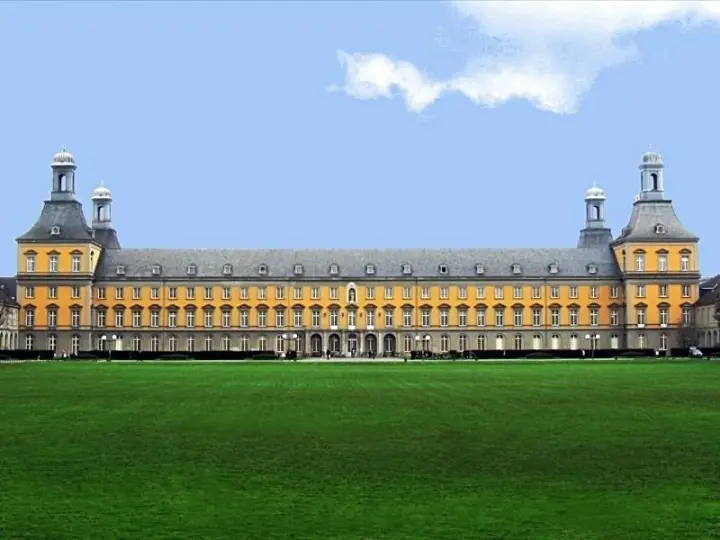
No tuition fee Tuition · sourced 2 years Duration View detailsCampus photos on this page: Daniel Tibi (Dti) | daniel-tibi.de (Public domain) — via Wikimedia Commons.
Ecumenical and Extended Ecumenical Studies — FAQs
5 questions
Tuition is No tuition fee. Taken from the university's published fees page, not re-checked since — confirm it before you budget. We confirm the current fee and the scholarships you qualify for — free.
The main intake is Winter semester. Most universities admit on a rolling basis — we confirm the exact deadline for your profile, free.
The “Ecumenical Studies” and “Extended Ecumenical Studies” consecutive Master’s programmes are aimed at applicants who have a first university degree in one of the subjects of Catholic Theology, Protestant Theology, Old Catholic Theology, Orthodox Theology, Religious Education, Religious Studies or a related field. For the Master’s programme in “Ecumenical Studies”, students need to have acquired at least 240 ECTS in their first academic degree; for the Master's programme in "Extended Ecumenical Studies", students need to have acquired at least 180 ECTS in their first academic degree. In-depth knowledge of a Christian denomination and its scientific reflection/interpretation, evidenced by study components amounting to at least 60 ECTS or comparable knowledge English language proficiency with a minimum level of B2 International applicants who are not considered equivalent to German citizens by or on the basis of international treaties and who do not have a German university entrance qualification must prove that they have passed the aptitude test for university studies (Annex 4, Examination Regulations). English: E.G. IELTS Academic: 5.5.
The programme runs about 12 months full-time.
Yes — shortlisting, SOP, LOR, Resume, application, scholarships and visa guidance are all free. We're paid by partner universities, not by you.
Apply to Ecumenical and Extended Ecumenical Studies — free help
A counsellor calls you back during office hours — 9am to 8pm IST, Mon to Sat. We are open now.