
Transition Management
Justus-Liebig-University Giessen · Giessen, Europe
Duration
24 mo
Tuition
No tuition fee
sourcedIntake
Winter semester
English
—
Winter semester intake. Most universities admit on a rolling basis — we confirm the exact application deadline for your profile, free.
Course details verified 09 Sep 2026 — intakes, entry requirements and course facts · official source
Fee sourced Taken from the university's published fees page, not re-checked since — confirm it before you budget. See the university fees page.
About this programme
Transition Management addresses the enormous economic and political transformations we observe in many transition and emerging economies worldwide. Their societies are moving from state management to a market economy, from autocracy to democracy, often at a rapid pace and at higher income and technology levels than in a typical developing country. The group of transition countries includes the successor states of the former Soviet Union and the countries of Eastern and South Eastern Europe as well as transition economies in Asia, such as China and Vietnam. The programme also provides relevant insight on emerging economies in Latin America and Africa. The English-language Master’s programme in "Transition Management" is an interdisciplinary study programme established by five faculties of Justus Liebig University Giessen, led by the Faculty of Agricultural Sciences, Nutritional Sciences and Environmental Management (Faculty 09). The Centre for International Development and Environmental Research (ZEU) at the University of Giessen contributes topical input and teaching modules specifically tailored to the needs of the programme. Justus Liebig University Giessen has been the first university in Germany to address the specific problems of transition countries in an international, interdisciplinary programme that combines theory and practice. The Master's programme Transition Management enables students to understand the complex processes and specific demands of transition and emerging economies, comprehend the different areas of transition, including economic, legal, political, social, agricultural and environmental aspects and their interrelationships, gain knowledge as well as practical skills in methods and strategies to enhance the transition process, train their soft skills by learning and working in international and interdisciplinary teams. Graduates of Transition Management qualify for senior positions in private and public sector management, public administration, academia, and international technical and economic cooperation. The study programme is organised in modules (courses). Each module comprises four semester hours per week and is completed with a final examination as given in the module description. The final grade of the study programme is calculated from the achieved module grades. The course consists of eight mandatory modules (core modules), six optional modules (profile modules), a work placement (or two more profile modules) and the Master's thesis. Having completed the core modules, the students are well equipped with a solid scientific education and ready to deepen their knowledge in specific research areas. By individually choosing their profile modules from a diverse range of study areas, students shape their individual competence profiles. Core Modules (mandatory): Empirical Research Methods Transition in Practice International Law in Transition Theory and Practice of Economic Development Transition and Integration Economics Power and Democracy Economics, Organisation and Management in Agriculture and Food Industries Business Administration and Sustainability Management Global Food Markets Profile Modules Students tailor their individual profile by selecting six modules and the work placement module or eight modules from the entire profile module catalogue of the faculty. For example, you can choose profile modules from the following subject areas: Agricultural, Food and Environmental Policy Organic Farming with Focus on Sustainable Soil Use Landscape, Water and Biogeochemical Cycles Food Sociology Communication and Engagement in Agricultural, Nutritional and Environmental Sciences Agricultural and Food Market Analysis Landscape Ecology and Landscape Planning Insect Biotechnology Biometry and Population Genetics Crop Biomass and Bioresources Political Science Industrial Organisation, Regulation and Antitrust International Economics Statistics and Exonometrics Recommended programme schedule: PDF Downloa
Intakes & deadlines
Winter semester
Dates confirmed for your profile · Open
Entry requirements
-
English
E.G. UNIcert® English: UNIcert® III telc English: telc English C1 TOEIC: 945 PTE Academic: 76 Cambridge English Qualifications: C1 Advanced IELTS Academic: 7 TOEFL iBT (before 2026): 95
-
Prerequisites
In general, students can apply for this Master's programme if they hold a Bachelor's degree with a duration of at least three years (180 credits) or a comparable degree. The Bachelor's degree must be completed in a closely related scientific field. For example: Agrarwissenschaften (Agricultural Science) Ernährungswissenschaften (Nutrition) Nachwachsende Rohstoffe und Bioressourcen (Crop Biomass and Bioresources) Ökotrophologie (Nutritional Sciences and Home Economics) Umwelt und globaler Wandel (Environment and Global Change) Umweltmanagement (Environmental Management) Wirtschaftswissenschaften (Economics) Rechtswissenschaften (Law) Sozial- und Politikwissenschaften (Political Science) Applications with a Bachelor’s degree in another scientific field or with a Bachelor’s degree from abroad will be examined individually as to whether the study requirements are fulfilled. For the Transition Management Master’s programme sufficient knowledge in the fields of economics, law and/or social sciences must be demonstrated, at least 60 CP in one of these fields. A specialist commission at JLU will then finally decide on the admission. Any information on the status of acceptance without having completed the application process is not possible. Detailed information about the application process is provided here: https://www.uni-giessen.de/en/faculties/f09/studies/general.
-
Documents
SOP, LOR & Resume — generate them free in 2 minutes.
Fees & scholarships
No tuition fee tuition (sourced). We confirm the exact costs and the scholarships you qualify for at Justus-Liebig-University Giessen — free, for your profile.
Other programmes at Justus-Liebig-University Giessen
Advanced Materials
No tuition fee Tuition · sourced 2 years Duration View details JLG Justus-Liebig-University GiessenAgrobioinformatics
No tuition fee Tuition · sourced 2 years Duration View details JLG Justus-Liebig-University GiessenAgrobiotechnology
No tuition fee Tuition · sourced 2 years Duration View details JLG Justus-Liebig-University GiessenEconomics of Global Risk (EGR)
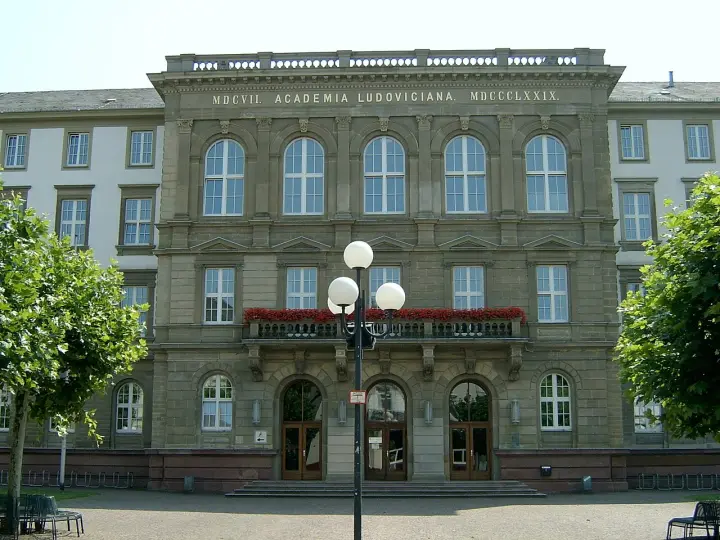
No tuition fee Tuition · sourced 2 years Duration View detailsCampus photos on this page: Ralf Lotys (Sicherlich) (CC BY 2.5) — via Wikimedia Commons.
Transition Management — FAQs
5 questions
Tuition is No tuition fee. Taken from the university's published fees page, not re-checked since — confirm it before you budget. We confirm the current fee and the scholarships you qualify for — free.
The main intake is Winter semester. Most universities admit on a rolling basis — we confirm the exact deadline for your profile, free.
In general, students can apply for this Master's programme if they hold a Bachelor's degree with a duration of at least three years (180 credits) or a comparable degree. The Bachelor's degree must be completed in a closely related scientific field. For example: Agrarwissenschaften (Agricultural Science) Ernährungswissenschaften (Nutrition) Nachwachsende Rohstoffe und Bioressourcen (Crop Biomass and Bioresources) Ökotrophologie (Nutritional Sciences and Home Economics) Umwelt und globaler Wandel (Environment and Global Change) Umweltmanagement (Environmental Management) Wirtschaftswissenschaften (Economics) Rechtswissenschaften (Law) Sozial- und Politikwissenschaften (Political Science) Applications with a Bachelor’s degree in another scientific field or with a Bachelor’s degree from abroad will be examined individually as to whether the study requirements are fulfilled. For the Transition Management Master’s programme sufficient knowledge in the fields of economics, law and/or social sciences must be demonstrated, at least 60 CP in one of these fields. A specialist commission at JLU will then finally decide on the admission. Any information on the status of acceptance without having completed the application process is not possible. Detailed information about the application process is provided here: https://www.uni-giessen.de/en/faculties/f09/studies/general. English: E.G. UNIcert® English: UNIcert® III telc English: telc English C1 TOEIC: 945 PTE Academic: 76 Cambridge English Qualifications: C1 Advanced IELTS Academic: 7 TOEFL iBT (before 2026): 95.
The programme runs about 24 months full-time.
Yes — shortlisting, SOP, LOR, Resume, application, scholarships and visa guidance are all free. We're paid by partner universities, not by you.
Apply to Transition Management — free help
A counsellor calls you back during office hours — 9am to 8pm IST, Mon to Sat. We are closed right now, so your request is first in line when we reopen.