
Sustainable Transition
Justus-Liebig-University Giessen · Giessen, Europe
Duration
24 mo
Tuition
No tuition fee
sourcedIntake
Winter semester
English
—
Winter semester intake. Most universities admit on a rolling basis — we confirm the exact application deadline for your profile, free.
Course details verified 09 Sep 2026 — intakes, entry requirements and course facts · official source
Fee sourced Taken from the university's published fees page, not re-checked since — confirm it before you budget. See the university fees page.
About this programme
Do you want to understand development and transition processes? Do you want to initiate social and technological change to make economic activities more sustainable? Are you interested in social, economic, political and natural sciences, especially in their interdependencies? Do you want to study from anywhere in the world at one of Germany's oldest universities? Then join us in working towards a more sustainable future, with a special emphasis on sustainable agricultural and food systems, and explore our international Master's degree programme in Sustainable Transition! The Master‘s degree programme in Sustainable Transition is the first fully online degree programme at Justus Liebig University Giessen, offered by the Faculty of Agricultural Sciences, Nutritional Sciences and Environmental Management (Faculty 09), a faculty with recognised expertise in the scientific analysis of agricultural and food systems. The standard duration of the programme is four semesters. All courses and examinations are offered online and can be taken remotely. If you wish to be physically present in Giessen during your studies, you can attend on-site courses during the summer vacations. As a student of our MSc programme, you will: analyse and understand the concept of sustainability and the trade-offs involved through the lens of different disciplines, comprehend the various areas of transition, including economic, legal, political, social, agricultural, and environmental aspects, and how they relate to sustainability, gain knowledge as well as analytical competences in methods and strategies to enhance transition processes towards a more sustainable economy, and be skilled in evaluating transition processes from a sustainability perspective and developing solutions for sustainable transitions applicable to the private and public sectors. The study programme is organised in modules (courses). Each module comprises four semester hours per week and is completed with a final examination as given in the module description. The final grade of the study programme is calculated from the achieved module grades. Our modules offer a wide spectrum of different teaching methods including synchronous online teaching such as lectures, seminars and group discussion as well as asynchronous elements such as videos and individual work tasks. The programme schedule consists of 11 mandatory modules (core modules), 5 optional modules (profile modules) and the Master's thesis. Having completed the core modules, the students will be well equipped with a solid scientific education and ready to deepen their knowledge in specific research areas. By individually choosing their profile modules from a diverse range of study areas, students shape their individual competence profiles. Core Modules (mandatory): Transdisciplinary Sustainability Research Theory and Practice of Economic Development Global Food Markets Sustainable Food Systems International Economics Climate Change and Economic Development Resource Economics and Sustainable Management Renewable Energy Transition Natural Resources and Ecosystem Services Food Politics Scientific Working and Writing Profile Modules Students tailor their individual profiles by selecting five modules from the profile module catalogue for digital degree programmes. Among the modules for this study programme are the following: Python for Environmental Scientists Concepts of Ecological Economics Land Governance for Sustainable Land Use in Africa Agriculture, Ecosystem Functioning and Climate Change The Economics of Nitrate Pollution Special Topics of the UN Sustainable Development Goals I Special Topics of the UN Sustainable Development Goals II Sustainable Plant Protection Land Use Change Projection with Q-GIS On-Site Courses during the Summer Vacation Several profile modules are offered as block modules with physical attendance in Giessen during the summer vacation. These modules are optional, and you can attend them if you wish to be
Intakes & deadlines
Winter semester
Dates confirmed for your profile · Open
Entry requirements
-
English
E.G. UNIcert® English: UNIcert® III telc English: telc English C1 TOEIC: 945 PTE Academic: 76 Cambridge English Qualifications: C1 Advanced IELTS Academic: 7 TOEFL iBT (before 2026): 95
-
Prerequisites
In general, students can apply for this Master's programme if they hold a Bachelor's degree with a duration of at least three years (180 credits) or a comparable degree and the grade "good" or "very good" (minimum grade of 2.6 in the German grading system) in a closely related scientific field. For example: Agrarwissenschaften (Agricultural Science) Ernährungswissenschaften (Nutrition) Nachwachsende Rohstoffe und Bioressourcen (Crop Biomass and Bioresources) Ökotrophologie (Nutritional Sciences and Home Economics) Umwelt und globaler Wandel (Environment and Global Change) Umweltmanagement (Environmental Management) Wirtschaftswissenschaften (Economics) Rechtswissenschaften (Law) Sozial- und Politikwissenschaften (Political Science) Applications with a Bachelor’s degree in another scientific field or with a Bachelor’s degree from abroad will be examined individually as to whether the study requirements are fulfilled. For the Sustainable Transition Master’s programme sufficient knowledge in the fields of economics, law and/or social sciences must be demonstrated, with at least 60 CP in one of these fields. The application must also include a letter of motivation with 500 words (+/- 10%) outlining the candidate’s personal motivation and subject-specific knowledge. The criteria for the evaluation of the motivation letter are given in the examination regulations. A specialist commission at JLU will then finally decide on the admission. Any information on the status of acceptance without having completed the application process is not possible. Detailed information about the application process is provided here: https://www.uni-giessen.de/en/faculties/f09/studies/general.
-
Documents
SOP, LOR & Resume — generate them free in 2 minutes.
Fees & scholarships
No tuition fee tuition (sourced). We confirm the exact costs and the scholarships you qualify for at Justus-Liebig-University Giessen — free, for your profile.
Other programmes at Justus-Liebig-University Giessen
Advanced Materials
No tuition fee Tuition · sourced 2 years Duration View details JLG Justus-Liebig-University GiessenAgrobioinformatics
No tuition fee Tuition · sourced 2 years Duration View details JLG Justus-Liebig-University GiessenAgrobiotechnology
No tuition fee Tuition · sourced 2 years Duration View details JLG Justus-Liebig-University GiessenEconomics of Global Risk (EGR)
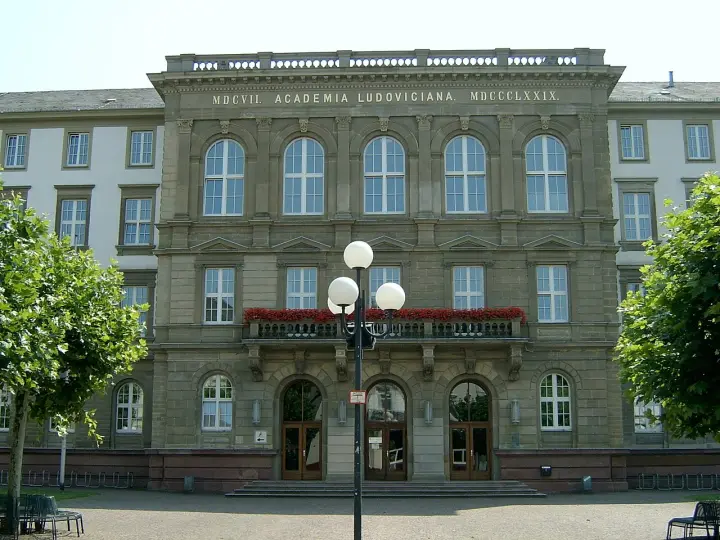
No tuition fee Tuition · sourced 2 years Duration View detailsCampus photos on this page: Ralf Lotys (Sicherlich) (CC BY 2.5) — via Wikimedia Commons.
Sustainable Transition — FAQs
5 questions
Tuition is No tuition fee. Taken from the university's published fees page, not re-checked since — confirm it before you budget. We confirm the current fee and the scholarships you qualify for — free.
The main intake is Winter semester. Most universities admit on a rolling basis — we confirm the exact deadline for your profile, free.
In general, students can apply for this Master's programme if they hold a Bachelor's degree with a duration of at least three years (180 credits) or a comparable degree and the grade "good" or "very good" (minimum grade of 2.6 in the German grading system) in a closely related scientific field. For example: Agrarwissenschaften (Agricultural Science) Ernährungswissenschaften (Nutrition) Nachwachsende Rohstoffe und Bioressourcen (Crop Biomass and Bioresources) Ökotrophologie (Nutritional Sciences and Home Economics) Umwelt und globaler Wandel (Environment and Global Change) Umweltmanagement (Environmental Management) Wirtschaftswissenschaften (Economics) Rechtswissenschaften (Law) Sozial- und Politikwissenschaften (Political Science) Applications with a Bachelor’s degree in another scientific field or with a Bachelor’s degree from abroad will be examined individually as to whether the study requirements are fulfilled. For the Sustainable Transition Master’s programme sufficient knowledge in the fields of economics, law and/or social sciences must be demonstrated, with at least 60 CP in one of these fields. The application must also include a letter of motivation with 500 words (+/- 10%) outlining the candidate’s personal motivation and subject-specific knowledge. The criteria for the evaluation of the motivation letter are given in the examination regulations. A specialist commission at JLU will then finally decide on the admission. Any information on the status of acceptance without having completed the application process is not possible. Detailed information about the application process is provided here: https://www.uni-giessen.de/en/faculties/f09/studies/general. English: E.G. UNIcert® English: UNIcert® III telc English: telc English C1 TOEIC: 945 PTE Academic: 76 Cambridge English Qualifications: C1 Advanced IELTS Academic: 7 TOEFL iBT (before 2026): 95.
The programme runs about 24 months full-time.
Yes — shortlisting, SOP, LOR, Resume, application, scholarships and visa guidance are all free. We're paid by partner universities, not by you.
Apply to Sustainable Transition — free help
A counsellor calls you back during office hours — 9am to 8pm IST, Mon to Sat. We are closed right now, so your request is first in line when we reopen.