
Molecular Plant Sciences
Julius-Maximilians-Universität Würzburg · Würzburg, Europe
Duration
24 mo
Tuition
No tuition fee
sourcedIntake
Winter semester
English
—
Winter semester intake. Most universities admit on a rolling basis — we confirm the exact application deadline for your profile, free.
Course details verified 09 Sep 2026 — intakes, entry requirements and course facts · official source
Fee sourced Taken from the university's published fees page, not re-checked since — confirm it before you budget. See the university fees page.
About this programme
Discover the fascinating world of plants — from molecular mechanisms to ecosystem dynamics! The Faculty of Biology at Würzburg University welcomes motivated and qualified graduates with a background in biology (BSc or equivalent) to join its two-year Master’s programme in Molecular Plant Sciences. This programme is designed for globally minded young scientists eager to deepen their understanding of how plants evolve, grow, adapt, and interact with their environment. As part of the Julius-von-Sachs-Institute within the JMU Biocenter, you will conduct research and learn from internationally recognised researchers in an environment that fosters curiosity, innovation, and collaboration. Through an inspiring combination of lectures, seminars, and extensive laboratory training – all taught in English – you will acquire advanced, research-oriented training in quantitative molecular plant sciences. You will actively engage in ongoing research projects, often with close one-to-one supervision, gaining real-world experience in cutting-edge scientific practice. The Master’s programme builds on the strengths of highly interactive plant departments at the JvSI and numerous research groups there working at the forefront of plant topics such as Ecophysiology, Physiology, Plant-Microbe Interactions, Signalling Networks, Adaptation and Evolution, Membrane Biology, Structural Biology, and Chemical Biology. This broad spectrum of expertise and the cooperative network within the entire Faculty of Biology ensure an academically rich and intellectually stimulating curriculum. Depending on your research interests and goals, you can tailor your Master’s programme by selecting two out of six main topics: Plant Membrane Biology Structural Biology Plant Adaptations to a Changing World Plant Biotic Interactions Plant Chemical Biology and Metabolism Plant Signalling Networks Graduates of this programme have not only expanded their scientific skill set but are also prepared to engage with pressing global challenges in plant science and sustainability. The website of the Master of Science programme in Molecular Plant Sciences is the best way to find out more about this programme: https://go.uniwue.de/molplant Contact: Prof Ulrich Hammes (ulrich.hammes@uni-wuerzburg.de), Prof Nathalie Lackus (nathalie.lackus@uni-wuerzburg.de), Prof Katharina Markmann (katharina.markmann@uni-wuerzburg.de) During the two-year Master’s programme in Molecular Plant Sciences, students are required to complete a total of 120 ECTS credits. Within the programme, two of the following six topics may be selected: Plant Membrane Biology, Structural Biology, Plant Adaptations to a Changing World, Plant Biotic Interactions, Plant Chemical Biology and Metabolism, and Plant Signalling Networks. In each selected topic, students complete graded modules summing up to 30 ECTS credits. These comprise two theoretical modules of 10 ECTS credits each and one advanced practical course (F1) worth 10 ECTS credits. Students select one focal topic, in which an additional 15 ECTS credits are obtained via an ungraded Advanced Practical Course 2 (F2). The F2 course lasts twelve weeks and precedes the Master’s thesis (6 months, 25 ECTS) with the final thesis colloquium (5 ECTS). Throughout their studies, students are actively engaged in ongoing research projects. They acquire the ability to plan and conduct independent theoretical and experimental work, to summarise and critically discuss their findings in the written thesis, and to present and defend their results in a final colloquium. The credit line “Additional Qualifications” enables students to broaden their scope beyond the focal topic areas by selecting additional modules amounting to 15 ECTS credits. These extra modules, assessed on a pass/fail basis, allow students to pursue individual academic interests. PDF Download
Intakes & deadlines
Winter semester
Dates confirmed for your profile · Open
Summer semester
Dates confirmed for your profile · Open
Entry requirements
-
English
E.G. Cambridge English Qualifications: C1 Advanced IELTS Academic: 6.5
-
Prerequisites
Bachelor of Science in Biology or a similar programme Biosciences: 75 ECTS credit equivalents Chemistry (including biochemistry and physical chemistry): 15 ECTS Physics, mathematics, biostatistics: 15 ECTS OR Biosciences: 60 ECTS Chemistry (including biochemistry and physical chemistry): 20 ECTS Physics, mathematics, biostatistics: 12 ECTS OR Biosciences: 70 ECTS Chemistry (including biochemistry and physical chemistry): 10 ECTS Physics, mathematics, biostatistics: 12 ECTS Proof of experimental laboratory experience, preferably by an experimental thesis comprising a minimum of 10 ECTS Please submit either your final degree or your transcript of records to certify the minimum requirement of 150 ECTS. You have to submit your completed transcript of records no later than 15 September or 15 March, respectively.
-
Documents
SOP, LOR & Resume — generate them free in 2 minutes.
Fees & scholarships
No tuition fee tuition (sourced). We confirm the exact costs and the scholarships you qualify for at Julius-Maximilians-Universität Würzburg — free, for your profile.
Other programmes at Julius-Maximilians-Universität Würzburg
Adult Education and Management in Lifelong Education
No tuition fee Tuition · sourced 2 years Duration View details JMW Julius-Maximilians-Universität WürzburgBehavioural Neurobiology / Neuroethology, Master of Science in Biology
No tuition fee Tuition · sourced 2 years Duration View details JMW Julius-Maximilians-Universität WürzburgCell and Infection Biology, Master of Science
No tuition fee Tuition · sourced 2 years Duration View details JMW Julius-Maximilians-Universität WürzburgChina Business and Economics, Master of Science
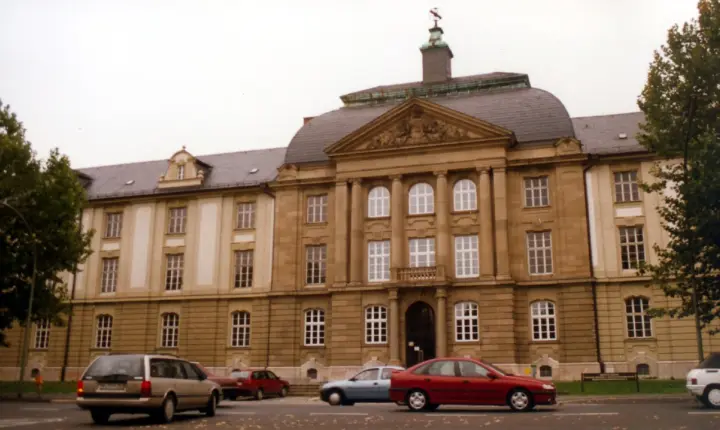
No tuition fee Tuition · sourced 2 years Duration View detailsCampus photos on this page: Robert Emmerich (CC BY-SA 3.0) — via Wikimedia Commons.
Molecular Plant Sciences — FAQs
5 questions
Tuition is No tuition fee. Taken from the university's published fees page, not re-checked since — confirm it before you budget. We confirm the current fee and the scholarships you qualify for — free.
The main intake is Winter semester. Most universities admit on a rolling basis — we confirm the exact deadline for your profile, free.
Bachelor of Science in Biology or a similar programme Biosciences: 75 ECTS credit equivalents Chemistry (including biochemistry and physical chemistry): 15 ECTS Physics, mathematics, biostatistics: 15 ECTS OR Biosciences: 60 ECTS Chemistry (including biochemistry and physical chemistry): 20 ECTS Physics, mathematics, biostatistics: 12 ECTS OR Biosciences: 70 ECTS Chemistry (including biochemistry and physical chemistry): 10 ECTS Physics, mathematics, biostatistics: 12 ECTS Proof of experimental laboratory experience, preferably by an experimental thesis comprising a minimum of 10 ECTS Please submit either your final degree or your transcript of records to certify the minimum requirement of 150 ECTS. You have to submit your completed transcript of records no later than 15 September or 15 March, respectively. English: E.G. Cambridge English Qualifications: C1 Advanced IELTS Academic: 6.5.
The programme runs about 24 months full-time.
Yes — shortlisting, SOP, LOR, Resume, application, scholarships and visa guidance are all free. We're paid by partner universities, not by you.
Apply to Molecular Plant Sciences — free help
A counsellor calls you back during office hours — 9am to 8pm IST, Mon to Sat. We are open now.