
Master of Peace Research and International Relations (MA)
Eberhard Karls Universität Tübingen · Tübingen, Europe
Duration
24 mo
Tuition
No tuition fee
sourcedIntake
Winter semester
English
—
Winter semester intake. Most universities admit on a rolling basis — we confirm the exact application deadline for your profile, free.
Course details verified 10 Sep 2026 — intakes, entry requirements and course facts · official source
Fee sourced Taken from the university's published fees page, not re-checked since — confirm it before you budget. See the university fees page.
About this programme
After successful completion of this Master's programme, students will be able to analyse complex problems of conflict, war and peace as well as of international relations broadly speaking. They will have acquired essential knowledge of essential theories and methods in this field, as well as the core empirical issues and their contexts. They will be able to apply this knowledge in the identification and analysis of novel problems of international politics, to independently develop theoretical ideas, and to critically evaluate policies addressing conflicts and other transnational issues. The curriculum builds on a strong theoretical-methodological orientation towards research-based learning, characterised by the application of theoretical knowledge to current case studies as well as the development of epistemological judgement and the practice of methodological skills. To this end, the four basic modules teach the theoretical and methodological foundations of the discipline. These modules are as follows: (1) Theoretical and Methodological Perspectives, (2) Normative and Critical Perspectives, (3) Global Governance and (4) Analysing Armed Conflicts. In the elective area, students are free to pursue their own areas of specialisation and study interests. There are numerous opportunities for in-depth study, ranging from courses on international law to peace education. In addition, four regularly offered excursions in particular provide the option of underpinning theoretical knowledge with practical experience. For this purpose, students can take part in (1) National Model United Nations, (2) Peace Boat, (3) European Security Institutions and (4) Mediation and Negotiation. (The excursions must be [co-]financed by the students.) The module handbook can be accessed on the website of the programme. It contains further information on the compulsory modules, as well as an overview and details of the elective modules offered. The standard duration of the programme is four semesters or two years, with a total of 120 ECTS. Of these, 81 ECTS are acquired in the compulsory modules and the final exam module, and 39 ECTS in elective modules. It is recommended to attend the compulsory courses during the first and second semester, as they cover thematic and methodological basics. First elective courses can be added in the second semester and completed in the third semester. The third semester is also well suited for a semester abroad. The fourth semester is reserved for the compulsory final module, which includes the Master's thesis, a colloquium on it and the final oral examination. This study plan is recommended in order to be able to complete the programme within the standard period of study, but it is not obligatory, so that courses can be taken in other semesters according to one's own interests and needs. Most courses are offered in the form of seminars, only three of the basic modules include lectures. Seminars and study trips provide ample opportunity to develop a student’s own interests and skills in relation to specific conflicts, policy areas, theories and/or methods. Students also acquire a range of transferable skills through diverse teaching and assessment methods, including but not limited to the following: role play, simulations, scenario writing, and study trips in addition to more conventional methods such as essay writing, class presentations and discussions. These methods allow students to further develop their skills in presenting academic debates and enhancing professional attitudes. In addition, students acquire skills in teamwork, intercultural communication and the (self-)organisation of groups. PDF Download
Intakes & deadlines
Winter semester
Dates confirmed for your profile · Open
Entry requirements
-
English
E.G. TOEFL iBT (before 2026): 80 Reading: 20 Listening: 20 Speaking: 20 Writing: 20
-
Prerequisites
Admission to the Master's programme in Peace Research and International Relations is open to students with a higher education entrance qualification who have passed the BA examination or an equivalent examination in Political Science, International Relations or a related subject with a grade of at least "good" (2.5, upper second class or equivalent). Final grades of international applicants will be converted into the German grading system. Please note that the recognition of international degrees in Germany is handled by our central Student Affairs Office (Advising and Admission of International Students), which can provide information about the recognition of specific degrees as well as grade conversion. It is recommended that applicants have achieved at least 60 ECTS in Political Science during their Bachelor’s studies. If your Bachelor’s degree is not in Political and/or Social Sciences and/or International Relations, your transcript of records should indicate the required amount of ECTS. Successful applications are selected on the basis of their BA degree grade, internships or other professional activities in a field related to peace research or international relations, as well as awards for academic or any other subject-related achievements.
-
Documents
SOP, LOR & Resume — generate them free in 2 minutes.
Fees & scholarships
No tuition fee tuition (sourced). We confirm the exact costs and the scholarships you qualify for at Eberhard Karls Universität Tübingen — free, for your profile.
Other programmes at Eberhard Karls Universität Tübingen
Infection Biology and Control
No tuition fee Tuition · sourced 2 years Duration View details EKT Eberhard Karls Universität TübingenIntercultural Franco-German Studies — Interkulturelle Deutsch-Französische Studien – EIFA (MA)
No tuition fee Tuition · sourced 2 years Duration View details EKT Eberhard Karls Universität TübingenRomance Literary Studies (Romanische Literaturwissenschaft)
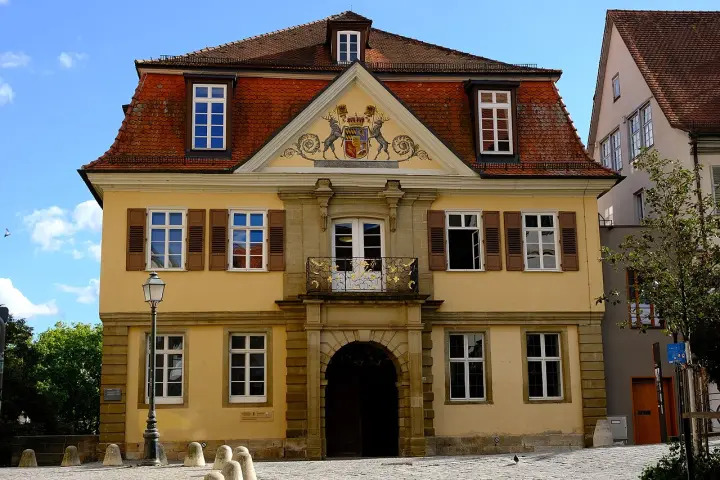
No tuition fee Tuition · sourced 2 years Duration View detailsCampus photos on this page: Dktue (CC0) — via Wikimedia Commons.
Master of Peace Research and International Relations (MA) — FAQs
5 questions
Tuition is No tuition fee. Taken from the university's published fees page, not re-checked since — confirm it before you budget. We confirm the current fee and the scholarships you qualify for — free.
The main intake is Winter semester. Most universities admit on a rolling basis — we confirm the exact deadline for your profile, free.
Admission to the Master's programme in Peace Research and International Relations is open to students with a higher education entrance qualification who have passed the BA examination or an equivalent examination in Political Science, International Relations or a related subject with a grade of at least "good" (2.5, upper second class or equivalent). Final grades of international applicants will be converted into the German grading system. Please note that the recognition of international degrees in Germany is handled by our central Student Affairs Office (Advising and Admission of International Students), which can provide information about the recognition of specific degrees as well as grade conversion. It is recommended that applicants have achieved at least 60 ECTS in Political Science during their Bachelor’s studies. If your Bachelor’s degree is not in Political and/or Social Sciences and/or International Relations, your transcript of records should indicate the required amount of ECTS. Successful applications are selected on the basis of their BA degree grade, internships or other professional activities in a field related to peace research or international relations, as well as awards for academic or any other subject-related achievements. English: E.G. TOEFL iBT (before 2026): 80 Reading: 20 Listening: 20 Speaking: 20 Writing: 20.
The programme runs about 24 months full-time.
Yes — shortlisting, SOP, LOR, Resume, application, scholarships and visa guidance are all free. We're paid by partner universities, not by you.
Apply to Master of Peace Research and International Relations (MA) — free help
A counsellor calls you back during office hours — 9am to 8pm IST, Mon to Sat. We are open now.