
Master of Science in Economics
Christian-Albrechts-University zu Kiel · Kiel, Europe
Duration
24 mo
Tuition
No tuition fee
sourcedIntake
Winter semester
English
—
Winter semester intake. Most universities admit on a rolling basis — we confirm the exact application deadline for your profile, free.
Course details verified 10 Sep 2026 — intakes, entry requirements and course facts · official source
Fee sourced Taken from the university's published fees page, not re-checked since — confirm it before you budget. See the university fees page.
About this programme
The Master's programme in Economics at Kiel University imparts methodical skills related to various fields of economics and a broad, sound and critical knowledge of microeconomics, macroeconomics and econometrics, plus a command of various sectors of applied economics. The main objective of the Master's course is to enable graduates to discuss and interpret the essential concepts and methods used in the economic sciences, evaluate the main research methods employed in the field, draw upon the knowledge they have acquired to deal independently with complex situations, and develop and implement ideas of their own. Graduates will have a sound command of advanced methods in both model-theoretical and empirical/quantitative analysis and will be able to analyse economic problems, assess economic arguments and conduct empirical investigations displaying a relatively high degree of complexity. In addition, they will possess a critical understanding of the economic concepts and methods they have learned. The programme is organised in six parts: Compulsory Section in Economics (30 ECTS CP) Compulsory Section in Econometrics (6 ECTS CP) Compulsory Elective Section in Econometrics (6 ECTS CP) Compulsory Elective Section in Economics (36 - 60 ECTS CP) Compulsory Elective Section Supplementary Subjects (0 - 12 ECTS CP) Master's thesis (18 or 30 ECTS CP) During the first semester, the core courses in Economics and Econometrics, Advanced Microeconomics, Economics Dynamics and Econometric Methods are obligatory. The second and third semesters focus on the specialisation courses in Economics. Students choose specialisation modules from various fields of Economics: Applied Microeconomics Macroeconomics & Growth Financial Economics International Economics Public Economics Environmental & Resource Economics Applied Empirical Methods Furthermore, students can choose a supplementary subject from another discipline. This supplementary subject can be Business, Computational Sciences, Business Information Systems, Social Sciences, Political Sciences, Agricultural Economics, German as a Foreign Language, or Mathematics. (At the moment, English as teaching language can only be guaranteed if additional Economic modules are chosen.) The fourth semester is mainly reserved for completion of the Master's thesis. There are two versions for the completion of the Master's thesis: 30 ECTS: six months processing time, or 18 ECTS: 15 weeks processing time; two additional modules of the Compulsory Elective Section Economics need to be completed. Documents: Examination regulations (Fachprüfungsordnung, English) (pdf) Fachprüfungsordnung (German) (pdf) Modules and course descriptions (Module Handbook) (pdf) A wide range of specialised courses offered on a regular basis gives students an insight into many areas of economic research arising through cooperation with the Kiel Institute for the World Economy. Study plan:
Intakes & deadlines
Winter semester
Dates confirmed for your profile · Open
Summer semester
Dates confirmed for your profile · Open
Entry requirements
-
English
E.G. UNIcert® English: UNIcert® III TOEIC: 945 Reading: 455 Listening: 490 Speaking: 180 Writing: 180 TOEFL iBT (before 2026): 79 Reading: 24 Listening: 22 Speaking: 25 Writing: 24 IELTS Academic: 6.5
-
Prerequisites
Applicants are expected to hold a Bachelor's degree or a comparable university degree (minimum grade 2.5) with a regular period of university education of three years or more and 180 ECTS credit points or more. In the 180 ECTS credit points, the following needs to be contained: 35 credit points from courses on principles of economics (i.e., courses on microeconomic theory and courses on macroeconomic theory) with no overlapping in substance and from courses on quantitative methods with no overlapping in substance of which at least: 15 credit points from courses on quantitative methods (mathematics, statistics, econometrics) For an evaluation of the suitability of the course content, you have to submit an official module manual (containing the relevant syllabi) - either as a searchable pdf file or as a link to the university's website. In case no official module manual is provided by the university, module descriptions (syllabi) approved by the university are accepted. The module manual needs to be provided either in German or English. Admission requirements can be found here. Recommended Literature can be found here (pdf).
-
Documents
SOP, LOR & Resume — generate them free in 2 minutes.
Fees & scholarships
No tuition fee tuition (sourced). We confirm the exact costs and the scholarships you qualify for at Christian-Albrechts-University zu Kiel — free, for your profile.
Other programmes at Christian-Albrechts-University zu Kiel
Battery Technologies
No tuition fee Tuition · sourced 18 months Duration View details CAZ Christian-Albrechts-University zu KielComputer Science
No tuition fee Tuition · sourced 18 months Duration View details CAZ Christian-Albrechts-University zu KielDairy Science
No tuition fee Tuition · sourced 2 years Duration View details CAZ Christian-Albrechts-University zu KielData Science
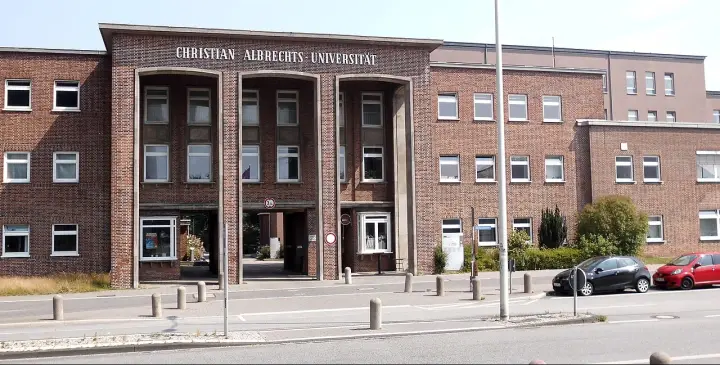
No tuition fee Tuition · sourced 18 months Duration View detailsCampus photos on this page: Siegbert Brey (CC BY-SA 4.0) — via Wikimedia Commons.
Master of Science in Economics — FAQs
5 questions
Tuition is No tuition fee. Taken from the university's published fees page, not re-checked since — confirm it before you budget. We confirm the current fee and the scholarships you qualify for — free.
The main intake is Winter semester. Most universities admit on a rolling basis — we confirm the exact deadline for your profile, free.
Applicants are expected to hold a Bachelor's degree or a comparable university degree (minimum grade 2.5) with a regular period of university education of three years or more and 180 ECTS credit points or more. In the 180 ECTS credit points, the following needs to be contained: 35 credit points from courses on principles of economics (i.e., courses on microeconomic theory and courses on macroeconomic theory) with no overlapping in substance and from courses on quantitative methods with no overlapping in substance of which at least: 15 credit points from courses on quantitative methods (mathematics, statistics, econometrics) For an evaluation of the suitability of the course content, you have to submit an official module manual (containing the relevant syllabi) - either as a searchable pdf file or as a link to the university's website. In case no official module manual is provided by the university, module descriptions (syllabi) approved by the university are accepted. The module manual needs to be provided either in German or English. Admission requirements can be found here. Recommended Literature can be found here (pdf). English: E.G. UNIcert® English: UNIcert® III TOEIC: 945 Reading: 455 Listening: 490 Speaking: 180 Writing: 180 TOEFL iBT (before 2026): 79 Reading: 24 Listening: 22 Speaking: 25 Writing: 24 IELTS Academic: 6.5.
The programme runs about 24 months full-time.
Yes — shortlisting, SOP, LOR, Resume, application, scholarships and visa guidance are all free. We're paid by partner universities, not by you.
Apply to Master of Science in Economics — free help
A counsellor calls you back during office hours — 9am to 8pm IST, Mon to Sat. We are open now.