
Study in Netherlands
English-taught degrees and a one-year orientation permit after you graduate
- Tuition (PG)
- €12,000–€30,000/yr (non-EU master's; EU statutory fee is €2,694 in 2026–27)
- Living cost / month
- €1,000–€1,500 (average student spending, Nuffic)
- Post-study work
- Orientation year: 1 year, not extendable. Work freely, no employer permit needed. Apply within…
- Main intake
- Application deadlines: 15 Jan (numerus fixus), 1 May (other programmes). Start months are set…
Why study in Netherlands
The Netherlands teaches a large share of its degrees in English, which is why it draws Indian students who want a European degree without learning the local language first. Nuffic, the Dutch sector body, puts non-EU tuition at roughly €9,000–€20,000 a year for a bachelor's and €12,000–€30,000 for a master's — well under UK or US levels, and far above the €2,694 statutory fee that EU students pay in 2026–27. The gap between those two numbers is the single most common surprise for applicants.
What makes the country unusual is what happens after you graduate. A graduate of an accredited Dutch institution can apply for a one-year orientation permit, and the holder may work for any employer without that employer needing a work permit. You can also work as an independent entrepreneur on it. It cannot be extended, and only one is granted.
The part people get wrong is the timing. The orientation permit is not a short dash after the ceremony: the IND measures eligibility as a qualification completed in the three years before the date of application. A graduate who assumed the window had closed usually still has it open.
During study the rules are tighter than most expect, and they are a choice rather than a total — see the work row below.
One-year orientation permit
Work freely for a year after graduating — no work permit needed by your employer.
Three years to apply
The orientation permit is open for three years after you finish, not a few weeks.
Taught in English
A large English-taught catalogue at both bachelor's and master's level.
Key facts for Indian students
Postgrad tuition / yr
€12,000–€30,000/yr
non-EU master's; EU statutory fee is €2,694 in 2026–27
Undergrad tuition / yr
€9,000–€20,000/yr
non-EU bachelor's
Living cost / month
€1,000–€1,500
average student spending, Nuffic
Work while studying
16 hrs/week OR full-time in June–August — one or the other, not both
Your employer needs a TWV work permit
Post-study work
Orientation year: 1 year, not extendable
Work freely, no employer permit needed. Apply within 3 years of finishing
Main intakes
Application deadlines: 15 Jan (numerus fixus), 1 May (other programmes)
Start months are set per programme
English (typical)
Set per programme by the institution
IELTS, TOEFL iBT, Cambridge, PTE and LanguageCert are generally accepted
Indicative ranges from official sources — your counsellor confirms exact costs, scholarships and entry requirements for your profile, free.
Scholarships for Netherlands
1 verified award on Vibedu, each with its official link.
NL Scholarship (formerly Holland Scholarship)
Government (Destination) Partial award Dates vary €5,000, paid in the first year of study only — explicitly not a full tuition scholarship Award Window not confirmed — check the official page Verified03 Oct 2026 Official source Details →13 universities in Netherlands, grouped by how competitive admission is. A balanced shortlist mixes all three — your counsellor builds yours with you, free.
Ambitious universities in Netherlands
The most selective. Worth a place on your list when your grades and scores are strong — alongside safer choices, not instead of them.

Delft University of Technology
The Netherlands' oldest and largest public technical university, in the city of Delft; EUR17,310–EUR22,290/yrTuition · indicative View university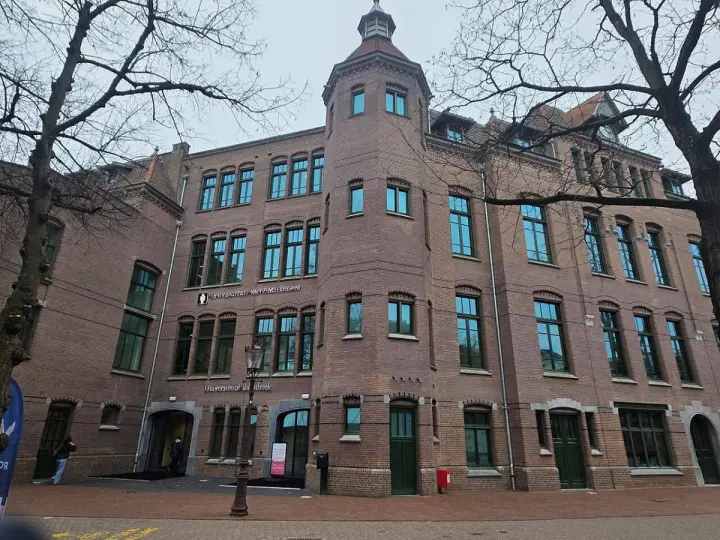

University of Amsterdam
A large public research university in Amsterdam, the Netherlands, strong in social sciences, humanities, economics and data/AI, with many… EUR12,075–EUR37,500/yrTuition · indicative View university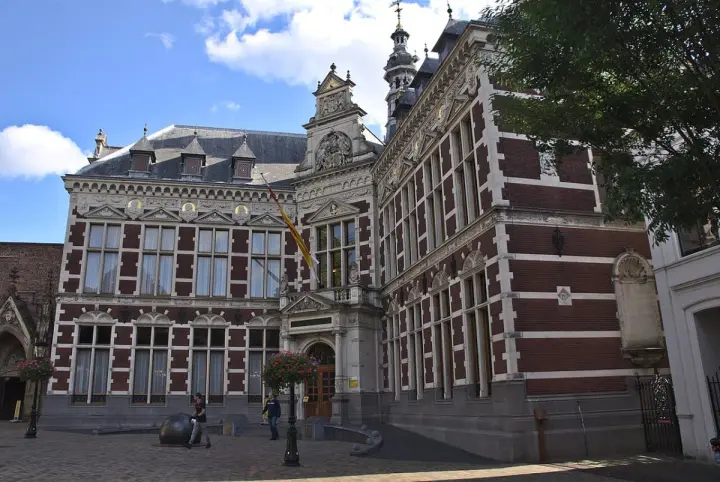
Utrecht University
Founded in 1636, Utrecht University is a comprehensive public research university in the central Netherlands, teaching around 40,000 students and… EUR21,342–EUR25,306/yrTuition · indicative View university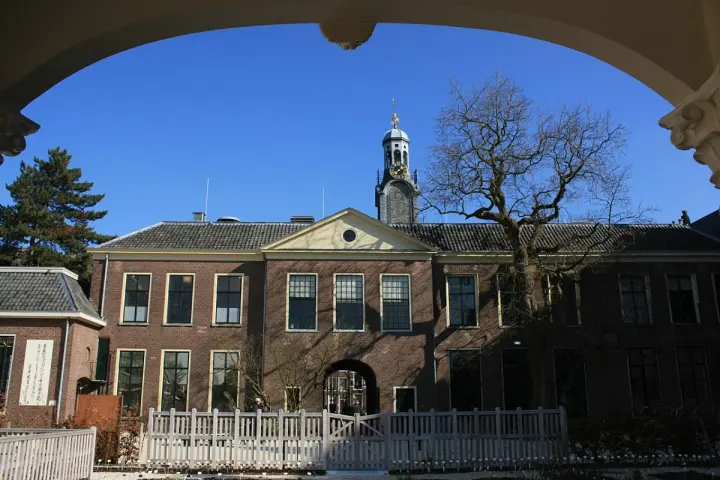
Leiden University
Established in 1575, Leiden University is the oldest university in the Netherlands, with faculties across Leiden and The Hague and a broad portfolio… EUR12,800–EUR33,100/yrTuition · indicative View universityModerate universities in Netherlands
Well-regarded universities where a solid academic record gives you a realistic chance of an offer.


Erasmus University Rotterdam
Erasmus University Rotterdam is a Public university in Netherlands, ranked #148 in the QS World University Rankings 2027. EUR13,500–EUR25,800/yrTuition · indicative View university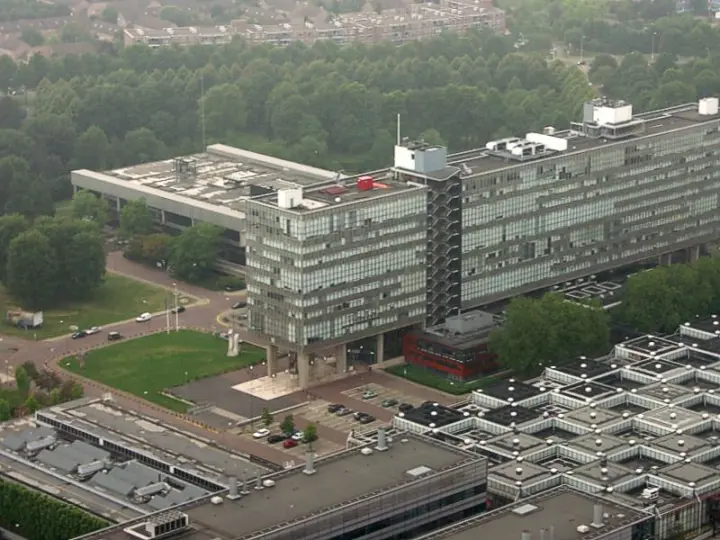
Eindhoven University of Technology
Eindhoven University of Technology is a Public university in Netherlands, ranked #152 in the QS World University Rankings 2027. EUR18,600–EUR21,700/yrTuition · indicative View university WR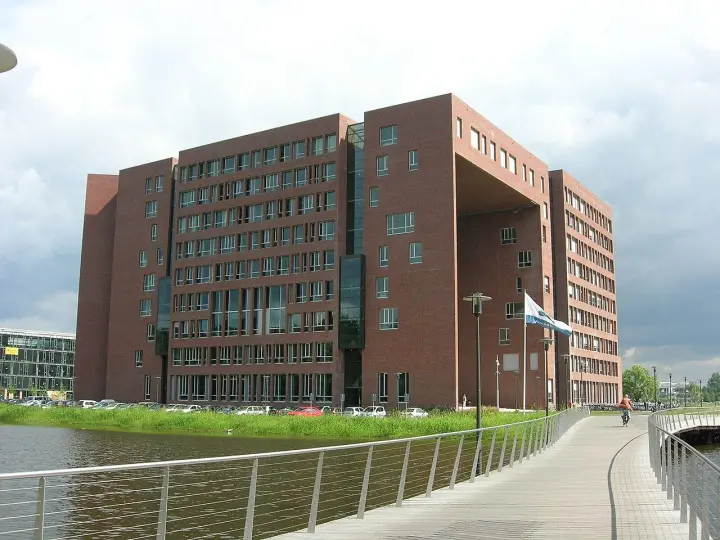
Wageningen University & Research
Wageningen University & Research is a Public university in Netherlands, ranked #154 in the QS World University Rankings 2027. EUR18,300–EUR21,900/yrTuition · indicative View university GR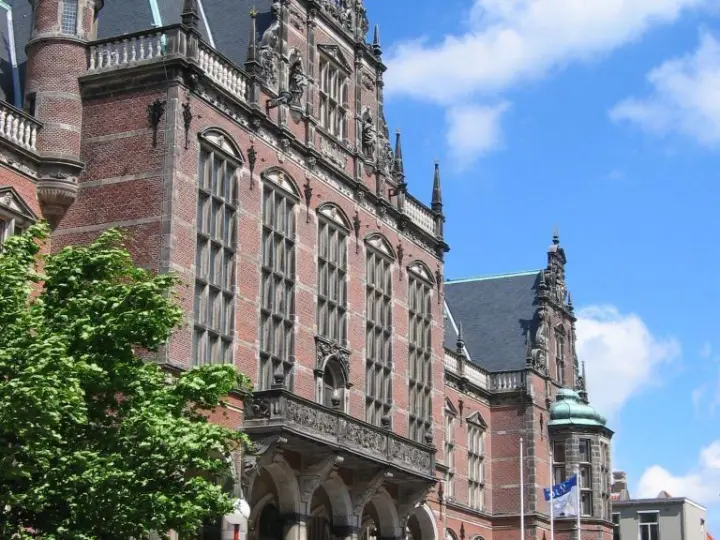
University of Groningen
University of Groningen is a Public university in Netherlands, ranked #157 in the QS World University Rankings 2027. EUR14,000–EUR24,900/yrTuition · indicative View university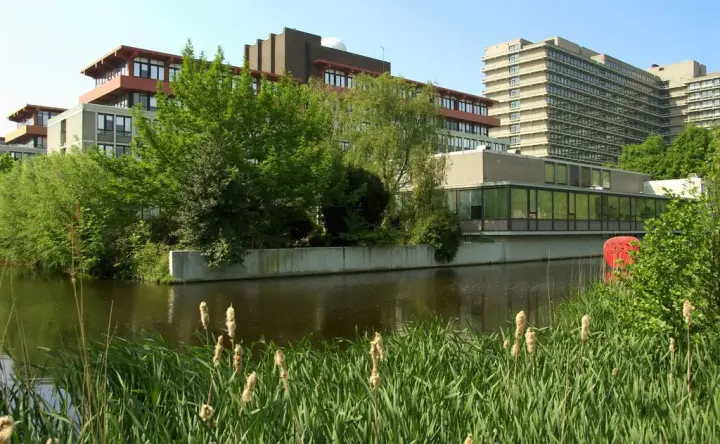
Vrije Universiteit Amsterdam
Vrije Universiteit Amsterdam is a Public university in Netherlands, ranked #185 in the QS World University Rankings 2027. EUR14,310–EUR34,440/yrTuition · indicative View university

University of Twente
University of Twente is a Public university in Netherlands, ranked #223 in the QS World University Rankings 2027. EUR12,300–EUR21,700/yrTuition · indicative View university

Maastricht University
Maastricht University is a Public university in Netherlands, ranked #254 in the QS World University Rankings 2027. EUR13,200–EUR25,100/yrTuition · indicative View university
Radboud University
Radboud University is a Public university in Netherlands, ranked #283 in the QS World University Rankings 2027. EUR13,793–EUR25,429/yrTuition · indicative View universitySafe / Budget universities in Netherlands
Broader entry requirements — the dependable base of a balanced shortlist.
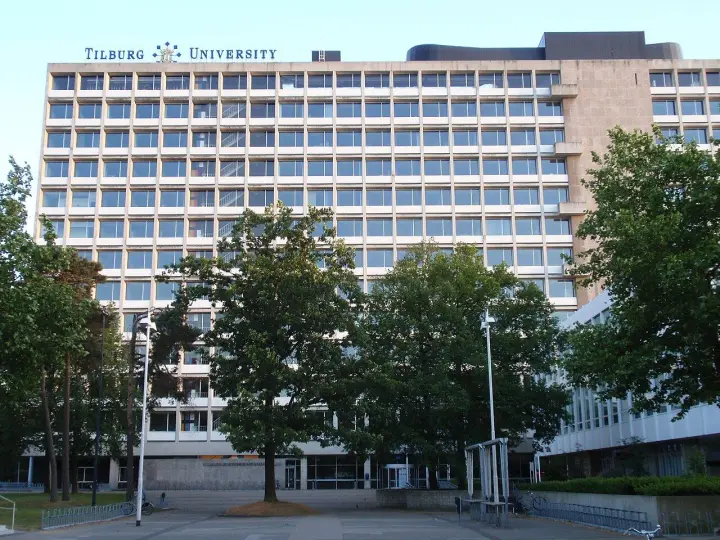
Campus photos on this page: Choinowski (CC BY-SA 4.0) · Aherver (CC BY 4.0) · Robert von Oliva (naruciakk) (CC0) · CHEN Dadi (CC BY-SA 3.0 nl) · Erasmus University Rotterdam (CC BY-SA 3.0) · Arno van den Tillaart from Eindhoven, Netherlands (CC BY 2.0) · DirkV (CC BY-SA 3.0) · Fruggo (CC BY 1.0) · Scientist-100 at English Wikipedia (Public domain) · Handige Harrie (Public domain) · Kleon3 (CC BY-SA 3.0) · Bj.schoenmakers (CC0) · Ron Maijen (CC BY-SA 3.0) — via Wikimedia Commons.
Intakes
Set per programme
Tuition & scholarships
Confirmed for your profile — free
Studying in Netherlands — FAQs
6 questions
Nuffic puts non-EU tuition at roughly €9,000–€20,000 a year for a bachelor's and €12,000–€30,000 for a master's. Those are the institutional fees charged to non-EU students; the €2,694 statutory fee you may see quoted for 2026–27 applies to EU, EEA, Swiss and Surinamese students, not to Indian students. Some institutions also charge an application or handling fee of €75–€100. Budget €1,000–€1,500 a month on top for living costs.
The IND gives you a choice, and it is a choice rather than a total: either up to 16 hours a week, or full-time during June, July and August. You cannot do both. Your employer must hold a work permit (TWV) for you — the right does not travel with your own student permit, which is what most students assume. Self-employment is exempt from the TWV and from the hours limit, and a traineeship that forms part of your study programme needs no TWV either.
It is a one-year residence permit that lets you look for work, and the holder may work for any employer without that employer needing a permit, or work for themselves. It cannot be extended. The window is longer than most people think: the IND measures eligibility as a qualification completed in the three years before the date you apply, not as a short period after graduation.
Only at master's level or above. The route for graduates of non-Dutch institutions covers a master's, doctoral or post-master's degree from an institution in the top 200 of at least two of the three main rankings on your graduation date, with IELTS 6.0 or a programme taught in English or Dutch, and a Nuffic evaluation of the diploma. A foreign bachelor's degree is not on the list.
There is no national band. Nuffic's own guidance is that admission requirements are set by each institution and can vary by programme, so the only reliable answer is the one on your course page. IELTS, TOEFL iBT, TOEIC, Cambridge English, LanguageCert and Pearson are generally accepted. The IELTS 6.0 you may see quoted is the IND's floor for one orientation-year route, not an admission requirement.
The IND lists the application at €254, and it is paid through your educational institution rather than by you directly. The orientation year permit costs the same. Neither figure is the tuition deposit or the institution's own application fee.
Get your free Netherlands study plan
A counsellor calls you back during office hours — 9am to 8pm IST, Mon to Sat. We are open now.
This sends an enquiry to Vibedu Study Abroad for free counselling. It is not an application to a university, a lender or a government.