
Study in the Netherlands
Thirteen world-ranked universities teaching in English, a labour market with 376,000 unfilled jobs, and a one-year permit after you graduate that lets you work for any employer without them needing a work permit.
- 376,000unfilled jobs, 2026 Q3
- 13ranked universities
- 1 yearorientation permit
- 3 yearsto claim it after you finish
Job figures are the Dutch national statistics office's own, for 2026 Q3, read on 5 Nov 2026. Every other number on this page names its source where it appears.
376,000 unfilled jobs, and which sectors hold them
Read this before the table. These are vacancies in the Dutch economy as a whole — posts employers had not filled at the end of 2026 Q3. The overwhelming majority will be filled by people already living and working in the Netherlands, and most of them require Dutch. A vacancy count tells you a sector is short of people. It does not tell you a graduate will be hired, and nobody can promise you a job in another country. Every row below says what language that sector actually hires in, because that is the part which decides whether the number means anything to you.
Wholesale and retail trade
73,500 unfilled posts
- What you would study
- Business, supply chain, marketing
- Language in practice
- Mostly Dutch-speaking roles; international trade and buying functions less so
Health and social work
69,700 unfilled posts
- What you would study
- Public health, health sciences, biomedical
- Language in practice
- Dutch required for registered clinical practice; research and policy roles less so
Specialised business services
33,400 unfilled posts
- What you would study
- Consulting, law, accountancy, engineering consultancy
- Language in practice
- The most English-friendly of the large sectors
Manufacturing
30,700 unfilled posts
- What you would study
- Mechanical, electrical, chemical and industrial engineering
- Language in practice
- English common in R&D and multinationals; Dutch on the production side
Construction
28,200 unfilled posts
- What you would study
- Civil engineering, architecture, construction management
- Language in practice
- Largely Dutch on site; design and BIM roles more international
Business support and staffing
27,300 unfilled posts
- What you would study
- HR, operations, business administration
- Language in practice
- Mixed; Dutch usually expected
Accommodation and food service
25,200 unfilled posts
- What you would study
- Hospitality and tourism management
- Language in practice
- English widely workable in Amsterdam and the tourist cities
Public administration
22,800 unfilled posts
- What you would study
- Public policy, international relations, law
- Language in practice
- Dutch effectively required, and many posts need Dutch or EU nationality
Information and communication
15,400 unfilled posts
- What you would study
- Computer science, data science, AI, cyber security
- Language in practice
- The most English-friendly sector in the country for graduates
Transportation and storage
15,100 unfilled posts
- What you would study
- Logistics, supply chain, maritime and port management
- Language in practice
- Dutch usual in operations; Rotterdam port and freight roles more international
Education
9,400 unfilled posts
- What you would study
- Education, research, subject masters
- Language in practice
- Dutch for school teaching; university research in English
Financial institutions
6,600 unfilled posts
- What you would study
- Finance, economics, econometrics, fintech
- Language in practice
- English common in Amsterdam banking and fintech
The twelve sectors above are every one with more than 5,000 unfilled posts, and together they hold 357,300 of the 376,000 national total. Only whole sectors are listed, never the sub-sectors inside them, because counting both would count the same vacancy twice. Source: CBS StatLine, table 80472eng, 2026 Q3, read 5 Nov 2026.
The direction matters more than the headline
A single quarter is a snapshot. Here is the same measure over the last five:
- 384,3002025 Q3
- 368,6002025 Q4
- 380,1002026 Q1
- 387,3002026 Q2
- 376,0002026 Q3
Vacancies have moved within a band rather than collapsing or booming — down from a 2022 peak, and broadly flat across the last two years. Treat anyone quoting you a single dramatic number, in either direction, as quoting a quarter that suited them.
All 13 Dutch universities in our catalogue
Every one is ranked in the QS World University Rankings 2027 and every one teaches at master's level in English. Tuition shown is the band an Indian student pays, not the EU rate — see the money section below for why those two numbers differ so much.
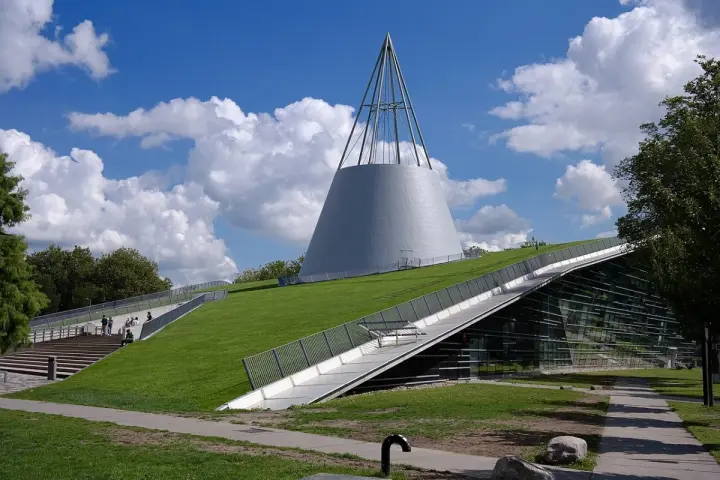 QS #48
Delft University of Technology
Delft
EUR 17,310–22,290
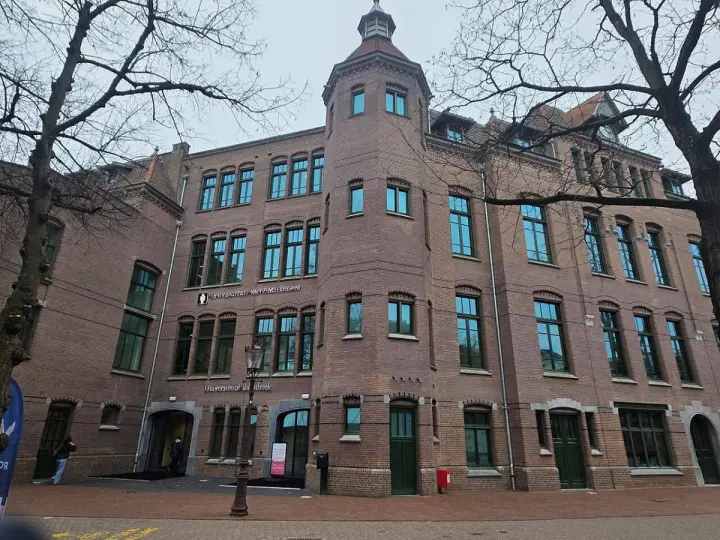 QS #60
University of Amsterdam
Amsterdam
EUR 12,075–37,500
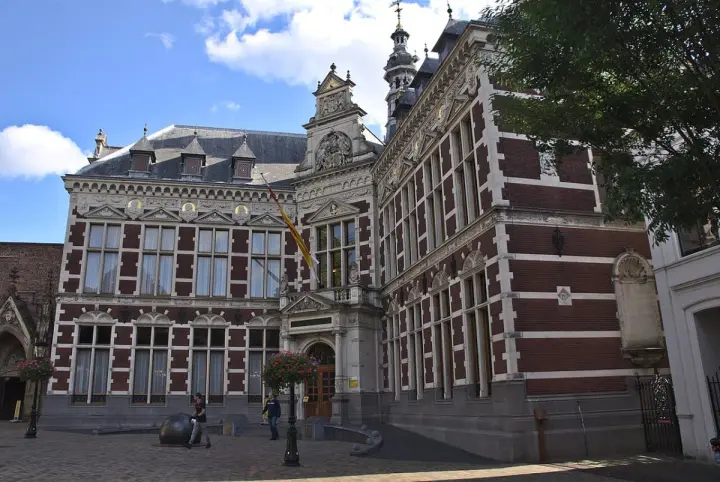 QS #113
Utrecht University
Utrecht
EUR 21,342–25,306
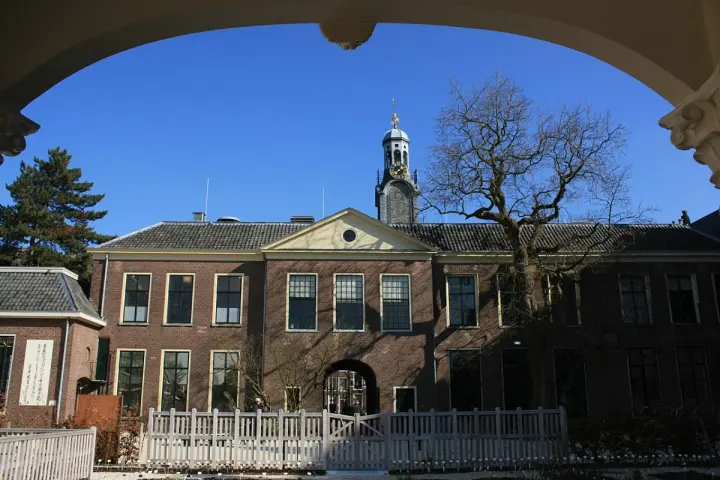 QS #119
Leiden University
Leiden
EUR 12,800–33,100
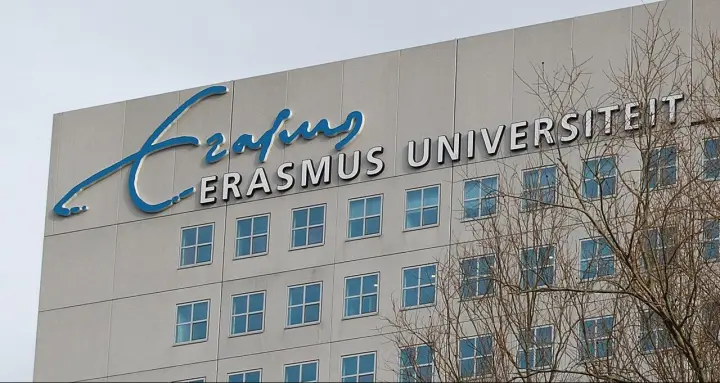 QS #148
Erasmus University Rotterdam
Rotterdam
EUR 13,500–25,800
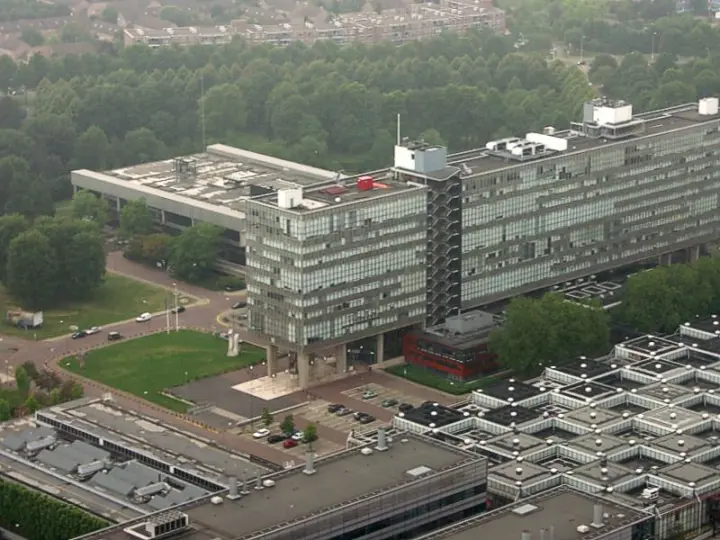 QS #152
Eindhoven University of Technology
Eindhoven
EUR 18,600–21,700
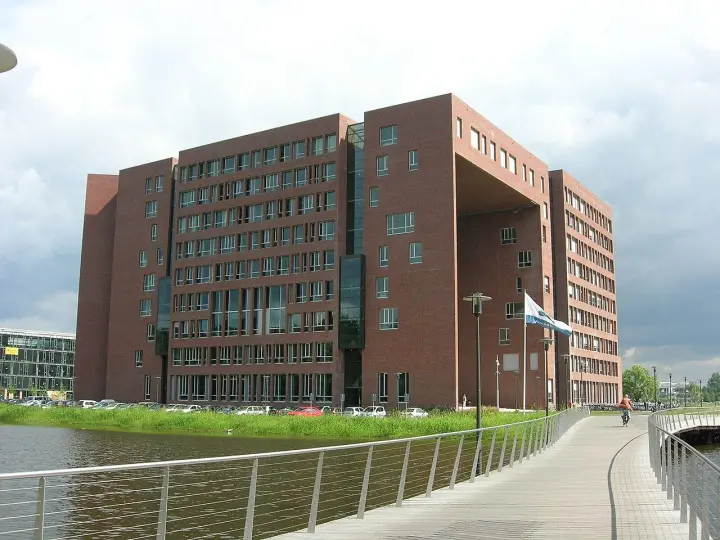 QS #154
Wageningen University & Research
Wageningen
EUR 18,300–21,900
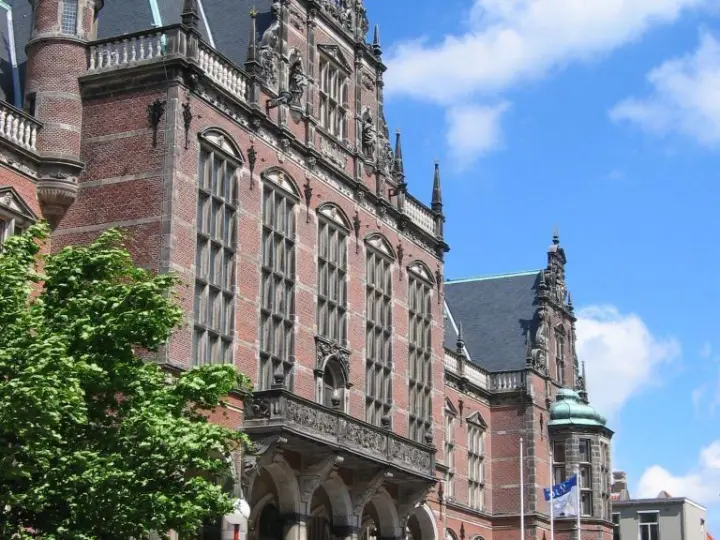 QS #157
University of Groningen
Groningen
EUR 14,000–24,900
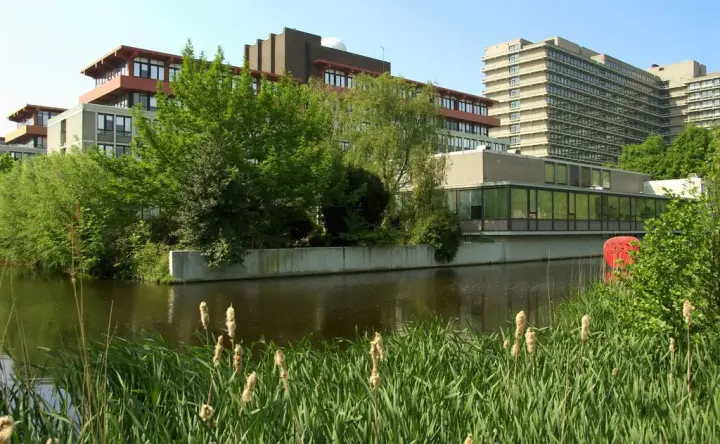 QS #185
Vrije Universiteit Amsterdam
Amsterdam
EUR 14,310–34,440
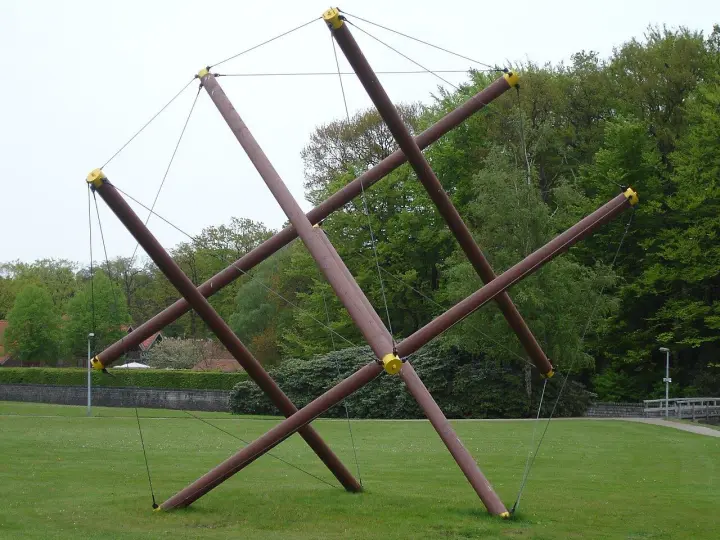 QS #223
University of Twente
Enschede
EUR 12,300–21,700
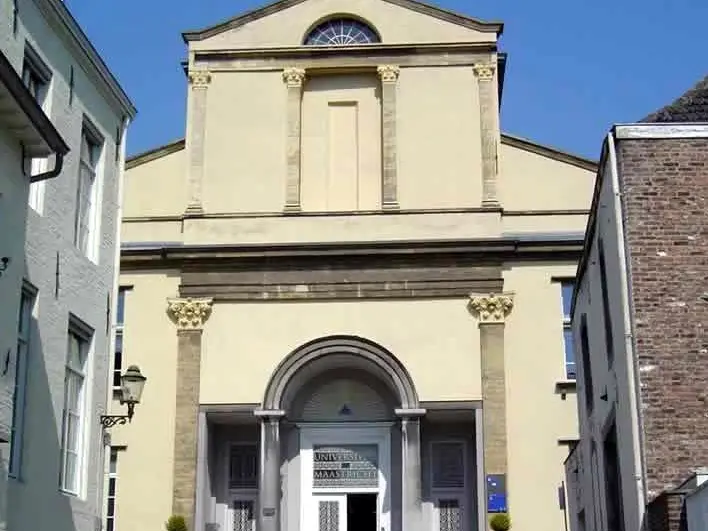 QS #254
Maastricht University
Maastricht
EUR 13,200–25,100
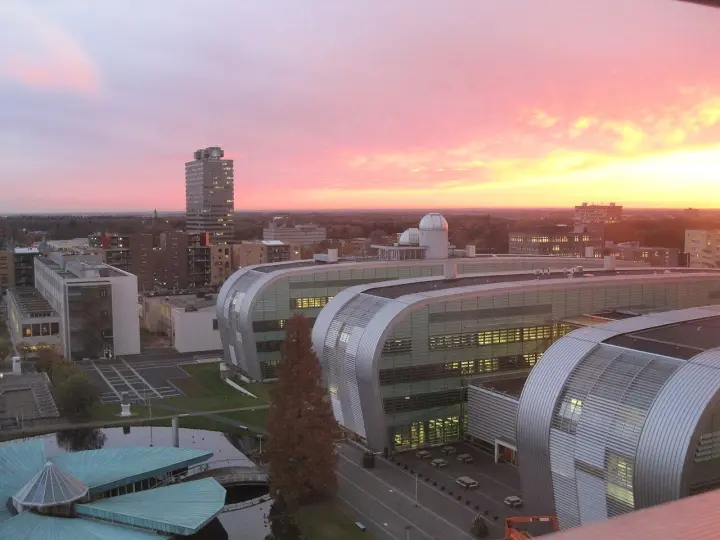 QS #283
Radboud University
Nijmegen
EUR 13,793–25,429
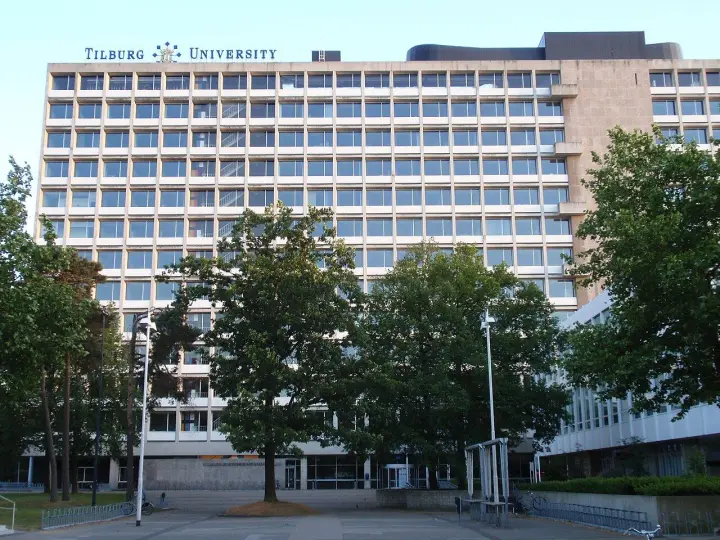 QS #429
Tilburg University
Tilburg
EUR 13,400–23,900
Campus photos on this page: Choinowski (CC BY-SA 4.0) · Aherver (CC BY 4.0) · Robert von Oliva (naruciakk) (CC0) · CHEN Dadi (CC BY-SA 3.0 nl) · Erasmus University Rotterdam (CC BY-SA 3.0) · Arno van den Tillaart from Eindhoven, Netherlands (CC BY 2.0) · DirkV (CC BY-SA 3.0) · Fruggo (CC BY 1.0) · Scientist-100 at English Wikipedia (Public domain) · Handige Harrie (Public domain) · Kleon3 (CC BY-SA 3.0) · Bj.schoenmakers (CC0) · Ron Maijen (CC BY-SA 3.0) — via Wikimedia Commons.
The number that is not yours
You will see €2,694 quoted as the cost of a Dutch degree. You will not pay it. That is the statutory fee, and it is for students from the EU, the EEA and Switzerland. An Indian student pays the institutional rate, which Nuffic puts at €9,000–€20,000 a year for a bachelor's and €12,000–€30,000 for a master's. The gap between those two figures is the single most common surprise on a Dutch application, and it is the same trap France sets with its €255 EU rate.
Master's tuition
€12,000–€30,000/yr (non-EU master's; EU statutory fee is €2,694 in 2026–27)
Bachelor's tuition
€9,000–€20,000/yr (non-EU bachelor's)
Living cost per month
€1,000–€1,500 (average student spending, Nuffic)
Work while studying
16 hrs/week OR full-time in June–August — one or the other, not both. Your employer needs a TWV work permit
Every Dutch scholarship we can verify
This list is short, and it is short because the honest list is short. Nuffic, the Dutch sector body, administers three schemes and one of them does not cover India. The larger money is at the universities themselves.
NL Scholarship
Openformerly the Holland Scholarship
EUR 5,000
Paid once, in your first year. Nuffic states plainly that this is not a full-tuition scholarship, and against a EUR 12,000-30,000 master it is a contribution rather than a solution.
- Who it is for
- Non-EEA nationality, a full-time bachelor or master place at a participating institution, and no previous degree from a Dutch institution.
- When
- Applications for the 2027-28 academic year are open.
Dutch Ministry of Education, Culture and Science with participating institutions, read 5 Nov 2026.
Erasmus+
OpenVaries
EU-funded mobility for part of a degree at a partner institution elsewhere in Europe, rather than funding for a whole Dutch degree.
- Who it is for
- Arranged through your institution, not applied for directly.
- When
- Set by the institution.
European Union, read 5 Nov 2026.
Institution scholarships
VariesVaries widely
Every Dutch university runs its own, and this is where the larger awards are — several cover a substantial share of tuition. They are not centrally listed, and amounts and deadlines differ by institution and by programme.
- Who it is for
- Set per institution, usually on academic merit, and often needing a separate application alongside admission.
- When
- Usually earlier than the admission deadline. Check before you apply, not after.
Orange Knowledge Programme
Closed — do not applyENDED IN 2024, with no further application rounds. Nuffic says so on its own scholarships page. It is listed here only because Indian study-abroad sites still advertise it as though it were open, and students still ask us how to apply.
Official page, read 5 Nov 2026.
The orientation year, and the part people get wrong
Orientation year: 1 year, not extendable. Work freely, no employer permit needed. Apply within 3 years of finishing
The timing is what catches people. The orientation permit is not a sprint from the graduation ceremony. The IND measures eligibility as a qualification completed in the three years before the date you apply, so a graduate who assumed the window had shut usually still has it open. It cannot be extended, and you get one.
While you hold it you may work for any employer without that employer needing a work permit for you, and you may work as an independent entrepreneur.
Working during the degree
16 hrs/week OR full-time in June–August — one or the other, not both. Your employer needs a TWV work permit
It is one allowance with two settings, not two allowances: either up to 16 hours a week across the year, or full-time in June, July and August. Never both. Your employer must hold the work permit and apply for it five weeks ahead — the right does not travel with your student permit, which is what most students assume.
Self-employment sits outside both the permit and the hours cap, and so does a traineeship that forms part of your programme.
And what we charge for it
Nothing. Counselling, course and university shortlisting, your SOP, LOR and CV, the application itself, scholarship matching, education-loan guidance and visa support are all free to you, and they stay free whether or not you ever become a client, because partner universities pay us rather than students.
- Shortlisting that is honest about your oddsSafe, moderate and ambitious, against what a Dutch institution will actually accept from your qualification and grades.
- SOP, LOR and CVDrafted with you and reviewed by a counsellor, free.
- Scholarship matchingAgainst what is genuinely open, including the institution-level awards that are not centrally listed.
- Education loan guidanceVibedu is not a lender, does not approve loans and does not set rates. We help you prepare and compare.
- Student visa and the orientation yearDocument checks, the IND process, and what to do in the three-year window after you finish.
- A reality check on the job marketIncluding which sectors on this page hire in English and which do not.
Studying in the Netherlands — FAQs
7 questions
Nuffic puts the institutional rate at EUR 12,000 to EUR 30,000 a year for a master's and EUR 9,000 to EUR 20,000 for a bachelor's. You will also see EUR 2,694 quoted widely as the cost of a Dutch degree for 2026-27: that is the statutory fee for students from the EU, EEA and Switzerland, and an Indian student is not charged it. The gap between the two is the single most common surprise on a Dutch application.
There were 376,000 unfilled vacancies at the end of 2026 Q3, which is the Dutch national statistics office's own figure. What that number is not is a list of jobs waiting for international graduates. Most will be filled by people already in the Dutch labour market and most require Dutch. The sectors that genuinely hire graduates in English are information and communication, specialised business services, and finance in Amsterdam. Treat the headline as evidence that the economy is short of people, not as a job offer.
Yes, and it is one allowance with two settings rather than two allowances: either a maximum of 16 hours a week across the year, or full-time during June, July and August. Never both. Your employer has to hold a work permit (a TWV) for you and must apply for it at least five weeks before you start — the right does not travel with your own student permit, which is what most students assume. Self-employment is outside both the permit and the hours cap, and so is a traineeship that forms part of your programme.
It is a one-year residence permit for graduates of an accredited Dutch institution. While you hold it you may work for any employer without that employer needing a work permit, and you may work as an independent entrepreneur. The part people get wrong is the timing: the IND measures eligibility as a qualification completed in the three years before the date you apply, not as a sprint from the ceremony. It cannot be extended and only one is granted.
Fewer than most sites suggest. The NL Scholarship, formerly the Holland Scholarship, is EUR 5,000 paid once in your first year, and Nuffic states plainly that it is not a full-tuition scholarship. Erasmus+ funds part of a degree at a partner institution. Beyond those, the larger awards are run by the universities themselves and are not centrally listed. The Orange Knowledge Programme ended in 2024 with no further rounds, and Indian study-abroad sites still advertise it as though it were open.
Not to study. The Netherlands teaches a large share of its degrees in English and that is why Indian students go. To work there after you graduate is a different question, and the answer depends entirely on the sector: information and communication, specialised business services and international finance hire in English; healthcare, public administration, construction and most of retail do not. The job table on this page says which is which, because it is the part that decides whether those vacancy numbers mean anything for you.
The Netherlands works to application deadlines rather than published national intake months: 15 January for numerus fixus programmes, which are the capped ones, and 1 May for most others. Start months are set per programme by the institution, which is why we do not print a national intake month for the Netherlands when we print one for most destinations. Nuffic publishes none, so inventing one would be inventing it.
Get your free Netherlands study plan
A counsellor calls you back during office hours — 9am to 8pm IST, Mon to Sat. We are open now.
This sends an enquiry to Vibedu Study Abroad for free counselling. It is not an application to a university, a lender or a government.