
Master of Science in Ocean and Climate Physics (MSc)
TUHH Hamburg University of Technology · Hamburg, Europe
Duration
24 mo
Tuition
No tuition fee
sourcedIntake
Winter semester
English
—
Winter semester intake. Most universities admit on a rolling basis — we confirm the exact application deadline for your profile, free.
Course details verified 10 Sep 2026 — intakes, entry requirements and course facts · official source
Fee sourced Taken from the university's published fees page, not re-checked since — confirm it before you budget. See the university fees page.
About this programme
The Oceanography programme at Universität Hamburg offers a Master’s degree (MSc) in Ocean and Climate Physics. The research-oriented, four-semester course is directed at students with a BSc degree in physical oceanography, meteorology, geophysics, physics or equivalent and provides profound knowledge on the physics of the ocean and its role in the climate system. Students will be educated and prepared for their future research in physical oceanographic or other climate sciences. Furthermore, students are trained to be able to autonomously implement and broaden scientific findings, methods, and skills. The MSc degree course is divided into two semesters of one year each, which comprise a technical deepening phase and a research phase. During the technical deepening phase, oceanographic expertise in theoretical and regional oceanography as well as climate physics and modelling will be developed, and methods and skills will be trained in practical lab courses and exercises. The research phase is meant to deepen autonomous scientific working and to provide ground for the following Master's thesis work. The work load amounts to an average of 30 credit points per semester (about 20 contact hours of courses). An overview of the courses is given at: https://www.ifm.uni-hamburg.de/en/education/master/02-curriculum.html
Intakes & deadlines
Winter semester
Dates confirmed for your profile · Open
Entry requirements
-
Prerequisites
University degree certificate in oceanography, physics, mathematics, meteorology or equivalent Bachelor of Science degree with at least 90 CP in mathematical and physical courses
-
Documents
SOP, LOR & Resume — generate them free in 2 minutes.
Fees & scholarships
No tuition fee tuition (sourced). We confirm the exact costs and the scholarships you qualify for at TUHH Hamburg University of Technology — free, for your profile.
Other programmes at TUHH Hamburg University of Technology
Atmospheric Science
No tuition fee Tuition · sourced 2 years Duration View details THT TUHH Hamburg University of TechnologyBiomedical Engineering (MSc)
No tuition fee Tuition · sourced 18 months Duration View details THT TUHH Hamburg University of TechnologyBritish and American Cultures: Texts and Media
No tuition fee Tuition · sourced 2 years Duration View details THT TUHH Hamburg University of TechnologyChemical and Bioprocess Engineering
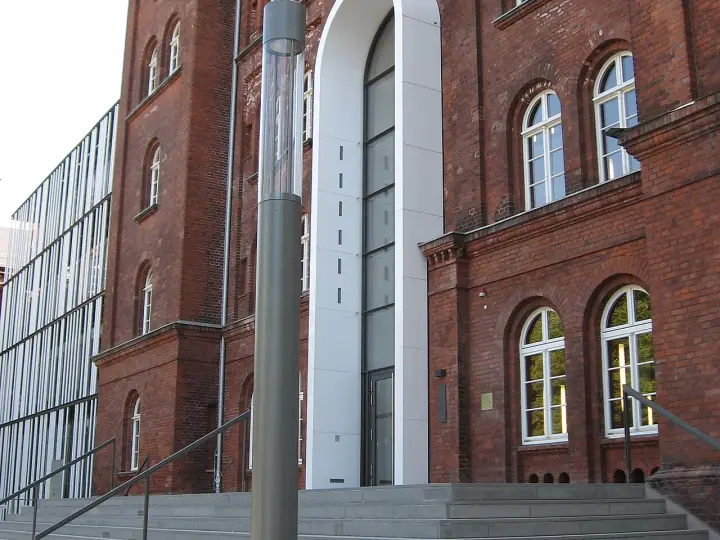
No tuition fee Tuition · sourced 2 years Duration View detailsCampus photos on this page: Dennis Rowedder (CC BY-SA 3.0) — via Wikimedia Commons.
Master of Science in Ocean and Climate Physics (MSc) — FAQs
5 questions
Tuition is No tuition fee. Taken from the university's published fees page, not re-checked since — confirm it before you budget. We confirm the current fee and the scholarships you qualify for — free.
The main intake is Winter semester. Most universities admit on a rolling basis — we confirm the exact deadline for your profile, free.
University degree certificate in oceanography, physics, mathematics, meteorology or equivalent Bachelor of Science degree with at least 90 CP in mathematical and physical courses
The programme runs about 24 months full-time.
Yes — shortlisting, SOP, LOR, Resume, application, scholarships and visa guidance are all free. We're paid by partner universities, not by you.
Apply to Master of Science in Ocean and Climate Physics (MSc) — free help
A counsellor calls you back during office hours — 9am to 8pm IST, Mon to Sat. We are closed right now, so your request is first in line when we reopen.