
MSc in Cognitive Neuroscience (MCNB)
Technische Universität Berlin · Berlin, Europe
Duration
24 mo
Tuition
No tuition fee
sourcedIntake
Winter semester
English
—
Winter semester intake. Most universities admit on a rolling basis — we confirm the exact application deadline for your profile, free.
Course details verified 10 Sep 2026 — intakes, entry requirements and course facts · official source
Fee sourced Taken from the university's published fees page, not re-checked since — confirm it before you budget. See the university fees page.
About this programme
The MSc in Cognitive Neuroscience (MCNB) Master's degree programme is an international programme offered by the Department of Education and Psychology at Freie Universität Berlin. MCNB is a research-focused consecutive Master's programme that aims to provide students with the theoretical and methodological skills to qualify for a career in applied research in general and neurocognitive psychology, biological psychology, and cognitive neuroscience. Candidates complete 9 compulsory modules (75 ECTS) + elective modules (15 ECTS) and a Master's thesis (30 ECTS). The programme is divided into two phases, study and research, which correspond to the two years of the programme. During the first year, in the study phase, the students are expected to take courses covering the programme's core themes. The study phase aims to provide an in-depth theoretical introduction to the three research themes and equip the students with appropriate methodological skills for the research phase. In the research phase, the students will have the opportunity to pursue their own research projects under the supervision of the programme’s faculty members. In the second year of the programme, the class schedule will be reduced to a week of class or one or two sessions a semester. Regulations for structure and sequence of studies are provided by the study regulations. They contain detailed descriptions of the contents and qualification goals of each individual module and provide an exemplary study plan. The examination regulations define the type and requirements of the module examinations and the Master's thesis. The regulations specify the credit points (CP) for each module or course as well as the workload in time hours for the entire study programme. The Master's thesis is intended to demonstrate that students are able to independently work on and present a research problem using scientific methods. Upon successful completion of the study programme, the university degree Master of Science (MSc) is awarded. Modules: (1) Cognitive Neuroscience: Perception, Attention, Action, and Cognitive Control (10 CP) (2) Cognitive Neuroscience: Memory, Emotion, Language, and Consciousness (10 CP) (3) Cognitive Neuroscience: Research Practice (10 CP) (4) Neurocognitive Methods and Data Analysis (10 CP) (5) Probabilistic and Statistical Modelling (10 CP) (6) Introduction to Programming (5 CP) (7) Neurocognitive Methods Practical (5 CP) (8) Research Workshop (5 CP) (9) Research Experiences (10 CP) + Elective module (15 CP) + Master's thesis and oral examination (30 CP)
Intakes & deadlines
Winter semester
Dates confirmed for your profile · Open
Entry requirements
-
English
E.G. IELTS Academic: 7 TOEFL iBT (since 2026): 5 Reading: 5 Listening: 5 Speaking: 5 Writing: 5 TOEFL iBT (before 2026): 95 Reading: 24 Listening: 22 Speaking: 25 Writing: 24 Cambridge English Qualifications: C1 Advanced UNIcert® English: UNIcert® III PTE Academic: 76
-
Prerequisites
Admission to the MCNB programme is highly competitive and bound to a series of necessary preconditions. Applicants necessarily need to meet the following criteria: Bachelor's degree in psychology, neurosciences, cognitive science, data science, mathematics, physics, biology, computer sciences, or first two parts of the Certificate of Physician Exam (Ärztliche Prüfung) or equivalent Proof of English language proficiency The admission process consists of three steps, from the initial application in April/May to a final admission decision by the end of July (tentatively). Admission to the MCNB programme follows a downward point-based ranking ranging from 100–0 selection points (SP), with 100 being the top score. Grades of the undergraduate programme will be transferred to a point score of up to 60 SP. (see the grade conversion table) Promising applicants will be invited to personal interviews. The admission committee will evaluate the motivation and qualification of prospective students by means of these interviews and award them up to another 40 SP leading to a maximum amount of 100 SP. Please visit our department website for more information.
-
Documents
SOP, LOR & Resume — generate them free in 2 minutes.
Fees & scholarships
No tuition fee tuition (sourced). We confirm the exact costs and the scholarships you qualify for at Technische Universität Berlin — free, for your profile.
Other programmes at Technische Universität Berlin
Ancient Worlds — Interdisciplinary Ancient Studies / Antike Welten — Interdisziplinäre Altertumswissenschaften
No tuition fee Tuition · sourced 2 years Duration View details TB Technische Universität BerlinBerlin MBA (full-time)
€9,950/yr Tuition · sourced 1 year Duration View details TB Technische Universität BerlinBerlin MBA (part-time)
€5,600/yr Tuition · sourced 2 years Duration View details TB Technische Universität BerlinBuilding Sustainability in Urban Futures (MBA)
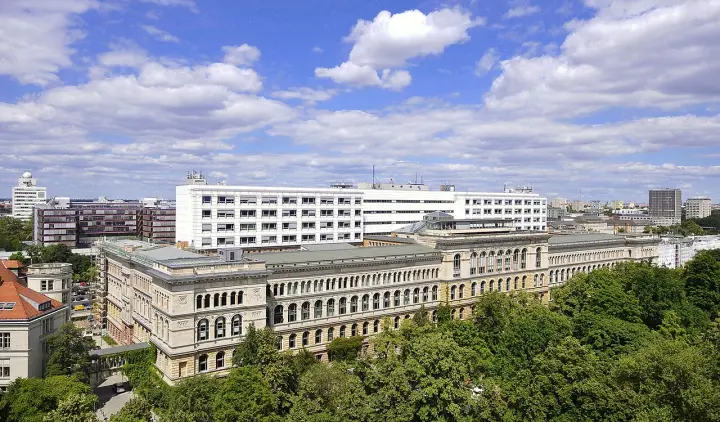
€6,600/yr Tuition · sourced 18 months Duration View detailsCampus photos on this page: TU Berlin/Pressestelle/Ulrich Dahl (Copyrighted free use) — via Wikimedia Commons.
MSc in Cognitive Neuroscience (MCNB) — FAQs
5 questions
Tuition is No tuition fee. Taken from the university's published fees page, not re-checked since — confirm it before you budget. We confirm the current fee and the scholarships you qualify for — free.
The main intake is Winter semester. Most universities admit on a rolling basis — we confirm the exact deadline for your profile, free.
Admission to the MCNB programme is highly competitive and bound to a series of necessary preconditions. Applicants necessarily need to meet the following criteria: Bachelor's degree in psychology, neurosciences, cognitive science, data science, mathematics, physics, biology, computer sciences, or first two parts of the Certificate of Physician Exam (Ärztliche Prüfung) or equivalent Proof of English language proficiency The admission process consists of three steps, from the initial application in April/May to a final admission decision by the end of July (tentatively). Admission to the MCNB programme follows a downward point-based ranking ranging from 100–0 selection points (SP), with 100 being the top score. Grades of the undergraduate programme will be transferred to a point score of up to 60 SP. (see the grade conversion table) Promising applicants will be invited to personal interviews. The admission committee will evaluate the motivation and qualification of prospective students by means of these interviews and award them up to another 40 SP leading to a maximum amount of 100 SP. Please visit our department website for more information. English: E.G. IELTS Academic: 7 TOEFL iBT (since 2026): 5 Reading: 5 Listening: 5 Speaking: 5 Writing: 5 TOEFL iBT (before 2026): 95 Reading: 24 Listening: 22 Speaking: 25 Writing: 24 Cambridge English Qualifications: C1 Advanced UNIcert® English: UNIcert® III PTE Academic: 76.
The programme runs about 24 months full-time.
Yes — shortlisting, SOP, LOR, Resume, application, scholarships and visa guidance are all free. We're paid by partner universities, not by you.
Apply to MSc in Cognitive Neuroscience (MCNB) — free help
A counsellor calls you back during office hours — 9am to 8pm IST, Mon to Sat. We are open now.