Master of Science in Chemistry
Technical University of Berlin · Berlin, Germany
Duration
24 mo
Tuition
No tuition fee
sourcedIntake
Winter semester
English
—
Winter semester intake. Most universities admit on a rolling basis — we confirm the exact application deadline for your profile, free.
Course details verified 10 Sep 2026 — intakes, entry requirements and course facts · official source
Fee sourced Taken from the university's published fees page, not re-checked since — confirm it before you budget. See the university fees page.
About this programme
Students will expand and deepen their knowledge in the three topic areas: Inorganic chemistry, organic chemistry, and physical chemistry. They will strengthen their specialised knowledge in a topic area in chemistry of their own choice or gain cross-cutting qualifications by taking non-chemistry modules. They will become familiar with the terminologies and special aspects of chemistry, its strengths and limitations, and will be able to apply their knowledge to new issues and situations, even in an interdisciplinary context. They will gain knowledge and practical skills relating to the current state of research in selected fields. They will be able to analyse chemical issues and assess them critically, to develop independent solution strategies, and to estimate their impacts in a wider context. The Master's programme focuses on the current state of research on concepts and experimental and theoretical methods by which the structure and behaviour of atoms, molecules, and solids can be examined, described, and predicted, complex molecules can be synthesised, and associations of molecules analysed. The programme includes both theoretical and instrumental methods of analytical proof and explanation of structures as well as the theoretical background necessary to understand and apply them. Research projects give students the opportunity to apply the latest research methods and concepts to current research topics being examined in working groups. The programme's elective modules provide the opportunity to link chemistry with other disciplines, such as mathematics, physics, biology, medicine, or materials sciences. The Master's programme with an overall of 120 credit points is structured into the following: A compulsory elective area comprising 35 credit points: The modules offered in the compulsory elective area focus on the understanding of modern experimental and theoretical developments in chemistry, to give students a wide basic scientific qualification. The compulsory elective area is structured in the following three topic areas: inorganic chemistry, organic chemistry, and physical and theoretical chemistry, comprising 10 credit points each and a cross-topic area comprising 5 credit points. A project area comprising 20 to 30 credit points: In order to also gain an understanding of current experimental and theoretical developments, research projects in chemical subjects must be taken in the project area. Students must complete research projects in at least two research groups, including at least 15 credit points in the topic areas inorganic chemistry, organic chemistry, or physical and theoretical chemistry. Other research projects may also be selected from other topic areas in chemistry. A specialisation area comprising 5 to 20 credit points: In the specialisation area students deepen their knowledge and specialise in a research-oriented or application-oriented topic area in chemistry in line with their individual skills and aims. An elective area comprising 15 to 20 credit points: In the elective area, the students can either deepen their expertise in chemistry further or gain cross-cutting qualifications or professional knowledge and skills beyond the field of chemistry, depending on their interests and career aims. The Master's thesis, including presentation comprising 30 credit points: The Master's thesis comprises two components, one written and one oral. The Master's thesis is intended to demonstrate that the student is capable of working independently on an issue in the field of chemistry at an advanced scientific level using scientific methods and of presenting the findings in writing and orally in an appropriate form, to place the findings in their scientific context and to document them.
Intakes & deadlines
Winter semester
Dates confirmed for your profile · Open
Summer semester
Dates confirmed for your profile · Open
Entry requirements
-
English
E.G. telc English: telc English B2 UNIcert® English: UNIcert® II TOEFL iBT Home Edition (before 2026): 72 TOEFL iBT (before 2026): 72 Cambridge English Qualifications: B2 First IELTS Academic: 5.5
-
Prerequisites
Academic admission requirements include a Bachelor's degree in chemistry or an equivalent degree with credits in chemistry that correspond to the Bachelor's programme in chemistry at Freie Universität Berlin. Please note that degrees in applied chemistry, chemical engineering, and other subjects, such as pharmacy or biochemistry, are generally not equivalent.
-
Documents
SOP, LOR & Resume — generate them free in 2 minutes.
Fees & scholarships
No tuition fee tuition (sourced). We confirm the exact costs and the scholarships you qualify for at Technical University of Berlin — free, for your profile.
Other programmes at Technical University of Berlin
Ancient Worlds — Interdisciplinary Ancient Studies / Antike Welten — Interdisziplinäre Altertumswissenschaften
No tuition fee Tuition · sourced 2 years Duration View details TB Technical University of BerlinBerlin MBA (full-time)
€9,950/yr Tuition · sourced 1 year Duration View details TB Technical University of BerlinBerlin MBA (part-time)
€5,600/yr Tuition · sourced 2 years Duration View details TB Technical University of BerlinBuilding Sustainability in Urban Futures (MBA)
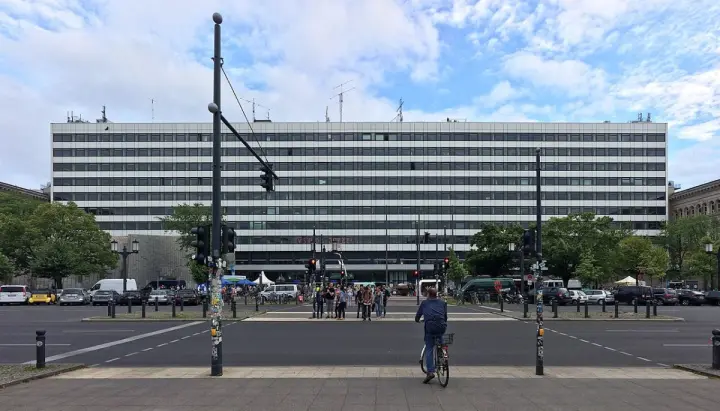
€6,600/yr Tuition · sourced 18 months Duration View detailsCampus photos on this page: Gunnar Klack (CC BY-SA 4.0) — via Wikimedia Commons.
Master of Science in Chemistry — FAQs
5 questions
Tuition is No tuition fee. Taken from the university's published fees page, not re-checked since — confirm it before you budget. We confirm the current fee and the scholarships you qualify for — free.
The main intake is Winter semester. Most universities admit on a rolling basis — we confirm the exact deadline for your profile, free.
Academic admission requirements include a Bachelor's degree in chemistry or an equivalent degree with credits in chemistry that correspond to the Bachelor's programme in chemistry at Freie Universität Berlin. Please note that degrees in applied chemistry, chemical engineering, and other subjects, such as pharmacy or biochemistry, are generally not equivalent. English: E.G. telc English: telc English B2 UNIcert® English: UNIcert® II TOEFL iBT Home Edition (before 2026): 72 TOEFL iBT (before 2026): 72 Cambridge English Qualifications: B2 First IELTS Academic: 5.5.
The programme runs about 24 months full-time.
Yes — shortlisting, SOP, LOR, Resume, application, scholarships and visa guidance are all free. We're paid by partner universities, not by you.
Apply to Master of Science in Chemistry — free help
A counsellor calls you back during office hours — 9am to 8pm IST, Mon to Sat. We are closed right now, so your request is first in line when we reopen.