
History and Societies of the Islamic World
Technical University of Berlin · Berlin, Germany
Duration
24 mo
Tuition
No tuition fee
sourcedIntake
Winter semester
English
—
Winter semester intake. Most universities admit on a rolling basis — we confirm the exact application deadline for your profile, free.
Course details verified 10 Sep 2026 — intakes, entry requirements and course facts · official source
Fee sourced Taken from the university's published fees page, not re-checked since — confirm it before you budget. See the university fees page.
About this programme
History and Societies of the Islamic World is a research-oriented Master’s programme at the Department of History and Cultural Studies with a focus on history, culture, religion, and the social sciences. It is a consecutive Master’s programme taught entirely in English. Admission to the programme requires a Bachelor’s degree in History and Cultures of the Middle East with a focus on Islamic Studies, or an equivalent degree in a closely related subject. The programme focuses on the history, politics, religions, cultures, knowledge formations, and normativities of Islamic societies from the beginnings of Islam to the present. The regional focus lies on West Asia and North Africa as well as on Europe, with special attention to global perspectives and interconnections. The Master’s programme offers an overview of the current state of research and central debates in the study of the history and societies of the Islamic world and trains students in various research approaches and methodologies. The inter- and transdisciplinary area of the programme provides students with the opportunity to specialise and deepen their professional focus. Unique features of the programme in the German academic context include the regional profile area “Islam in Europe” and a special emphasis on theory and methodology in the study of the Islamic world. Theoretical and methodological topics and approaches include gender dimensions in various contexts as well as constructions of difference and alterity; postcolonial perspectives; critique of racism; knowledge production and power; the interaction of law, religion, and politics; systems of meaning-making; linguistic and social constructions of reality; power asymmetries and dependencies; conceptual history and semantic fields; religion and secularity; heritagisation; popular and consumer culture; urban studies; and insider and outsider perspectives among Muslims and non-Muslims. The strong research orientation of the Master’s programme results in a close linkage between the courses offered and the research priorities of the Institute of Islamic Studies. Through research-based learning, students are encouraged to carry out independent research projects – for example, through guided field research, interview-based research, philological source analysis with a focus on unedited manuscripts, the systematic recording and analysis of current Arabic knowledge production, digital humanities, approaches to material culture, or in globally oriented conceptual studies drawing on multiple types of sources. Additionally, students deepen their knowledge of Arabic through reading courses dealing with Arabic primary sources of various types and genres in the core focal area of the programme. PDF Download
Intakes & deadlines
Winter semester
Dates confirmed for your profile · Open
Summer semester
Dates confirmed for your profile · Open
Entry requirements
-
English
E.G. UNIcert® English: UNIcert® III PTE Academic: 76 TOEFL iBT (since 2026): 5 Reading: 5 Listening: 5 Speaking: 5 Writing: 5 Cambridge English Qualifications: C1 Advanced IELTS Academic: 7
-
Prerequisites
For admission to the Master’s programme, applicants must fulfil the following requirements: A first university degree (e.g. a Bachelor’s degree) comprising at least 180 credit points (ECTS) A minimum of 60 ECTS must have been earned in courses relevant to the study of history and societies of the Islamic world. Of these 60 ECTS, at least 40 ECTS must have been earned in courses that impart written Arabic language skills up to and including the B2 level of the Common European Framework of Reference for Languages (CEFR) and oral Arabic language skills at the level B1 or an equivalent. At least 20 ECTS of the requirement must have been earned in courses focusing on other (i.e. not language skills-focused) topics relevant to the study of history and societies of the Islamic world. The Arabic language requirement can also be fulfilled in other ways, for example by providing proof that the applicant has completed secondary or tertiary education in an Arabic-speaking country. In this case, the required 60 ECTS must have been earned in courses focusing on other (i.e. not language skills-focused) topics relevant to the study of history and societies of the Islamic world.
-
Documents
SOP, LOR & Resume — generate them free in 2 minutes.
Fees & scholarships
No tuition fee tuition (sourced). We confirm the exact costs and the scholarships you qualify for at Technical University of Berlin — free, for your profile.
Other programmes at Technical University of Berlin
Ancient Worlds — Interdisciplinary Ancient Studies / Antike Welten — Interdisziplinäre Altertumswissenschaften
No tuition fee Tuition · sourced 2 years Duration View details TB Technical University of BerlinBerlin MBA (full-time)
€9,950/yr Tuition · sourced 1 year Duration View details TB Technical University of BerlinBerlin MBA (part-time)
€5,600/yr Tuition · sourced 2 years Duration View details TB Technical University of BerlinBuilding Sustainability in Urban Futures (MBA)
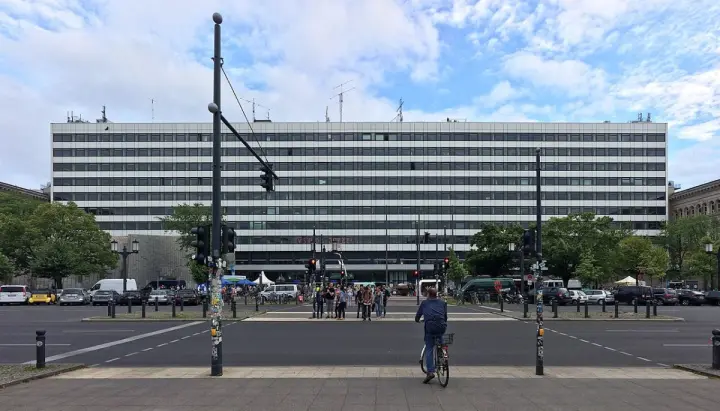
€6,600/yr Tuition · sourced 18 months Duration View detailsCampus photos on this page: Gunnar Klack (CC BY-SA 4.0) — via Wikimedia Commons.
History and Societies of the Islamic World — FAQs
5 questions
Tuition is No tuition fee. Taken from the university's published fees page, not re-checked since — confirm it before you budget. We confirm the current fee and the scholarships you qualify for — free.
The main intake is Winter semester. Most universities admit on a rolling basis — we confirm the exact deadline for your profile, free.
For admission to the Master’s programme, applicants must fulfil the following requirements: A first university degree (e.g. a Bachelor’s degree) comprising at least 180 credit points (ECTS) A minimum of 60 ECTS must have been earned in courses relevant to the study of history and societies of the Islamic world. Of these 60 ECTS, at least 40 ECTS must have been earned in courses that impart written Arabic language skills up to and including the B2 level of the Common European Framework of Reference for Languages (CEFR) and oral Arabic language skills at the level B1 or an equivalent. At least 20 ECTS of the requirement must have been earned in courses focusing on other (i.e. not language skills-focused) topics relevant to the study of history and societies of the Islamic world. The Arabic language requirement can also be fulfilled in other ways, for example by providing proof that the applicant has completed secondary or tertiary education in an Arabic-speaking country. In this case, the required 60 ECTS must have been earned in courses focusing on other (i.e. not language skills-focused) topics relevant to the study of history and societies of the Islamic world. English: E.G. UNIcert® English: UNIcert® III PTE Academic: 76 TOEFL iBT (since 2026): 5 Reading: 5 Listening: 5 Speaking: 5 Writing: 5 Cambridge English Qualifications: C1 Advanced IELTS Academic: 7.
The programme runs about 24 months full-time.
Yes — shortlisting, SOP, LOR, Resume, application, scholarships and visa guidance are all free. We're paid by partner universities, not by you.
Apply to History and Societies of the Islamic World — free help
A counsellor calls you back during office hours — 9am to 8pm IST, Mon to Sat. We are open now.