
Master's Programme in Neuroscience
Ludwig-Maximilians-Universität München · Munich, Europe
Duration
24 mo
Tuition
No tuition fee
sourcedIntake
Winter semester
English
—
Winter semester intake. Most universities admit on a rolling basis — we confirm the exact application deadline for your profile, free.
Course details verified 09 Sep 2026 — intakes, entry requirements and course facts · official source
Fee sourced Taken from the university's published fees page, not re-checked since — confirm it before you budget. See the university fees page.
About this programme
How does the brain work? Significant progress has been made in the field of cellular and molecular neuroscience and modern in vivo techniques have revolutionised non-invasive observation of brain activity even in humans. Today's challenges lie in understanding the brain as a complex functioning system and many problems remain to be solved. For example, we still cannot explain how information processed in parallel pathways within one sensory modality (as in the visual or auditory system) is fused into the complex object we perceive, such as a face or particular voice. Based on their teaching and research expertise, the members of the teaching faculty, which includes members of the Graduate School of Systemic Neurosciences (GSN) and guest lecturers from external institutions, believe that the overwhelming complexity of the human brain can only be explained by applying different approaches and methods of the disciplines in neuroscience. Thus, our programme continuously works on educating a new generation of neuroscientists starting at the level of graduate students. With an excellent understanding of the molecular, cellular and systemic principles of neurobiology, our students acquire a deeper knowledge of neuron-neuron interaction, the dynamics of neuron-glia interaction, rules of information transfer in simple and complex circuits of single brain centres, interaction of different brain centres, and the function of the human brain. This educational concept can be seen reflected in the curriculum. 1. General education The educational programme is based on four main scientific topics, that of systems neurobiology, molecular and cellular neurobiology, computational neuroscience and neurophilosophy. Our curriculum provides the students with a profound understanding of the biological principles in brain structure and neuron-neuron communication before broadening the scope towards cognition and higher brain functions, computational methods and philosophical aspects in neurosciences. The main portion of the general education takes place in the first two semesters of study. 2. Individual research training Each semester the student has to complete an individual research project. This will guarantee hands-on research training from the very beginning and gives students the opportunity to become acquainted with participating laboratories and researchers. In addition to the mandatory general courses, students can choose from a broad spectrum of methods and interdisciplinary courses. 3. Transferable skills Our educational concept would not be complete without training of complementary skills, which supplement our core curriculum and help to optimally prepare students for their future career goals. In their second year, our students obtain first-hand teaching experience (and credits). In addition to a scientific education, the Master's programme includes modular workshops on academic transferable skills such as communication training, presentation skills, scientific writing, and time management. 4. Mentoring Each student has their own mentor from the GSN faculty. The mentors serve as academic advisers, helping students plan their educational career and facilitate contacts in collaborating institutions. In informal meetings, a student has an excellent opportunity to discuss problems, receive guidance or have an informative scientific chat. Two academic tracks Starting 2018, the GSN curriculum has been expanded in order to offer students more flexibility as well as the opportunity to sharpen their academic profiles. Students can now choose courses along either a Systemic-Cellular-Molecular Neuroscience track or a Computational Neuroscience track. Regardless of the selected track, all students will complete coursework within the other area, but at a more moderate level. PDF Download
Intakes & deadlines
Winter semester
Dates confirmed for your profile · Open
Entry requirements
-
Prerequisites
Applicants for the MSc programme in Neurosciences must hold a Bachelor's or equivalent degree in biology, psychology, medical sciences, bioinformatics, engineering, physics, computer sciences, philosophy, or a related field.
-
Documents
SOP, LOR & Resume — generate them free in 2 minutes.
Fees & scholarships
No tuition fee tuition (sourced). We confirm the exact costs and the scholarships you qualify for at Ludwig-Maximilians-Universität München — free, for your profile.
Other programmes at Ludwig-Maximilians-Universität München
Digital Media Manager
€3,840/yr Tuition · sourced 18 months Duration View details LMM Ludwig-Maximilians-Universität MünchenElite Master's Programme: Theoretical and Mathematical Physics
No tuition fee Tuition · sourced 2 years Duration View details LMM Ludwig-Maximilians-Universität MünchenEntrepreneurship and Digital Transformation
No tuition fee Tuition · sourced 18 months Duration View details LMM Ludwig-Maximilians-Universität MünchenEvolution, Ecology and Systematics (Master of Science)
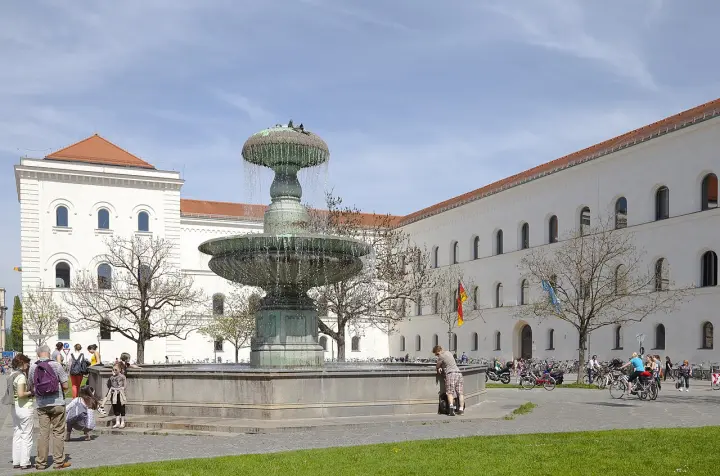
No tuition fee Tuition · sourced 2 years Duration View detailsCampus photos on this page: Diego Delso (CC BY-SA 3.0) — via Wikimedia Commons.
Master's Programme in Neuroscience — FAQs
5 questions
Tuition is No tuition fee. Taken from the university's published fees page, not re-checked since — confirm it before you budget. We confirm the current fee and the scholarships you qualify for — free.
The main intake is Winter semester. Most universities admit on a rolling basis — we confirm the exact deadline for your profile, free.
Applicants for the MSc programme in Neurosciences must hold a Bachelor's or equivalent degree in biology, psychology, medical sciences, bioinformatics, engineering, physics, computer sciences, philosophy, or a related field.
The programme runs about 24 months full-time.
Yes — shortlisting, SOP, LOR, Resume, application, scholarships and visa guidance are all free. We're paid by partner universities, not by you.
Apply to Master's Programme in Neuroscience — free help
A counsellor calls you back during office hours — 9am to 8pm IST, Mon to Sat. We are closed right now, so your request is first in line when we reopen.