Sustainable Chemistry
Justus-Liebig-University Giessen · Giessen, Europe
Duration
24 mo
Tuition
No tuition fee
sourcedIntake
Winter semester
English
—
Winter semester intake. Most universities admit on a rolling basis — we confirm the exact application deadline for your profile, free.
Course details verified 09 Sep 2026 — intakes, entry requirements and course facts · official source
Fee sourced Taken from the university's published fees page, not re-checked since — confirm it before you budget. See the university fees page.
About this programme
Are you interested in science? Do you enjoy doing exciting lab experiments and do you already have a Bachelor’s degree in chemistry or a related subject? Do you want to play an active role in shaping a better future for our planet and all its inhabitants? Are you passionate about sustainability issues? Then the MSc Sustainable Chemistry programme at Justus Liebig University Giessen (JLU) is the right choice for you. The international Master's programme combines all of the above. You will learn how to design chemical processes, products and methods so that they meet the requirements of sustainability. This means that environmental and social aspects such as resource consumption, energy efficiency, climate protection, health and safety are considered in the development and use of chemical products and processes. The MSc Sustainable Chemistry is taught by internationally renowned experts in various areas of sustainable chemistry. The programme provides you with both theoretical and practical in-depth knowledge of chemical concepts of synthesis, analysis, and evaluation from a sustainability perspective. In addition to lectures and seminars, you will be involved in cutting-edge research projects at an early stage. On completion of the programme, graduates will have learned the following: fundamentals of sustainability and sustainable chemistry, advanced topics in inorganic, organic, and physical chemistry such as heavy metal-free synthesis and catalysis, photochemistry, electrochemistry, circular economy for chemical processes, chemical research in the context of sustainability. Through the network of "DigiChem – creating a digital study environment for sustainable chemistry", together with the Universities of Padua (Italy), Ljubljana (Slovenia) and Zagreb (Croatia), the study programme also offers various opportunities for international exchange. Due to its international focus, the programme also offers national and global career opportunities. These are facilitated through international networking with partner universities and experts in the field. The programme has a duration of two years and comprises 120 ECTS credit points. It starts in the first year with taught modules (comprising lectures, seminars, exercises) including compulsory and elective modules. Students can choose the elective modules according to their interests (Energy Materials, Sustainable Water Treatment, Sustainable Materials Chemistry, etc.). Likewise, soft skills (e.g. Scientific Writing and Data Dissemination) and professional skills (Innovation Management for Natural Scientists) can be enhanced. The second year of the programme is entirely devoted to research work. Students are directly involved in the current research of the chemistry working groups. They learn about the latest developments in sustainable synthesis and materials development, right through to the recovery of critical resources. At the end of the programme, students complete the Master’s thesis. Modules of the first year – taught modules Introduction to Principles of Sustainability MSc seminar: New Frontiers in Chemical Sustainability Chemical Concepts of Sustainability Sustainable Inorganic Chemistry: Criticality, Synthesis, Substitution and Recovery Sustainable Energy Technologies Circular Economy Sustainability of Organic Reactions: Principles of Green Chemistry Three elective modules – from chemistry or other subjects (see below) Examples for elective modules Sustainable Water Treatment Sustainable Materials Chemistry: Energy Materials Innovation Management for Natural Scientists Risk and Quality Management and more Modules of the second year – research modules Two research modules with lab work in a research group One laboratory project in sustainable chemistry Master's thesis
Intakes & deadlines
Winter semester
Dates confirmed for your profile · Open
Entry requirements
-
English
E.G. UNIcert® English: UNIcert® II IELTS Academic: 6 TOEFL iBT (before 2026): 80 Reading: 18 Listening: 17 Speaking: 20 Writing: 17
-
Prerequisites
Applicants must hold a Bachelor’s degree in Chemistry with at least 180 ECTS points. The previous studies must demonstrate a profile that complies with the "Empfehlungen der GDCh-Studienkommission zum Bachelorstudium Chemie an Universitäten". This is assessed by the examination board as part of the application and admission procedure. Other courses of study may be accepted following a case-by-case assessment. The admission may include additional coursework of up to 30 CP, which must be completed within the first two semesters. These additional academic performances are not part of the Master's course. Admission may be dependent on passing an entrance examination. Here, the skills and knowledge required for the Master's programme are examined based on the "Empfehlungen der GDCh-Studienkommission zum Bachelorstudium Chemie an Universitäten". The examination board executes the entry examination. Applicants will be given an examination notice of at least three weeks.
-
Documents
SOP, LOR & Resume — generate them free in 2 minutes.
Fees & scholarships
No tuition fee tuition (sourced). We confirm the exact costs and the scholarships you qualify for at Justus-Liebig-University Giessen — free, for your profile.
Other programmes at Justus-Liebig-University Giessen
Advanced Materials
No tuition fee Tuition · sourced 2 years Duration View details JLG Justus-Liebig-University GiessenAgrobioinformatics
No tuition fee Tuition · sourced 2 years Duration View details JLG Justus-Liebig-University GiessenAgrobiotechnology
No tuition fee Tuition · sourced 2 years Duration View details JLG Justus-Liebig-University GiessenEconomics of Global Risk (EGR)
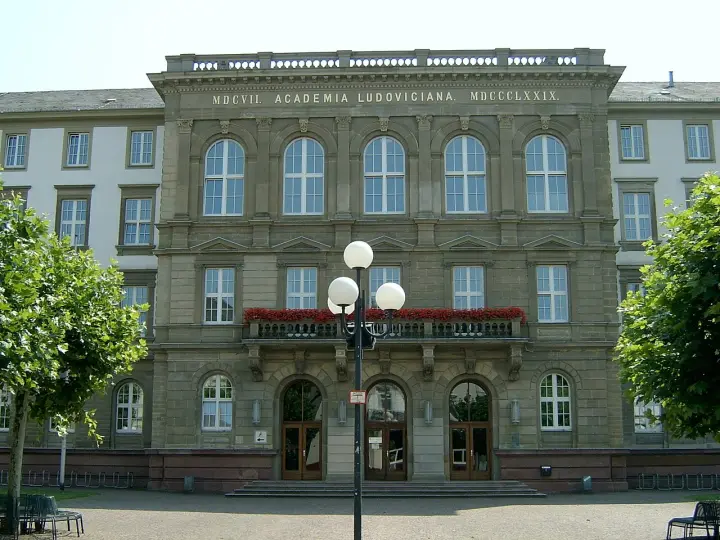
No tuition fee Tuition · sourced 2 years Duration View detailsCampus photos on this page: Ralf Lotys (Sicherlich) (CC BY 2.5) — via Wikimedia Commons.
Sustainable Chemistry — FAQs
5 questions
Tuition is No tuition fee. Taken from the university's published fees page, not re-checked since — confirm it before you budget. We confirm the current fee and the scholarships you qualify for — free.
The main intake is Winter semester. Most universities admit on a rolling basis — we confirm the exact deadline for your profile, free.
Applicants must hold a Bachelor’s degree in Chemistry with at least 180 ECTS points. The previous studies must demonstrate a profile that complies with the "Empfehlungen der GDCh-Studienkommission zum Bachelorstudium Chemie an Universitäten". This is assessed by the examination board as part of the application and admission procedure. Other courses of study may be accepted following a case-by-case assessment. The admission may include additional coursework of up to 30 CP, which must be completed within the first two semesters. These additional academic performances are not part of the Master's course. Admission may be dependent on passing an entrance examination. Here, the skills and knowledge required for the Master's programme are examined based on the "Empfehlungen der GDCh-Studienkommission zum Bachelorstudium Chemie an Universitäten". The examination board executes the entry examination. Applicants will be given an examination notice of at least three weeks. English: E.G. UNIcert® English: UNIcert® II IELTS Academic: 6 TOEFL iBT (before 2026): 80 Reading: 18 Listening: 17 Speaking: 20 Writing: 17.
The programme runs about 24 months full-time.
Yes — shortlisting, SOP, LOR, Resume, application, scholarships and visa guidance are all free. We're paid by partner universities, not by you.
Apply to Sustainable Chemistry — free help
A counsellor calls you back during office hours — 9am to 8pm IST, Mon to Sat. We are open now.