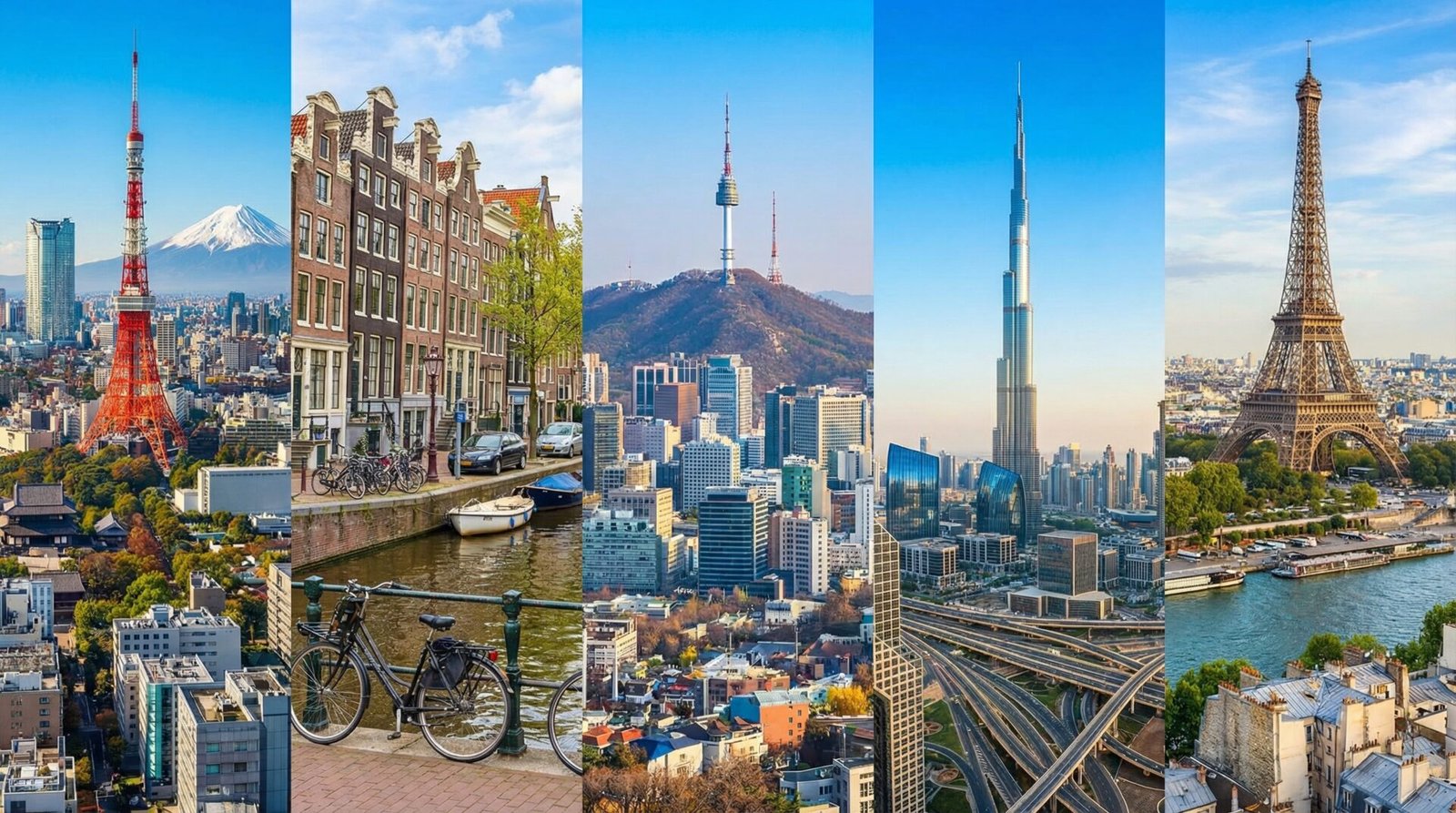
Study Abroad in 2026 Beyond the Big 4 – Emerging Destinations & Hidden Opportunities
Study Abroad in 2026 Beyond the Big 4 – Emerging Destinations & Hidden Opportunities
By Vibedu Editorial Team | Updated for 2026
📋 Table of Contents
- Introduction: The Shift Beyond Traditional Choices
- 1. Germany: Tuition-Free Excellence with Strong Industry Ties
- 2. France: Affordable European Hub with Cultural Flair
- 3. Ireland: The English-Speaking EU Gateway
- 4. Netherlands: Innovative Teaching & Orientation Year
- 5. Spain: Emerging Powerhouse with Lifestyle Appeal
- 6. South Korea: Cultural Wave Meets Academic Excellence
- 7. Japan: Breaking Records with New Flexibility
- 8. Malaysia: Affordable Hub with Branch Campuses
- 9. UAE (Dubai): The Modern Education Metropolis
- 10. Finland: Student-Centric Nordic Innovation
- FAQ: Emerging Destinations Explained
Introduction: Why Look Beyond the Big Four in 2026?
The landscape of international education is undergoing a seismic shift. For decades, students have flocked to the "Big Four" – USA, UK, Canada, and Australia. However, Study Abroad in 2026 Beyond the Big 4 is not just a trend; it's a strategic response to policy disruptions, rising costs, and the desire for a more welcoming environment. Policy changes in traditional destinations, including caps on enrolments and stricter visa rules, have prompted students to explore emerging study abroad destinations 2026 [citation:1].
These alternatives to USA UK Canada Australia offer compelling advantages: affordability, quality education, clearer pathways to permanent residency, and a genuine sense of being wanted. The concept of the "Big Four" is evolving into a "Big Fourteen," as countries across Europe and Asia aggressively recruit international talent [citation:1][citation:6]. This guide explores the new countries to study abroad 2026 that are redefining global education, providing students with affordable emerging study destinations that deliver strong return on investment.
1. Germany: Tuition-Free Excellence with Strong Industry Ties
Germany remains a top contender among emerging study abroad destinations 2026 (though it's well-established, its appeal continues to grow). Hosting over 420,000 international students, Germany's public universities charge minimal tuition fees, often just €170–€650 per semester [citation:2][citation:3]. The country's strong economy and focus on STEM fields mean graduates are in high demand. The 18-month post-study work visa allows graduates to seek employment, and with an aging population, Germany actively welcomes skilled professionals. Three-quarters of German universities report stable or rising international enrolments, driven by English-taught programs and the need to address labour shortages [citation:2]. Learn more about Germany's post-study options (nofollow).
2. France: Affordable European Hub with Cultural Flair
France is aggressively positioning itself as a premier destination, aiming to host 500,000 international students by 2027. With nearly 445,000 students already enrolled in 2024/25, it's on track to meet this goal [citation:2][citation:3]. Public university tuition is remarkably low (€170–€650/year), and living costs outside Paris are moderate (€7,000–€11,000 annually). The government has expanded scholarships for students from Africa and Asia. The APS (Autorisation Provisoire de Séjour) allows graduates to stay for one year to seek employment or start a business [citation:3]. For students seeking affordable emerging study destinations with access to the entire European market, France is unmatched. Explore French programs via Campus France (dofollow).
3. Ireland: The English-Speaking EU Gateway
Ireland's tech-focused economy and English-speaking environment make it a prime alternative to USA UK Canada Australia. With over 40,000 international students in 2023/24, Ireland offers the "Stamp 1G" visa, allowing graduates to stay for one year (bachelor's) or two years (master's) to work [citation:2][citation:3]. Tuition ranges from €9,000–€25,000, but the strong job market in tech, pharmaceuticals, and finance offsets costs. Dublin is a European headquarters for companies like Google, Facebook, and LinkedIn. While housing in Dublin is competitive, the career outcomes are excellent. Check official Irish immigration guidelines (nofollow).
4. Netherlands: Innovative Teaching & Orientation Year
The Netherlands offers a unique "Orientation Year" visa for graduates of Dutch universities, providing one year to find a job or start a business with no work restrictions. With a tech sector facing a deficit of 4 million workers by 2030, international graduates are in high demand. Salaries start around €40,000–€50,000, and the country boasts one of the lowest international graduate unemployment rates at just 4% [citation:2]. Over 2,200 English-taught programs make it accessible, and the country's central European location is ideal for travel and internships. Discover study options in the Netherlands (dofollow).
5. Spain: Emerging Powerhouse with Lifestyle Appeal
Spain is rapidly emerging as one of Europe's education powerhouses. A comprehensive white paper by MSM Unify positions Spain as a favored destination for students from India, South Asia, and the Middle East [citation:7]. Tuition at public universities ranges from €700–€2,500 annually, with living costs significantly lower than in other Western European countries [citation:5]. Cities like Barcelona, Madrid, and Valencia are hubs for technology, startups, and practical education. Spain's leading role in the Erasmus+ programme allows students to build networks across multiple European countries. The country offers a "residence permit for job search" for graduates. Visit the Spanish Ministry of Universities website (nofollow).
6. South Korea: Cultural Wave Meets Academic Excellence
South Korea is one of the fastest-growing emerging study abroad destinations 2026. The country surpassed its target of 300,000 international students two years ahead of schedule [citation:2][citation:6]. Over a third of international students come from Vietnam, followed by China, Uzbekistan, Mongolia, and Nepal. The global rise of Korean culture (Hallyu) and an increase in English-taught programs have driven interest, with American student numbers rising significantly. While post-study employment visas (E-7) can be challenging, the government is actively working to improve pathways. For students interested in technology, engineering, and business, South Korea offers world-class universities at reasonable costs [citation:8]. Explore South Korean scholarships (dofollow).
7. Japan: Breaking Records with New Flexibility
Japan has shattered its international student targets, reaching 435,200 students by June 2025—eight years ahead of its 2033 goal [citation:9]. The government is now easing enrolment caps at top national universities, allowing them to exceed limits by up to 5% from April 2026 to attract high-achieving students [citation:9]. Universities like Tohoku and Tsukuba aim to raise the proportion of international undergraduates to roughly 20%. While tuition for international students is increasing slightly, the value proposition remains strong. Japan offers research opportunities and a pathway to work in one of the world's largest economies. Check Japan's official study portal (nofollow).
8. Malaysia: Affordable Hub with Branch Campuses
Malaysia is emerging as a Southeast Asian hotspot for international education, targeting 250,000 international students by 2030 and recording a 26% rise in applications recently [citation:2]. The sharpest increase has come from China, with numbers rising 25% year-on-year in 2024. Malaysia offers one of the world's most developed transnational education models, with branch campuses of prestigious universities like Monash, Nottingham, and Southampton. Tuition and living costs are significantly lower than in Western countries, making it one of the most affordable emerging study destinations. Degrees are internationally recognized, and students can often transfer to the home campus [citation:6]. Visit Education Malaysia Global Services (dofollow).
9. UAE (Dubai): The Modern Education Metropolis
The UAE, particularly Dubai, is rapidly evolving into a global education hub. Enrollment in Dubai's private higher education institutions soared ~20% in 2024–25, reaching ~42,026 students, with international students making up about 35% of that total [citation:3]. Indian students alone represent ~42% of the international cohort. Dubai hosts branch campuses of world-renowned institutions from the UK, US, and Australia, offering familiar credentials in a modern, cosmopolitan setting. Tuition ranges from AED 40,000–70,000/year (approx. $11,000–$19,000). The tax-free income for internships and jobs is a massive draw. The UAE's Education 33 strategy aims to solidify its position as a top education hub [citation:3]. Check Dubai's higher education regulator (nofollow).
10. Finland: Student-Centric Nordic Innovation
Finland is gaining attention for its student-centric academic model, focus on innovation, and clarity around post-study pathways [citation:8]. While tuition fees for non-EU students were introduced, they remain competitive, and scholarships are abundant. Finland's education system is consistently ranked among the best globally, with an emphasis on research, critical thinking, and practical application. The country offers a one-year job search visa for graduates. For students interested in technology, design, and sustainability, Finland provides a unique, high-quality environment. Learn more about studying in Finland (dofollow).
Why These Destinations Are Winning in 2026
The shift towards emerging study abroad destinations 2026 is driven by several factors. Students are increasingly evaluating return on investment, seeking countries with clear post-study work rights and affordable tuition [citation:4]. Visa policy reforms in countries like Germany, Ireland, and Japan have made them more attractive, while uncertainty in the Big Four has made students cautious [citation:4]. Additionally, the rise of intra-regional mobility in Asia means students are choosing closer, culturally similar destinations with strong university rankings [citation:6]. These alternatives to USA UK Canada Australia offer not just education, but a genuine pathway to global careers.
Verified Resources for Your Research
For the most current visa policies and program information, always refer to official government and authoritative education sites:
- DAAD - German Academic Exchange Service (nofollow)
- Campus France Official Site (dofollow)
- Education in Ireland (nofollow)
- Study in Holland (dofollow)
- Study in Japan Official Guide (nofollow)
- Study in Korea (dofollow)
- Education Malaysia (nofollow)
Frequently Asked Questions: Emerging Destinations 2026
Your Roadmap to Studying Abroad in 2026
The world of international education is more diverse than ever. Study Abroad in 2026 Beyond the Big 4 means access to high-quality, affordable education with genuine career pathways. Start your research early, consider your budget and career goals, and don't be afraid to look beyond the traditional choices. Whether you choose Germany's engineering prowess, France's cultural richness, or Malaysia's strategic location, these emerging study abroad destinations 2026 are ready to welcome you.
© 2026 Vibedu. This guide includes primary keyword: "Study Abroad in 2026 Beyond the Big 4".