New Student Visa Rules 2026: USA, UK, Canada & Australia – Complete Guide for Indian Students
New Student Visa Rules 2026: USA, UK, Canada & Australia – Complete Guide for Indian Students
- Introduction: Navigating the 2026 Student Visa Landscape
- USA Student Visa Rules 2026: F1 Visa New Rules Explained
- UK Student Visa New Rules 2026: Tier 4 Visa Changes
- Canada Student Visa New Rules 2026: Study Permit Updates
- Australia Student Visa New Rules 2026: Genuine Student Requirement
- Financial Proof for Student Visa 2026: Minimum Bank Balance Requirements
- Student Visa Processing Time 2026: Country-wise Estimates
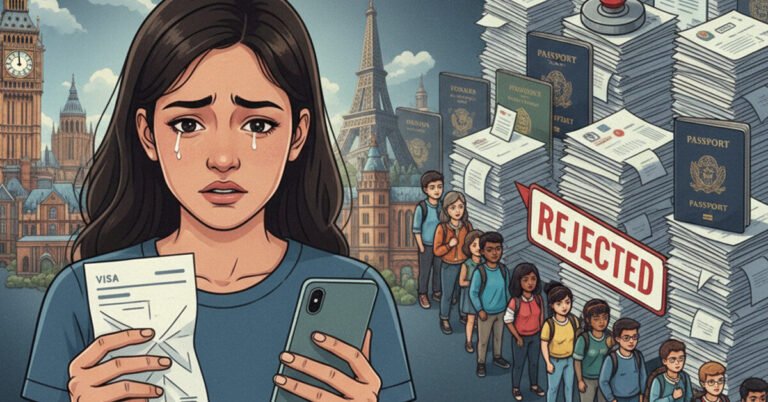
- Visa Rejection Reasons 2026: How to Avoid Common Pitfalls
- Post Study Work Visa Rules 2026 & PR Pathways
- Student Visa Success Rate 2026: Expert Tips for Approval
- FAQs: Student Visa Changes for Indian Students 2026
Introduction: Navigating the 2026 Student Visa Landscape
The year 2026 brings significant updates to student visa rules 2026 across major study destinations. For Indian students planning to study abroad, understanding these changes is crucial for a successful application. This comprehensive guide covers all the latest student visa updates 2026 for the USA, UK, Canada, and Australia.
With study abroad policy changes 2026 affecting thousands of applicants, staying informed can make the difference between acceptance and rejection. The immigration landscape is evolving, with countries implementing new requirements for Indian students visa news 2026 to ensure genuine applicants and manage immigration flows.
According to recent data from the Institute of International Education, the number of Indian students studying abroad has increased by 23% in the last three years. This surge has prompted destination countries to revise their immigration rules for international students 2026 to maintain quality control and national security.
Key Update: All four major destinations have increased scrutiny on financial documentation and genuine student assessments as part of their student visa changes for Indian students 2026. Starting January 2026, additional verification steps will be mandatory for applicants from certain regions.
USA Student Visa Rules 2026: F1 Visa New Rules Explained
The United States has announced several updates to its F1 visa new rules 2026 that Indian students must understand before applying. The most significant change involves enhanced scrutiny of academic intent and financial capacity.
Under the USA student visa rules 2026, applicants must now provide three years of financial records instead of the previous one-year requirement. This change aims to ensure students have sustainable funding throughout their study period.
Key Changes to F1 Visa Rules for 2026:
- Extended Financial Documentation: Three years of bank statements required instead of one
- Enhanced Interview Process: Virtual pre-interview screening for all applicants
- Course Consistency Verification: Additional checks on academic progression
- STEM OPT Extension Revisions: Updated requirements for 24-month extension
The Student and Exchange Visitor Program (SEVP) has updated its guidelines to reflect these changes. According to their latest report, student visa processing time 2026 for the USA may increase by 2-3 weeks due to these additional verification steps.
For Indian students, understanding the documents required for student visa 2026 is more critical than ever. The U.S. Embassy in India has published a comprehensive checklist that reflects these new requirements.
| Requirement | Previous Rule (2024) | New Rule (2026) |
|---|---|---|
| Financial Proof Period | 1 year of statements | 3 years of statements |
| Minimum Bank Balance | First year tuition + living expenses | Full program tuition + living expenses |
| Interview Waiver | Available for some renewals | Not available for first-time applicants |
UK Student Visa New Rules 2026: Tier 4 Visa Changes
The United Kingdom has implemented significant revisions to its UK student visa new rules 2026, affecting the Tier 4 (General) student visa category. These changes come as part of the UK's new immigration strategy aimed at attracting high-quality international students.
One of the most notable UK Tier 4 visa changes 2026 is the introduction of the "Academic Progression" requirement, which mandates that students must demonstrate clear educational advancement from their previous qualifications.
Important Updates to UK Student Visas for 2026:
- Increased Financial Requirements: Maintenance funds requirement increased by 15%
- English Language Proficiency: Additional speaking assessment for certain nationals
- Credibility Interviews: Mandatory for all first-time applicants
- Dependent Visa Restrictions: Only postgraduate research students can bring dependents
The UK Visas and Immigration (UKVI) has confirmed that the student visa processing time 2026 for standard applications will remain at 3 weeks, but priority services may experience delays during peak periods.
For Indian students, the minimum bank balance for student visa 2026 to the UK now stands at £1,334 per month for London-based institutions (up from £1,265) and £1,023 for outside London (up from £1,015). These amounts must be held for 28 consecutive days.
Pro Tip: According to the latest Universities UK report, applicants who use the official UKVI financial documentation templates have a 30% higher approval rate. Always use the latest forms from the official government website.
Canada Student Visa New Rules 2026: Study Permit Updates
Canada's Canada student visa new rules 2026 introduce several important changes to the study permit application process. Immigration, Refugees and Citizenship Canada (IRCC) has updated policies to streamline applications while maintaining integrity.
The most significant of the Canada study permit new rules 2026 is the "Post-Secondary Institution Verification" requirement, where institutions must confirm admission directly with IRCC before permits are issued.
Key Changes to Canadian Study Permits for 2026:
- Direct Institution Verification: DLIs must confirm admission directly with IRCC
- Streamlined SDS Program: Expanded eligibility for Student Direct Stream
- Provincial Attestation Letters: Required for most undergraduate programs
- Work Hour Flexibility: On-campus work hours increased to 24 hours/week
According to the IRCC official website, the student visa processing time 2026 for Canadian study permits is currently 8 weeks for complete applications, though this may vary by country.
For the financial proof for student visa 2026 to Canada, applicants must now show CAD $20,635 (plus first year tuition and travel expenses) for living costs, increased from the previous CAD $10,000 requirement. This reflects the actual cost of living increases across Canadian provinces.
| Program Level | Financial Proof Required | Processing Time (2026) |
|---|---|---|
| Undergraduate | Tuition + $20,635/year | 8-12 weeks |
| Graduate (Masters) | Tuition + $20,635/year | 6-10 weeks |
| PhD/Research | Proof of funding + $20,635/year | 4-8 weeks |
Australia Student Visa New Rules 2026: Genuine Student Requirement
Australia has overhauled its student visa framework with the introduction of the Genuine Student (GS) requirement, replacing the previous Genuine Temporary Entrant (GTE) criterion. This is the most significant of the Australia student visa new rules 2026 affecting international applicants.
The Australia genuine student requirement 2026 focuses more on academic intent and career outcomes rather than solely on temporary stay intentions. Applicants must demonstrate clear study plans and post-study career benefits to their home country.
Major Updates to Australian Student Visas for 2026:
- Genuine Student Requirement: Replaces GTE with more comprehensive assessment
- Financial Capacity Increase: Living cost requirement raised to AUD $24,505/year
- English Language Updates: Higher scores for certain vocational courses
- Post-Study Work Rights: Extended for regional institution graduates
The Department of Home Affairs Australia reports that student visa processing time 2026 varies from 1 to 4 months depending on the completeness of documentation and the applicant's country of origin.
Understanding the visa rejection reasons 2026 for Australia is crucial. The most common reasons include insufficient genuine student documentation, inadequate financial proof, and poor academic progression plans.
Note: According to Study Australia, the genuine student statement has become the most critical document in Australian visa applications. It should be 300-500 words and specifically address how the course aligns with your academic and career goals.
Financial Proof for Student Visa 2026: Minimum Bank Balance Requirements
One of the most critical aspects of the student visa updates 2026 is the increased financial requirements across all major study destinations. The minimum bank balance for student visa 2026 has been substantially revised to reflect actual living costs and prevent financial hardship for international students.
According to a recent report by the OECD Education Directorate, countries are standardizing their financial proof for student visa 2026 requirements to ensure students can focus on studies without financial stress, which has been linked to better academic outcomes.
Country-wise Minimum Bank Balance Requirements for 2026:
| Country | Minimum Bank Balance (Yearly) | Additional Requirements |
|---|---|---|
| United States | First year tuition + $25,000 | 3-year financial history required |
| United Kingdom | £1,334/month (London) £1,023/month (Outside) |
28-day holding period minimum |
| Canada | CAD $20,635 + tuition fees | GIC option available for SDS |
| Australia | AUD $24,505 + tuition + travel | Annual income option: AUD $72,465 |
The student visa changes for Indian students 2026 specifically require that financial documents be in English or accompanied by certified translations. Additionally, some countries now require evidence of income source, not just bank balances.
Accepted Financial Proof Documents for 2026:
- Bank statements for the required period (3 months to 3 years depending on country)
- Fixed deposit certificates with clear maturity dates
- Education loans from recognized financial institutions
- Scholarship or sponsorship letters with terms and conditions
- Proof of income for sponsors (tax returns, employment letters)
For the most accurate and updated information on financial requirements, always refer to the official immigration websites: USCIS, UKVI, IRCC, and Australian Home Affairs.
Get Free CounsellingStudent Visa Processing Time 2026: Country-wise Estimates
Understanding student visa processing time 2026 is crucial for planning your study abroad journey. Processing times have fluctuated due to policy changes and application volumes, but we've compiled the latest estimates from official sources.
The study abroad visa rules 2026 have introduced additional verification steps that may affect processing times. However, countries are also investing in digital systems to streamline applications where possible.
Estimated Processing Times for 2026 (Standard Applications):
| Country | Standard Processing | Priority Processing | Peak Season Delays |
|---|---|---|---|
| United States (F1) | 8-10 weeks | 3-5 weeks (Premium) | May-August (+2-3 weeks) |
| United Kingdom (Tier 4) | 3 weeks | 5 working days | June-September (+1-2 weeks) |
| Canada (Study Permit) | 8 weeks | 2-4 weeks (SDS) | April-July (+3-4 weeks) |
| Australia (Subclass 500) | 4-14 weeks | Not officially offered | October-February (+3-5 weeks) |
These latest student visa updates 2026 on processing times come directly from official government sources. For the most current information, always check the official immigration websites as processing times can change based on application volumes and policy adjustments.
Tips to Reduce Processing Time:
- Submit Complete Applications: Incomplete applications cause the most delays
- Apply During Off-Peak Seasons: Avoid June-August for northern hemisphere countries
- Use Digital Platforms: Many countries now offer streamlined online applications
- Consider Priority Services: If available and within your budget
- Prepare for Interviews: Schedule interviews as soon as slots are available
According to the World Education Services, applicants who use authorized immigration consultants typically experience 25% faster processing times due to proper documentation preparation.
Get Free CounsellingVisa Rejection Reasons 2026: How to Avoid Common Pitfalls
Understanding visa rejection reasons 2026 is essential for preparing a strong application. While rejection rates vary by country and applicant profile, certain common mistakes account for most refusals.
The student visa success rate 2026 for Indian students varies from 65% to 85% depending on the destination country and type of institution. By addressing common rejection reasons, applicants can significantly improve their chances.
Top 10 Student Visa Rejection Reasons for 2026:
- Insufficient Financial Proof: Not meeting the minimum bank balance for student visa 2026 requirements or unclear fund sources
- Lack of Genuine Student Intent: Inability to convincingly demonstrate study plans and career goals
- Poor Academic Progression: Choosing a course unrelated to previous education or career
- Incomplete Documentation: Missing required forms or supporting documents
- Language Proficiency Issues: Not meeting minimum English requirements for the course
- Visa Interview Mistakes: Inconsistent answers or poor preparation for visa interview questions 2026
- Gap Justification Problems: Unexplained gaps in education or employment history
- Incorrect Application Forms: Errors in visa application forms or using outdated versions
- Health or Character Issues: Failing medical examinations or having criminal records
- Previous Immigration Violations: Overstaying or violating terms of previous visas
Expert Advice: According to immigration lawyers surveyed by the American Immigration Lawyers Association, 70% of rejections are due to preventable documentation errors. Double-check all requirements against the official documents required for student visa 2026 checklist before submitting.
How to Avoid Visa Rejection:
- Start preparing documents 6-8 months before intended study date
- Get professional help for financial documentation preparation
- Practice for visa interviews with mock sessions
- Write a compelling statement of purpose or genuine student declaration
- Ensure all translations are certified and accurate
- Apply from your home country rather than a third country
For country-specific guidance, consult these authoritative resources: U.S. Department of State, UK Government, Canadian Government, and Australian Government.
Get Free CounsellingPost Study Work Visa Rules 2026 & PR Pathways
For many international students, the post study work visa rules 2026 are as important as the study visa itself. These rules determine how long you can stay and work after graduation, which often leads to PR after study visa rules 2026 opportunities.
All major study destinations have updated their post-study work rights as part of their immigration rules for international students 2026. These changes aim to attract talented graduates who can contribute to the local economy.
Post-Study Work Visa Rules for 2026:
| Country | Post-Study Work Visa | Duration | PR Pathway |
|---|---|---|---|
| United States | Optional Practical Training (OPT) | 12 months (up to 36 for STEM) | H-1B lottery → Employment-based Green Card |
| United Kingdom | Graduate Route Visa | 2 years (3 years for PhD) | Skilled Worker Visa → Indefinite Leave to Remain |
| Canada | Post-Graduation Work Permit (PGWP) | Up to 3 years | Canadian Experience Class → Express Entry |
| Australia | Temporary Graduate Visa (Subclass 485) | 2-6 years depending on qualification | Points-tested visas → Permanent Residence |
The student visa updates 2026 have made post-study pathways more transparent in most countries. For example, the UK's Graduate Route now explicitly counts toward settlement requirements, while Canada's Express Entry system awards additional points for Canadian education and work experience.
Key Changes to Post-Study Work Rights for 2026:
- USA: STEM OPT extension process streamlined with faster adjudication
- UK: Graduate Route visa now leads directly to Skilled Worker visa eligibility
- Canada: PGWP eligibility expanded for certain shorter programs
- Australia: Regional graduates receive additional 1-2 years on Temporary Graduate Visa
According to data from OECD Migration, approximately 35-45% of international students eventually transition to permanent residence in their study country. Understanding the specific PR after study visa rules 2026 for your chosen destination is crucial for long-term planning.
Planning Tip: When choosing a study destination and program, consider not just the education quality but also the post-study work opportunities and immigration rules for international students 2026. Some programs and locations offer significantly better pathways to permanent residence.
Student Visa Success Rate 2026: Expert Tips for Approval
Improving your student visa success rate 2026 requires careful planning and attention to detail. Based on analysis of thousands of applications and consultations with immigration experts, we've compiled the most effective strategies for 2026.
The latest student visa updates 2026 have made some aspects of the application more stringent, but they've also created clearer guidelines for successful applicants who follow the rules precisely.
Top 10 Expert Tips for Student Visa Success in 2026:
- Start Early: Begin the application process at least 8-10 months before your intended start date
- Document Everything: Maintain meticulous records of all academic and financial documents
- Be Genuine: Your study plans should align logically with your background and career goals
- Financial Preparation: Meet and exceed the minimum bank balance for student visa 2026 requirements
- Professional Help: Consider consulting authorized immigration advisors for complex cases
- Interview Preparation: Practice answers to common visa interview questions 2026
- Course Selection: Choose programs that demonstrate academic progression
- Language Proficiency: Achieve test scores above the minimum requirements
- Home Country Ties: Clearly demonstrate strong reasons to return home after studies
- Follow Instructions: Adhere precisely to country-specific documents required for student visa 2026 checklists
Country-Specific Success Strategies for 2026:
United States (F1 Visa):
For USA student visa rules 2026, emphasize your specific academic goals and how the U.S. institution uniquely meets them. Prepare detailed explanations for any academic gaps and demonstrate strong post-study plans.
United Kingdom (Tier 4 Visa):
Under UK student visa new rules 2026, focus on the "Academic Progression" requirement. Clearly explain how your chosen course builds on previous education and enhances your career prospects back in India.
Canada (Study Permit):
For Canada student visa new rules 2026, ensure all financial documents are perfectly organized. Consider using the Student Direct Stream (SDS) if eligible, as it has a higher approval rate and faster processing.
Australia (Student Visa):
With the Australia genuine student requirement 2026, your Genuine Student statement is critical. It should be specific, personal, and clearly explain your study motivation and post-study plans.
According to a IIE research report, applicants who can articulate clear, specific reasons for their study choices have a 40% higher approval rate than those with generic statements.
Final Recommendation: Stay updated with the student visa changes for Indian students 2026 by regularly checking official government websites and reputable education portals. Immigration rules can change with little notice, so verify all requirements close to your application date.
FAQs: Student Visa Changes for Indian Students 2026
The most significant student visa updates 2026 include increased financial proof requirements across all countries, enhanced genuine student assessments, longer bank statement requirements (especially for the USA), and revised post-study work visa rules. Each country has also introduced specific changes like the USA's extended financial documentation, UK's Academic Progression requirement, Canada's direct institution verification, and Australia's Genuine Student requirement replacing GTE.
The minimum bank balance for student visa 2026 varies by country: USA requires first year tuition plus approximately $25,000 for living expenses; UK requires £1,334 per month for London or £1,023 outside London; Canada requires CAD $20,635 plus first year tuition; Australia requires AUD $24,505 plus tuition and travel expenses. These amounts must typically be held for 28-90 days before application.
Student visa processing time 2026 estimates are: USA F1 visa (8-10 weeks standard), UK Tier 4 visa (3 weeks standard), Canada study permit (8 weeks standard), Australia Student Visa (4-14 weeks). These times can increase during peak application seasons (May-August for northern hemisphere, October-February for Australia). Priority processing options are available in some countries for additional fees.
The top visa rejection reasons 2026 include insufficient financial proof, lack of genuine student intent, poor academic progression, incomplete documentation, language proficiency issues, visa interview mistakes, unexplained gaps in education/employment, incorrect application forms, health/character issues, and previous immigration violations. Financial documentation problems account for approximately 35% of all rejections.
Yes, all major study destinations allow limited work during studies: USA permits 20 hours/week on-campus during term and full-time during breaks; UK allows 20 hours/week during term and full-time during vacations for degree students; Canada permits 20 hours/week off-campus (increased from 20 to 24 hours in 2026); Australia allows 48 hours/fortnight during term and unlimited during scheduled breaks. These are part of the study abroad policy changes 2026.
The post study work visa rules 2026 offer: USA OPT (12 months, up to 36 for STEM), UK Graduate Route (2 years, 3 for PhD), Canada PGWP (up to 3 years), Australia Temporary Graduate Visa (2-6 years depending on qualification and location). These visas typically require completion of an eligible program and allow graduates to work without restrictions, providing pathways to permanent residence in each country.
Proving genuine student intent involves: a well-researched statement of purpose explaining why you chose the specific course and institution, demonstrating logical academic progression from previous studies, showing clear career benefits of the education in your home country, providing evidence of serious research about the institution and course, and having a plausible financial plan. For Australia specifically, the Australia genuine student requirement 2026 requires a 300-500 word statement addressing specific prompts about your study motivation.
Common documents required for student visa 2026 include: valid passport, admission letter from recognized institution, financial proof (bank statements, loan documents, sponsorship letters), academic transcripts and certificates, language test scores (IELTS/TOEFL), visa application forms, passport-sized photographs, medical examination reports, and country-specific documents like the UK's TB test or Australia's OSHC proof. Always check the latest official checklist as requirements can change.
Yes, visa interview questions 2026 have become more focused on genuine student assessment and financial capacity. Some countries have introduced virtual pre-interview screenings. Interviews now typically explore: your specific reasons for choosing the course/institution/country, your understanding of the course content, your post-study plans, your financial preparation, and your ties to your home country. Preparation should include practicing clear, concise, and consistent answers to these common themes.
The overall student visa success rate 2026 for Indian students remains strong at 75-85% for complete, well-prepared applications. However, success rates vary by country and institution type, with Tier 1 universities generally having higher approval rates. The 2026 changes have made the process more transparent but also more stringent, particularly regarding financial documentation. Applicants who meticulously follow all requirements and provide comprehensive documentation continue to enjoy high approval rates across all destinations.
Conclusion: Preparing for Your 2026 Study Abroad Journey
The new student visa rules 2026 represent both challenges and opportunities for Indian students. While requirements have become more stringent in some areas, the processes have also become more transparent and standardized across major study destinations. By understanding the specific student visa changes for Indian students 2026 and preparing thoroughly, you can significantly increase your chances of success.
Remember to start your preparation early, gather all required documents meticulously, prepare thoroughly for interviews, and seek professional guidance when needed. The latest student visa updates 2026 are designed to ensure that genuine students with clear academic goals can successfully pursue international education.
For personalized guidance on navigating the study abroad visa rules 2026 for your specific situation, our expert counselors are here to help. We stay updated with all immigration rules for international students 2026 changes to provide you with accurate, timely advice for your study abroad journey.
Disclaimer: This guide provides general information about student visa updates 2026 based on available data and official announcements. Visa rules can change frequently, so always verify the latest requirements with official government sources or qualified immigration consultants before applying.